Pickleball Injury Prevention Gear: Braces, Sleeves & Wraps Guide
Pickleball injury prevention gear covers nine distinct product categories — knee braces, knee sleeves, wrist braces, wrist sleeves, elbow sleeves, arm sleeves, ankle braces, shoulder wraps, and calf sleeves — each designed to support a specific joint or muscle group against the sport’s most common overuse and acute-impact injuries. Whether you’re managing an existing condition, returning from time off, or building a proactive protection routine before anything hurts, this guide maps every gear type to the body part it protects and explains how it works.
The selection problem most players face isn’t lack of options — it’s the wrong gear for the wrong problem. A compression sleeve and a rigid brace solve different mechanical issues, and reaching for the wrong one can delay recovery or mask a problem that needs attention. This guide distinguishes the three structural categories (braces, sleeves, wraps), explains the injuries behind each, and gives you a framework for matching the right support to your specific situation.
Roughly 19,000 pickleball-related injuries are treated in U.S. emergency rooms each year, with the 50-plus age group absorbing the large majority of those incidents. But the injury rate has tracked the sport’s participation growth across all ages — competitive younger players logging high session volumes are not immune. The common thread: overuse injuries that build gradually, often in the elbow, knee, or wrist, and acute injuries — ankle sprains, shoulder strains — that happen in an instant during lateral movement.
The sections below cover each gear type, body part by body part, then offer a selection framework and honest context for what protective gear can and cannot do.
What Is Pickleball Injury Prevention Gear?
Pickleball injury prevention gear is any wearable support product — brace, sleeve, or wrap — that reduces injury risk, stabilizes an injured or vulnerable joint, or enhances a player’s proprioceptive awareness during play. The category spans everything from a simple neoprene knee sleeve to a hinged ankle brace with rigid lateral uprights, and the distinctions between them matter for both effectiveness and comfort.
Braces — Structural Support for Unstable or Injured Joints
Braces provide the highest level of mechanical support in this category. They incorporate semi-rigid or rigid frames, adjustable straps, and in some designs, hinged joints that guide range of motion. Knee braces with medial-lateral hinges protect ACL and MCL structures during the sharp pivots and weight transfers that pickleball demands. Wrist braces with thermoplastic or aluminum stays prevent hyperextension during powerful forehand drives. Ankle braces with stirrup designs restrict inversion, the most common mechanism of lateral ankle sprains on court. If your injury history involves ligament instability, a partial tear, or post-surgical return to play, braces are the appropriate starting point.
Sleeves — Compression Support for Muscles and Mild Joint Fatigue
Sleeves work through graduated compression, tissue warmth, and proprioceptive enhancement. Made from elastic knit, neoprene, or copper-infused blends, a well-fitted sleeve increases blood flow to the target area by improving venous return, which accelerates clearance of metabolic waste during long sessions. More importantly for active play, compression reminds the joint where it is in space — a mechanism called proprioception — which helps muscles react faster to unexpected movement. Players returning from a mild ankle sprain often wear sleeves not for mechanical bracing but because the compression input reduces the risk of a reflex-slow overextension on an unstable surface. For mild swelling, soreness, or muscle fatigue without structural instability, sleeves are the appropriate choice.
Wraps — Adjustable Support for Variable-Demand Joints
Wraps use hook-and-loop closures, elastic bandaging, or neoprene panels to deliver compression that players can adjust between sessions or during play. Common formats include wrist wraps with thumb loops, shoulder compression wraps with figure-eight strapping, and ankle wraps that conform to foot geometry. The advantage over fixed-size sleeves is custom compression level — tighter on high-demand days, looser during warm-up or recovery. Wraps suit players whose support needs vary by activity intensity or who have joint profiles that standard sleeve sizing doesn’t accommodate.
Which Pickleball Injuries Drive Players to Protective Gear?
The six body areas most frequently injured in pickleball — the lateral elbow, wrist, shoulder, knee, ankle, and calf — map directly to the sport’s mechanical demands: repetitive forearm rotation for every shot, constant weight transfer and pivoting for court coverage, and the ground-reaction forces of stopping and changing direction on a hard court surface. Understanding which injuries affect each area helps you prioritize where protection is most necessary.
Upper Body: Lateral Epicondylitis, Wrist Sprains, and Rotator Cuff Strain
Lateral epicondylitis — called pickleball elbow as often as tennis elbow now — develops when the forearm extensor tendons at the outer elbow are repeatedly overloaded. The swing mechanics of a forehand dink, an overhead smash, and a two-handed backhand all place tension on those tendons, especially when paddle grip is too small (forcing a tighter grip that amplifies vibration transfer) or when a player’s wrist-dominated swing pattern puts excess load on the lateral epicondyle.
Wrist sprains and strains occur most often in the dominant hand during off-center ball contact and in the non-dominant wrist during two-handed backhand shots. The wrist absorbs force that the arm fails to dampen, particularly when paddle handle length and grip size are mismatched.
Rotator cuff strain presents in players who generate significant power from shoulder rotation — notably during high overhead smashes or aggressive serves. Incomplete warm-up of the shoulder external rotators is the most common contributing factor.
Lower Body: Knee Instability, Ankle Sprains, Achilles Strain, and Calf Tightness
Knee injuries in pickleball include patellar tendonitis (pain below the kneecap from repeated squatting-and-rising at the kitchen line), medial and lateral ligament strains from pivoting movements, and osteoarthritis aggravation in older players. The kitchen — where players crouch, step, and spring laterally in tight spaces — is the primary loading zone for both knees throughout a match.
Ankle sprains are among the most acute injuries in pickleball, occurring when a player steps on an uneven surface, misjudges a court line, or plants and pivots simultaneously. Lateral ankle sprains (inversion) account for the majority of cases.
Achilles strain and calf tightness develop in players who play frequently without structured recovery time. The calf-Achilles unit absorbs force on every forward step, split-step, and explosive push off — and under high session volume without adequate warm-up or footwear support, fatigue accumulates faster than tissue can recover.
Do Braces and Sleeves Actually Prevent Pickleball Injuries?
Yes, protective gear prevents pickleball injuries — but within defined mechanisms and with real limitations. The evidence supports compression sleeves and braces for reducing acute injury risk, managing inflammation, and improving proprioceptive feedback. What gear cannot do is change the underlying movement patterns or overuse load that caused the injury in the first place.
How Compression Improves Blood Flow, Proprioception, and Joint Stability
Compression sleeves improve blood flow to the target area by up to 15%, per clinical studies on graduated compression in athletic populations, which reduces intra-articular swelling and accelerates recovery between sessions. The more underappreciated mechanism is proprioceptive enhancement — the sensory input from a fitted sleeve tells the nervous system where that joint sits in space with greater precision, which speeds up the protective muscle contractions that prevent hyperextension and unwanted inversion. Players who’ve had knee sprains often describe wearing a sleeve as feeling more confident and controlled in lateral movement, not more restricted.
Rigid and semi-rigid braces add a mechanical layer on top of compression: the frame limits range of motion at the injury boundary, protecting ligament structures from the forces that would re-injure them during the dynamic movements pickleball demands. A hinged knee brace does not remove strain from the ACL — it reduces the peak strain during the specific movement arc where instability is highest.
The Boundary: What Protective Gear Cannot Fix
Protective gear cannot correct the overuse pattern that created the injury. A counterforce strap below the elbow — the classic lateral epicondylitis management tool — diffuses vibration before it reaches the tendon, reducing pain in the short term. But if the player continues with a wrist-dominant swing and a paddle grip that’s too small, the tendon loads at the same level underneath the strap. The brace masks the signal; the root cause continues.
The same principle applies to knee sleeves worn over an undertrained quadriceps-to-hamstring strength ratio, or ankle braces worn instead of proprioceptive retraining after a sprain. Gear is most effective when it’s part of a broader approach that addresses mechanics, conditioning, and recovery — not a substitute for them.
Pickleball Injury Prevention Gear by Body Part
The nine protective gear categories available for pickleball players each address a specific body part and injury mechanism. The overview below covers what each type does and who needs it most. Each gear type has a dedicated guide with product reviews at the linked page.
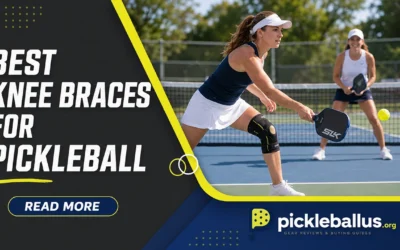
Knee Braces — Ligament Instability and Post-Surgery Return
Knee braces for pickleball fall into three designs: compression sleeves for mild swelling, hinged braces for ligament instability (ACL, MCL), and unloader braces for osteoarthritis. Hinged models provide real mechanical protection during the pivoting and lateral-loading movements that place peak stress on knee ligaments. Players returning from a partial ligament injury or knee surgery need a hinged brace before progressing to sleeve-only support. The best pickleball knee brace guide covers the top-rated options across all three categories with fit guidance for each.
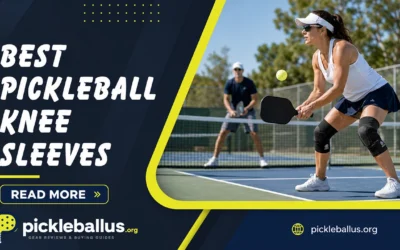
Knee Sleeves — Mild Swelling, Patellar Tracking, and Proprioception
Knee sleeves are the most widely used item in this category because they suit the broadest range of players: anyone with mild post-session soreness, patellar tendon irritation, or general joint fatigue from high session volume. A properly fitted sleeve does not restrict movement and is comfortable enough to wear for an entire two-hour match. Players who squat and rise frequently at the kitchen line benefit from the compression support even without any diagnosed injury. See the best pickleball knee sleeve reviews for options by compression level and material.
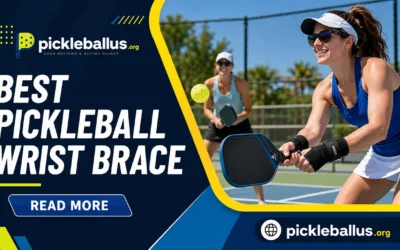
Wrist Braces — Sprains, Strains, and Swing-Arm Overuse
Wrist braces use thermoplastic stays or metal inserts to restrict hyperextension while leaving grip function intact. They are the first line of protection after a wrist sprain and the correct choice for players with diagnosed triangular fibrocartilage complex (TFCC) issues or chronic wrist instability. For players who generate shot power primarily through wrist snap rather than hip and shoulder rotation, a wrist brace also serves as a mechanical cue to change mechanics. The best pickleball wrist brace guide reviews low-profile options that fit inside a standard grip without affecting feel.
Wrist Sleeves — Mild Soreness and Tendon Fatigue
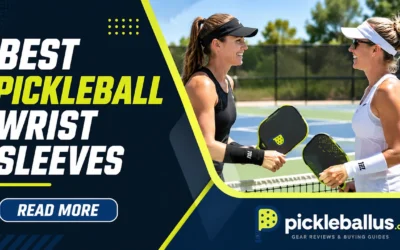
Wrist sleeves provide compression without the stay inserts of a rigid brace, making them appropriate for mild tendon soreness, post-session inflammation, and general fatigue in the swing wrist. Players with a history of wrist issues who’ve returned to full play often wear a sleeve during maintenance sessions as a sensory reminder to control wrist position at contact. The best pickleball wrist sleeve options include models thin enough to wear under a paddle grip without changing grip circumference.
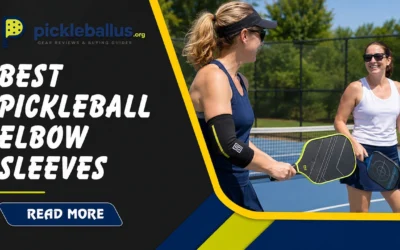
Elbow Sleeves — Lateral Epicondylitis and Forearm Muscle Soreness
Elbow sleeves compress the forearm extensor muscles and the lateral epicondyle simultaneously, reducing muscle vibration and maintaining tissue warmth during play. They address the same injury zone as counterforce straps but through full-coverage compression rather than a single targeted pressure point. Players with mild to moderate pickleball elbow symptoms who are not yet at the brace-required stage, and players seeking active prevention during high-volume training blocks, benefit most from elbow sleeves. The best pickleball elbow sleeve guide covers the most tested models, including neoprene and knit versions.
Arm Sleeves — UV Protection and Full-Arm Compression
Arm sleeves cover the forearm through to the upper arm and serve dual purposes: UV protection during outdoor play and light compression support for the full arm musculature during extended matches. They are not bracing products — they do not address structural instability — but they reduce muscle vibration across a larger area than an elbow-only sleeve, which benefits players who experience forearm fatigue and soreness during multi-hour sessions. The best pickleball arm sleeves guide reviews sun-protection and compression-focused options side by side.
Ankle Braces — Lateral Ankle Sprains and Surface Instability
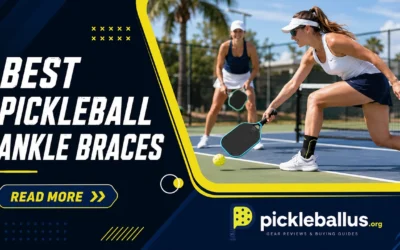
Ankle braces are among the most evidence-supported products in this category. Randomized controlled trials in court sports consistently show that lace-up and stirrup ankle braces reduce the incidence of lateral ankle sprains in players with a prior sprain history. In pickleball specifically — where rapid direction changes, split-steps, and court-line misjudgments are constant — ankle braces provide meaningful mechanical resistance to the inversion forces that cause most ankle injuries. Best pickleball ankle brace options include low-profile designs that fit inside a standard court shoe without affecting lateral shoe stability.
Shoulder Wraps — Rotator Cuff Support and Overhead-Motion Pain
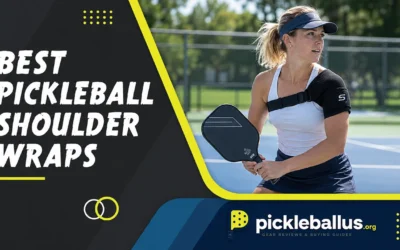
Shoulder wraps use figure-eight strapping or neoprene panels to compress the rotator cuff and posterior shoulder during play. They are most appropriate for players recovering from a rotator cuff strain who are cleared for activity, or players with chronic shoulder impingement that worsens after overhead shots. Unlike elbow and knee products, pickleball shoulder wraps require careful attention to strapping pattern — an incorrectly positioned wrap can restrict healthy range of motion rather than supporting the injured structure.
Calf Sleeves — Achilles Protection, Circulation, and Fatigue Reduction
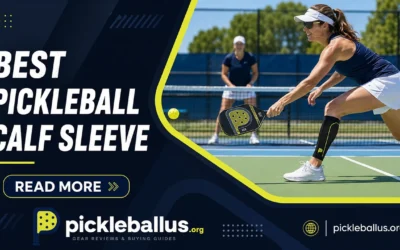
Calf sleeves compress the gastrocnemius and soleus muscles and the Achilles tendon, reducing muscle oscillation during the explosive push-offs, split-steps, and landing impacts that occur throughout a pickleball match. For players managing Achilles tendon soreness or playing in cold conditions where the calf warms up slowly, calf sleeves reduce injury risk during the first 15–20 minutes of a session when the tissue is most vulnerable. Players with circulation concerns or those logging high weekly session counts benefit from the venous return improvement calf sleeves provide. The best pickleball calf sleeve guide reviews compression-level options from light-support to medical-grade.
How to Choose the Right Pickleball Injury Prevention Gear
Choosing the right gear starts with identifying your body part first, then matching severity to the appropriate support category. Buying a brace when a sleeve is sufficient adds weight and potentially restricts healthy movement; buying a sleeve when a brace is needed leaves structural instability unaddressed. The following three-step framework narrows the decision.
Step 1 — Identify Which Joint or Muscle Group Needs Support
Start with honest body-part identification. Not “my leg hurts” but specifically: is the pain in the knee joint, the patellar tendon below the kneecap, the lateral ankle, or the calf belly? Location determines which product category applies. If you are unsure of the exact structure involved, a brief consultation with a physical therapist or sports medicine practitioner provides a precise answer in 15 minutes and prevents weeks of wearing the wrong product.
Step 2 — Match Severity to Gear Category
The severity-to-category mapping is: mild symptoms (soreness, general fatigue) → sleeve or wrap; moderate symptoms (swelling, instability, recurring pain) → brace; severe or post-surgical → consult a specialist first, then brace under guidance. Players in the mild category who reach for a rigid brace are over-protecting the joint and may reduce blood flow and proprioceptive input they’d benefit from. Players in the moderate category who reach for a sleeve are under-protecting the joint and risk re-injury on the first sudden movement.
Step 3 — Confirm Fit, Material, and Activity Compatibility
Every brace and sleeve category reviewed in this guide includes sizing guidance from the manufacturer. Measure circumference at the stated anatomical landmark — mid-patella for knee products, widest calf point for calf sleeves, one inch below the lateral epicondyle for elbow products — and select the size that matches the compression chart, not the size that approximates your clothing size. Material selection matters for session length: neoprene retains heat effectively for short sessions and cold environments; open-weave knit fabrics manage moisture better for matches exceeding 90 minutes.
By this point you have a complete picture of every gear type, the injuries each one addresses, and a framework for choosing the right support for your body. Knowing what to buy, however, is only part of staying on the court long-term — the players who avoid chronic injuries don’t just wear the right gear, they address the upstream factors that gear alone cannot touch. The next section covers those factors: the paddle mechanics, conditioning habits, and body-awareness signals that make protective gear more effective rather than more necessary.
What Pickleball Injury Prevention Gear Cannot Do Alone
Protective gear reduces risk and manages symptoms. It does not remove the underlying causes of pickleball’s most common overuse injuries — those originate in mechanics, workload management, and physical conditioning. Understanding where gear ends and the rest of injury prevention begins determines how effectively you use both.
The Paddle Grip Size Connection
The single most cited upstream cause of pickleball elbow is a paddle grip that’s too small. When grip circumference is smaller than the player’s optimal size, the hand squeezes tighter to maintain control, which transfers vibration from the paddle face up the shaft and directly into the forearm extensor tendons at the lateral epicondyle. An elbow sleeve or counterforce strap reduces that transferred vibration — but if grip size remains wrong, the loading continues underneath the compression. Measuring grip circumference and matching it to the paddle handle before purchasing protective gear for elbow pain is the more efficient intervention. Similarly, best pickleball paddles for tennis elbow covers paddles with thicker cores and vibration-dampening construction that reduce forearm load at the source.
Warm-Up and Conditioning
A structured warm-up addressing the hip flexors, calf complex, shoulder external rotators, and wrist extensors before every session reduces the injury exposure of the first 20 minutes of play — the period when most overuse injuries and many acute injuries occur. Players who arrive on court and immediately begin hard rallying skip the period where connective tissue temperature and elasticity reach safe operating range. The general principle: 5–10 minutes of dynamic movement targeting the joints you’re about to load is more effective than any single piece of protective gear for the joint you didn’t warm up.
Conditioning — specifically developing the quadriceps-to-hamstring strength ratio for knee stability, the peroneals for ankle inversion resistance, and the rotator cuff for shoulder centering — addresses the structural vulnerability that gear mitigates from the outside. Pickleball warm-up exercises and pickleball injuries cover both protocols and common injury mechanisms in detail.
Reading Your Body’s Signals
Pain lasting more than three minutes after stopping play — not during play — signals possible micro-injury that warrants rest and professional assessment. The common mistake is interpreting gear as a signal to continue playing when the body is indicating something different. Braces and sleeves support tissue that is functioning within its capacity; they are not mechanical substitutes for tissue that has already been damaged and needs time to repair. The players who manage the longest careers in pickleball tend to have the clearest distinction between manageable fatigue and early injury signals — and they step off the court before the latter progresses.