How to Choose a Pickleball Paddle: Core, Weight & Grip Guide
The best pickleball paddle for your game comes down to five variables: face material, core thickness, weight, shape, and grip size. Get those five right and almost any paddle in your price range will serve you well. Get one of them wrong — especially core thickness or weight — and even a $200 paddle will fight your natural playing style. This guide breaks down every spec in plain language so you can walk into any paddle comparison with confidence.
Before diving into specs, here’s what most buying guides miss: paddles don’t have universal “best” settings. A 16mm carbon fiber paddle that suits a control-focused 4.0 player will frustrate a power player who needs fast ball response. The second section of this guide covers how to match all five variables to your specific game. That means if you already know your playing style, skip straight to “How to Match a Pickleball Paddle to Your Skill Level” — the spec sections will make more sense after you know what you’re optimizing for.
One more thing before we start: don’t chase the pro’s paddle. Ben Johns’ signature paddle is engineered around his specific contact style and wrist mechanics. Your game is different. The right paddle is the one that fits your swing, not someone else’s trophy case.
Below is a complete breakdown of every factor that matters when choosing a pickleball paddle.
What Is a Pickleball Paddle — and Why Does Your Choice Matter?
A pickleball paddle is a solid-faced paddle (no strings) used to hit a perforated plastic ball across a low net. Unlike tennis rackets, paddles have no string tension to tune — so the face material, core, and weight are entirely responsible for how the ball responds at contact. Those three variables determine your power ceiling, your control floor, and how much feedback you feel on off-center hits.
The key concept to understand before choosing is the power-control spectrum. Every paddle design lives somewhere on a line between maximum power (fast ball speed, more pop, harder dwell) and maximum control (slower dwell, softer contact, better placement accuracy). You can’t fully maximize both — a harder, thinner core returns energy faster (more power), while a thicker, softer core absorbs energy longer (more control). Your choice of where to land on that spectrum is the single most important decision you’ll make.
Face Material and What It Controls
The paddle face is the surface that contacts the ball. Face material determines how much spin you can generate, how the ball feels at impact, and how much power the face adds to your swing.
- Carbon fiber — stiff, textured, excellent for spin and consistency. Transfers energy efficiently with minimal flex.
- Fiberglass — more flex than carbon fiber, which creates a “trampoline effect” that adds power. Softer feel at contact.
- Graphite — lightweight and precise. Less spin potential than raw carbon fiber, but excellent touch for dinking and drops.
- Composite — a general term for multi-material faces (often fiberglass-based). Balanced across power and control. Common in beginner-to-mid-range paddles.
Core Material and How It Drives Performance
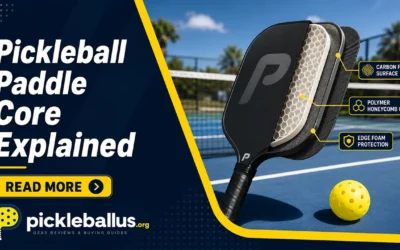
The core is the interior structure sandwiched between the two face layers. Core material controls dwell time (how long the ball stays on the face), vibration, pop sound, and overall feel.
The three core types you’ll encounter are:
- Polymer honeycomb (polypropylene) — the industry standard. Soft, quiet, good shock absorption. The main weakness is “core crush” over time, which creates dead spots.
- Nomex honeycomb — rigid and loud. Used in older paddles and some power-focused designs. More pop, less touch.
- Foam edge/core systems — newer construction found in premium paddles. Extends the effective hitting area, reduces vibration, and increases the sweet spot size.
What Are the Main Pickleball Paddle Face Materials?
The four main pickleball paddle face materials are carbon fiber, fiberglass, graphite, and composite — each designed around a different priority in power, spin, or feel. Here’s how they break down in real play.
Carbon Fiber — Control, Spin, and Consistency
Carbon fiber faces, especially raw carbon fiber (T700 or T300 grade), generate the most spin of any face material available because the rough, gritty texture grips the ball at contact. This is why carbon fiber paddles now dominate the pro and competitive amateur markets. The trade-off is reduced feel compared to fiberglass — carbon fiber is stiffer, so you get less sensory feedback on soft shots like drops and dinks. If spin and control over aggressive shots are your priorities, carbon fiber is the face material to target.
For players wanting to explore the top options in this category, the best carbon fiber pickleball paddles range from mid-range choices through tournament-level gear — worth reviewing once you’ve locked in your core thickness preference.
Fiberglass — Power and Feel at Contact
Fiberglass faces flex slightly at impact, creating a trampoline-like effect that adds natural power to every shot. Players transitioning from tennis or racquetball often prefer fiberglass because the elastic feel is closer to what they already know. It also delivers richer tactile feedback than carbon fiber, which helps with soft-game touch shots. The downside is that fiberglass generates less spin than raw carbon fiber. If you play a flatter, power-heavy game and want natural pop without relying entirely on swing speed, fiberglass is a strong fit.
Graphite — Lightweight Precision
Graphite is the thinnest and lightest face material, making graphite-faced paddles among the fastest-swinging options available. The low weight improves hand speed and reaction time at the net — valuable for doubles players who need quick resets. Graphite doesn’t spin the ball as aggressively as carbon fiber and doesn’t add power like fiberglass. It occupies a precise middle ground: lightweight touch. Players who rely on finesse, placement, and consistency over raw power tend to gravitate toward graphite.
Composite — The All-Rounder Entry Point
Composite paddles combine multiple materials (most often a fiberglass outer with polymer core) to deliver a balanced feel across power, control, and durability. Most beginner and mid-range paddles fall into the composite category because they’re forgiving — a slightly off-center hit won’t punish you the way a stiffer carbon fiber paddle might. For players just learning the game, composite paddles help build fundamentals without requiring precision contact. As skills develop, most players graduate to a more specialized face material that matches their emerging style.
14mm vs 16mm Core: Which Thickness Fits Your Game?
Core thickness is the most impactful single spec you can choose on a pickleball paddle — yet most buyers overlook it entirely. The standard options today are 14mm and 16mm, with some paddles offering 13mm (aggressive power) or 18–20mm (maximum control) at the extremes. Understanding this spec before everything else will save you from buying the wrong paddle twice.
Understanding the full pickleball paddle weight and core relationship helps too — thickness affects how a paddle’s weight is distributed and where it sits on the power-control spectrum.
14mm — Faster Response and Power Transfer
A 14mm core compresses less at impact, returning energy to the ball faster — which translates to more power and a crisper, snappier feel. Players who generate their own pace and want the paddle to amplify it tend to prefer 14mm. The downside is reduced dwell time: the ball leaves the face quicker, giving you less time to control placement on soft shots. Reset shots in the kitchen, drop shots, and dink exchanges require more active technique on a 14mm paddle — it won’t do the softening for you. Best fit: aggressive baseliners, players with a tennis background, advanced players who already have a refined soft game.
16mm — Softer Dwell Time and Reset Accuracy
A 16mm core absorbs more energy at contact, slowing the ball-face interaction and giving you a longer dwell window to control shot direction. This extra millisecond of dwell makes reset shots, drops, and dinks noticeably easier. Balls that might pop up off a 14mm paddle tend to stay low and controlled off 16mm. The trade-off is slightly reduced power output — your hard drives won’t carry quite the same pace. Best fit: control-focused players, kitchen specialists, anyone transitioning from doubles to more net-heavy play, players working on reducing unforced errors.
Paddle Weight: How Light and Heavy Paddles Play Differently
Pickleball paddles range from about 6.5 oz on the light end to 9+ oz on the heavy end, with most competitive players landing in the 7.5–8.2 oz midweight range. Weight affects three things: how fast you can swing the paddle, how much power you generate without extra effort, and how much strain accumulates on your elbow and shoulder over time.
Lightweight — Under 7.5 oz
Lightweight paddles under 7.5 oz reward hand speed, allow faster resets at the net, and significantly reduce stress on the elbow and forearm. For players with a history of tennis elbow, golfer’s elbow, or shoulder problems, dropping paddle weight is often the fastest way to reduce pain during play. Lighter paddles also make two-handed backhand shots easier to generate quickly. The trade-off: less mass means you need more swing speed to drive the ball deep, which can be tiring over a long match. The best pickleball paddles for tennis elbow are almost exclusively in this lightweight-to-midweight range and often combine low weight with thick cores to minimize vibration.
Midweight — 7.5 to 8.2 oz
Midweight paddles between 7.5 and 8.2 oz hit the sweet spot for most competitive players because they balance power, control, and arm comfort without sacrificing performance in either direction. The majority of top-selling paddles across all price ranges fall in this window. If you’re unsure where to start, this is the default range — you can always add an overgrip (which adds roughly 0.5–1 oz) to experiment with slightly more mass.
Heavyweight — 8.3 oz and Above
Heavy paddles above 8.3 oz deliver the most raw power, particularly on drives, serves, and third-shot speed-ups. The extra mass does the work for you — even a shorter swing generates significant pace. The downside is real: heavier paddles fatigue the forearm faster, slow your reaction time at the net, and increase elbow strain with repeated use. Unless you’re physically strong and primarily play singles where power is a larger competitive advantage, heavyweight paddles are a narrow-audience choice.
Shape and Grip Size: Two Factors Most Buyers Ignore
Paddle shape determines your reach and sweet spot placement, while grip size determines comfort, injury risk, and wrist mechanics during play. These two specs get far less attention than face material and core thickness, but they’re the ones that affect physical comfort — and you’ll notice a wrong grip size in your first game.
Standard vs Elongated Paddle Shape
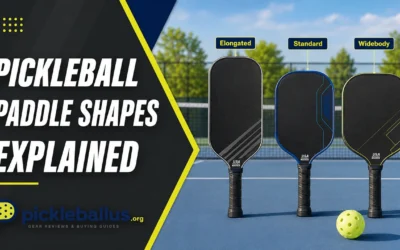
Standard-shaped paddles (roughly 15.5–16 inches long and 7.5–8 inches wide) offer a larger sweet spot and more forgiving off-center hits, making them the better all-around choice for recreational players and doubles specialists. Best elongated pickleball paddles are longer (up to 16.5 inches) and narrower, shifting the sweet spot higher up the face and extending reach — ideal for singles players who want extra leverage on drives and serves, or players with a tennis background used to hitting from the top of the string bed.
Widebody paddles are a third option: shorter and wider than standard, maximizing the sweet spot size. They’re particularly forgiving for beginners or players returning from injury.
How to Measure Your Correct Grip Size
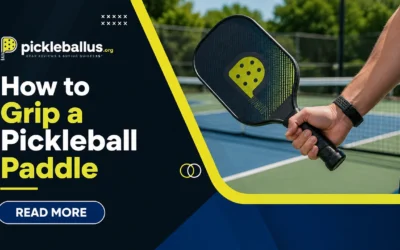
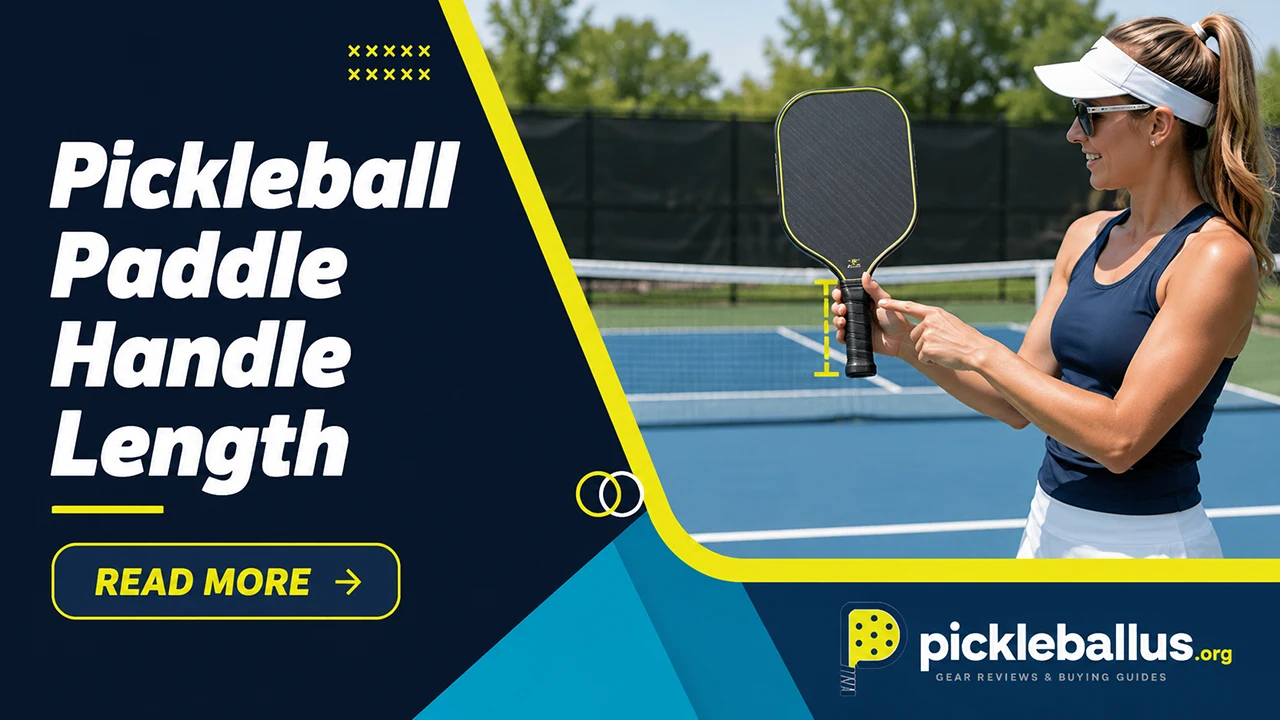
The correct pickleball grip size is between 4.0 and 4.5 inches in circumference — roughly matching your palm measurement from the middle crease to the tip of your ring finger. The fastest test: hold the paddle in your dominant hand with a normal grip, then slide your non-dominant index finger into the gap between your fingertips and your palm. If it fits snugly, the grip is right. If there’s no room, size up. If it flops around, size down.
Getting this wrong has real consequences. A grip that’s too small causes excess wrist motion, which leads to overuse injuries in the forearm and elbow. A grip that’s too large limits wrist flexibility, reduces spin potential, and can cause forearm tendinitis from overcompensating. When in doubt, choose the smaller size — you can always add an overgrip layer to increase circumference.
Grip Length and Handle Style for Two-Handed Backhands
Players who use a two-handed backhand (common among tennis players) should prioritize handle length — look for paddles with grip lengths of 5.5 inches or longer. Short-handle paddles (4.5 inches or less) make two-handed backhands awkward and force you to choke up, shifting your hand position and altering your swing path. The best pickleball paddles for two-handed backhand almost always combine an elongated shape with a long handle to give both hands a natural grip position.
How to Match a Pickleball Paddle to Your Skill Level
The goal when choosing a paddle by skill level isn’t to buy “beginner” or “advanced” marketing labels — it’s to match the specs above to how you actually play and what habits you want to build. A 5.0 player who’s rusty after two years off might benefit from a forgiving 16mm paddle more than the thin, responsive paddle they once played with.
Beginners — What to Prioritize to Build Good Habits
Beginners should prioritize a midweight (7.5–8.0 oz), thick-core (16mm) paddle with a composite or fiberglass face. This combination is forgiving: the thick core softens mishits, the midweight keeps arm fatigue in check, and the composite face rewards fundamentals rather than penalizing imperfect contact. Avoid heavy paddles — the extra weight promotes compensating swing mechanics that are hard to unlearn. The best pickleball paddles for beginners in this spec range span a wide price band, so budget is less a constraint than finding the right weight and core combination.
Intermediate Players (3.0–3.5 DUPR) — The Upgrade Decision
Intermediate players at the 3.0–3.5 DUPR level should start refining toward either a control or power identity — the time for a “balanced” paddle is fading. Players who dominate from the kitchen and value resets will benefit from moving to a carbon fiber 16mm paddle. Players who generate points from the baseline through hard drives and aggressive third-shot drops may want to try a fiberglass 14mm setup. The best pickleball paddles for intermediate players at this level often run mid-range in price, with plenty of performance options that don’t require tournament-level investment.
Advanced Players (4.0+) — Dialing In Feel and Specs
Advanced players at 4.0 and above are optimizing for their specific game pattern, not shopping for general performance. At this level, raw carbon fiber (T700 grade) faces for maximum spin potential, 13–14mm cores for faster response on speed-up attacks, and elongated shapes for reach and power are common choices. Hand feel, vibration, and dwell time become the deciding factors rather than specs on a box. Most advanced players have already tried five or more paddles — the key is demo programs, which let you test a paddle in real match conditions before committing. The best pickleball paddles for advanced players tend to cluster in the premium price tier, but even at this level, some mid-range paddles punch well above their cost.
By this point, you have a solid map of every technical spec that determines how a pickleball paddle performs — from face material and core thickness to weight and grip geometry. Choosing well on those dimensions will get most players exactly where they need to be. That said, a few factors sit outside the spec sheet yet regularly determine whether a paddle lasts two seasons or two months, and whether a $180 paddle actually outperforms one at half the price. The section below covers the details that separate an informed buyer from someone who just got lucky.
What Else Should You Know Before Buying a Pickleball Paddle?
Most buying decisions end with face material, core, and weight — and that’s fine for recreational play. But these three supplementary factors can make the difference between a paddle that holds up and one that disappoints six months after purchase.
USAPA/USA Pickleball Approval — When It Matters and When It Doesn’t
USA Pickleball (formerly USAPA) approval means a paddle has passed size, weight, and surface-texture regulations for sanctioned tournament play. If you play competitive tournaments — club leagues, regional events, or sanctioned open play — you need an approved paddle. If you play casually with friends or in recreational drop-in sessions, approval status is irrelevant to your experience. A non-approved paddle won’t perform differently in your backyard game. That said, most paddles sold by major brands are approved by default, so this is rarely a limitation in practice. Always check the current USA Pickleball approved paddle list before purchasing for tournament use, as approval status can change when new texture or material regulations are introduced.
Core Crush — What It Is and How to Avoid a Dead Paddle
Core crush happens when the internal polymer honeycomb cells collapse under repeated hard impact, creating soft or dead spots on the paddle face. You’ll feel it as a sudden loss of pop and control in a specific area — the ball stops responding the way it should. Core crush is the #1 reason paddles “go dead” before they look worn out. It’s most common when paddles absorb high-velocity impacts repeatedly: hard overheads, slams off the court surface, or smashing the paddle against a hard floor. Thermoformed construction (where the face is bonded to the core under heat and pressure) resists core crush better than traditional layered builds. If paddle longevity matters to you, look for thermoformed models and avoid storing paddles in car trunks during extreme temperatures.
Does a Higher Price Always Mean Better Performance?
No — price reflects materials, manufacturing precision, and brand positioning, not a universal performance guarantee. A mid-range paddle with the right specs for your game will outperform a premium paddle built around a different playing style. The price jump from mid-range to premium typically buys you: finer carbon fiber grades (T700 vs T300), more precise thermoforming, and marginal improvements in sweet spot consistency. For recreational players and most intermediates, those differences are imperceptible during actual play. Invest at the level where you’ll notice the difference — which for most players is somewhere in the mid-range, not at the top of the market.
- y meaningful