Best Pickleball Paddle Brands in 2026 — Ranked for Every Play Style

Choosing a paddle brand is one of the most consequential decisions you’ll make as a pickleball player. The wrong choice doesn’t just cost you money — it costs you reps, confidence, and months of fighting equipment that doesn’t match your game. The right brand, on the other hand, accelerates your development and keeps equipment off your list of excuses.

This guide ranks the top pickleball paddle brands in 2026 based on real-court performance, product line depth, price-to-value ratio, and how well each brand serves different skill levels. Whether you’re picking up your first paddle or upgrading from a mid-range setup, you’ll find a clear answer here.

What Makes a Pickleball Paddle Brand Worth Buying?

A brand earns its place not by marketing spend or pro sponsorships, but by consistent engineering across multiple price points. The brands that make this list have repeatable quality, transparent specs, and product lines that serve more than one type of player.

Core material and face construction — the real performance drivers

Every paddle has two structural choices that determine how it feels on contact: the core (typically polymer honeycomb, foam, or Nomex) and the face (graphite, fiberglass, raw carbon fiber, or composite). The brands that lead in 2026 have invested heavily in foam core architecture and textured raw carbon faces — a combination that delivers longer dwell time, better spin generation, and more consistent power without sacrificing control.

Brands that still rely on standard polymer cores with a basic fiberglass face are being left behind at the premium end, though they remain viable at entry price points.

Price tiers explained: under $100, $100–$150, $150–$250

The pickleball paddle market in 2026 operates in three tiers. Under $100: solid beginner options with decent forgiveness, but limited spin and power ceiling. Between $100–$150: the sweet spot for most intermediate players, where construction quality improves significantly and thermoformed builds begin to appear. Above $150: premium foam-core and raw carbon paddles used by 4.0+ and tournament-level players.

The gap between tiers has narrowed substantially. Brands like Vatic Pro and 11SIX24 now offer paddles at $99 that match specs that looked premium just 18 months ago. Understanding the pickleball paddle materials behind each price point helps you decide where your money goes furthest.

USAPA approval and PEF compliance — why it matters in 2026

The USA Pickleball Association (USAPA) approves paddles for sanctioned play, and the newer PEF (Paddle Energy Factor) standard is now fully enforced at competitive events. Brands building tournament-ready paddles publicly disclose PEF compliance. If you plan to compete at any level, verify your paddle is on the USAPA-approved list before buying. Several import brands sell non-compliant paddles that are fine for casual play but will get you disqualified at organized tournaments.

Top 10 Pickleball Paddle Brands Ranked for 2026

The brands below are ranked on overall merit — line-up depth, construction quality, value across price points, and on-court reputation with players at multiple skill levels.

1. JOOLA — Best Overall Brand

JOOLA leads the 2026 market on the strength of its Perseus Pro IV and new Pro V series, which introduced a proprietary KineticFrame architecture — a flex-point system inspired by kick-point engineering in hockey sticks and golf clubs. This design delivers predictable ball exit trajectory, faster paddle recovery between shots, and reduced off-center movement. The result is a paddle that rewards both aggressive play and precise soft-game work.

JOOLA paddles appear on the tour bags of both sponsored and unsponsored pros, which is the strongest market signal there is. JOOLA’s price range spans $80 to $260, covering nearly every tier. Read detailed model comparisons at best joola pickleball paddles.

2. Selkirk — Best for Control and Longevity

Selkirk builds paddles that last and stand behind them with one of the strongest warranty programs in the industry. Their carbon fiber faces use ProSpin+ NextGen Texture, engineered for long-lasting grit that doesn’t wear down after 20 hours of play like cheaper textured surfaces do. The LUXX Control Air Invikta is the most reviewed paddle in the premium control category.

Selkirk’s product line covers every major skill level, from the SLK Evo series for beginners to the LUXX and Vanguard lines for advanced players. If control, touch, and equipment reliability matter most to you, Selkirk belongs at the top of your shortlist. Full brand breakdown at Selkirk pickleball paddle.

3. Engage — Best for Soft-Game Players

Engage paddles are built for the kitchen line. The brand has long prioritized feel and dwell time over raw power, making its paddles a favorite among dink-heavy, strategy-focused players. The Engage Alpha Pro — their flagship foam-core paddle — delivers impressive controllable power and expert weight distribution that suits players who rely on placement and spin rather than firepower.

Engage sponsors some of the most technically skilled pros on tour, and that philosophy shows up in how every paddle in their line is tuned. See the full model range at best engage pickleball paddles.

4. CRBN — Best Raw Carbon Feel

CRBN has built its identity around raw carbon fiber. Their paddles use T700 and T800 raw carbon faces that produce some of the most feedback-rich, spin-heavy contact in the market. The grit feels different from any other brand — more tactile, more responsive to brushed strokes.

CRBN operates in the $150–$230 range and does not chase volume with a large product line. Instead, they focus on 14mm and 16mm variants of a few core shapes, each refined across multiple generations. Players who prioritize feel over forgiveness and are willing to develop the technique to back it up will find CRBN worth every dollar.

5. Vatic Pro — Best Value Under $100

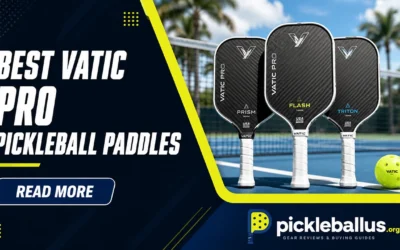
Vatic Pro redefined what a $99 paddle can do. The Prism Flash series delivers raw carbon fiber construction, a thermoformed-adjacent build process, and tournament-viable performance at a price point that other brands can’t match. In 2026, it remains the default recommendation for any intermediate player unwilling to spend above $100.

Vatic Pro’s line is focused and intentional — no filler SKUs, no budget padding. Every paddle in the lineup has a clear purpose and a verified audience of real players who chose it over more expensive alternatives. Full reviews at Vatic Pro pickleball paddle.

6. Gearbox — Best for Power Players

Gearbox builds paddles differently than everyone else on this list. Their paddles use SST (Solid Surface Technology) — a seamless, edgeless construction with no face-to-core bonding layer, which eliminates delamination risk and creates a consistent hitting surface across the entire paddle face. This construction produces an unusually large sweet spot and efficient power transfer.

Gearbox paddles are heavier than the market average, and that’s by design. Players who hit hard drives, overheads, and third-shot attacks will feel the difference. The GX5 and GX2 series are the core of their 2026 lineup, with models ranging from $130 to $200.

7. Six Zero — Best for Advanced Spin

Six Zero is an advanced-player brand that does not apologize for it. The Black Opal series targets 4.5+ players who want maximum shot-shaping potential, high spin rates, and a paddle with a ceiling high enough to grow into for years. The sweet spot is smaller than most competitors, which requires clean mechanics to extract the full performance.

The trade-off is clear: Six Zero rewards technical players with shot-making capability that broader-audience paddles don’t offer. If your mechanics are still settling, this is not the right brand yet. If they’re locked in, Six Zero is one of the most satisfying paddles in the market. Full model breakdown at Six Zero pickleball paddle.

8. Onix — Best for Recreational and Senior Players

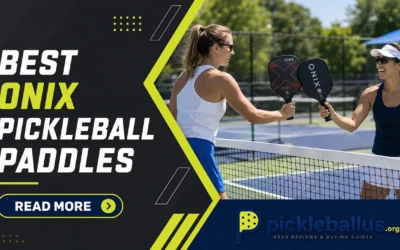
Onix has been building approved pickleball paddles since 2005 — longer than most brands on this list have existed. Their paddles prioritize comfort, accessibility, and familiarity over cutting-edge construction. The Z5 remains one of the best-selling recreational paddles ever made because it delivers consistent bounce, a forgiving wide body, and a price point that doesn’t intimidate new players.

For seniors, recreational club players, and anyone prioritizing joint comfort over performance ceiling, Onix remains a reliable choice. See current models at Onix pickleball paddle.

9. Bread & Butter — Best Brand Identity + Performance

Bread & Butter paddles are unmistakable on the court — bold graphics, distinctive shapes, and an unapologetically aggressive performance profile. The Loco and Filth models use thermoformed unibody construction with textured Toray T700 carbon fiber faces, producing some of the highest measured spin rates in the market.

These paddles reward disciplined technique and are not ideal for players whose mechanics are still inconsistent. In the $150–$200 range, Bread & Butter competes directly with CRBN and Six Zero for the attention of players who want equipment that performs as aggressively as they play.

10. Franklin — Best for Budget Beginners

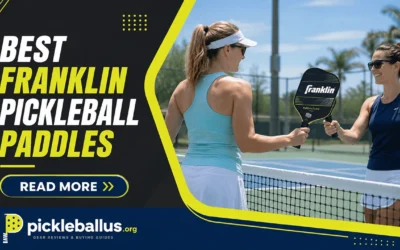
Franklin entered the pickleball paddle space from a sporting goods background spanning 75+ years. Their C45 Dynasty series delivers solid performance in the $80–$130 range and has earned a following at the recreational and beginner-intermediate level. Anna Leigh Waters, one of the top professionals in the sport, signed with Franklin in early 2026 — a credibility signal that the brand is taking performance seriously at the pro level.

For players picking up their first proper paddle and not ready to commit $150+, Franklin is a dependable entry point with growing performance credentials.

Premium vs Budget Brands — Is the Price Gap Worth It?

In 2026, the answer depends on your skill level. A beginner will not extract the performance difference between a $99 Vatic Pro and a $220 JOOLA Perseus Pro. They lack the mechanics to feel the dwell time advantage, the grit to generate consistent spin, or the touch to appreciate the contact feedback of a premium raw carbon face.

What a $250 paddle gives you that a $99 one doesn’t

At the premium tier, you get foam core construction for better power management and feel, longer-lasting surface grit for sustained spin performance, more precise weight distribution through thermoformed or unibody builds, and engineering refined through multiple product generations with pro-level playtesting feedback. Each difference matters only when your technique is developed enough to activate it.

Brands that have closed the performance gap in 2026

Vatic Pro, 11SIX24, and Selkirk’s SLK entry lines have all closed the gap significantly. The best pickleball paddles list in 2026 includes $99 paddles that would have been considered mid-tier at $150 just two years ago. If you’re at 3.0–3.5 skill level and unwilling to spend above $100, you are not sacrificing meaningful performance in 2026 by staying in this tier.

Which Pickleball Paddle Brand Should You Choose?

Brand selection should start with an honest assessment of your current skill level and intended use. Refer to how to choose a pickleball paddle for a full framework — but here’s the brand-level shortcut.

For beginners: Vatic Pro, Franklin, or 11SIX24

Beginners need forgiveness, durability, and a price they won’t regret if they quit after six months. Vatic Pro’s Prism Flash at $99, Franklin’s C45 series, and 11SIX24’s Jelly Bean series all deliver these qualities without overcharging for construction benefits you won’t feel yet. Each paddle also has a performance ceiling high enough that you won’t outgrow it until you’re solidly at the 3.5 level.

For intermediate players: Engage, Selkirk, or JOOLA

Intermediate players — roughly 3.0 to 4.0 — are where brand choice starts to matter. At this level, the differences in feel, dwell time, and spin response become perceptible, and those differences compound into actual shot-making advantages. Engage suits players building a soft game. Selkirk suits all-around players who want reliability above everything. JOOLA suits players beginning to develop offensive weapons.

For advanced players: CRBN, Gearbox, or Six Zero

Advanced players — 4.0 and above — should prioritize construction details over brand prestige. CRBN for maximum spin and feel feedback. Gearbox for power efficiency and delamination-proof construction. Six Zero for shot-shaping ceiling and the kind of touch that separates 4.5 from 5.0 play.

By this point, you know which brands lead the market, what separates them at each price tier, and which fits your current skill level. Brand reputation and product positioning are the right place to start — but the conversation doesn’t end there. How a paddle is physically constructed, whether it holds up over 200+ hours of hard play, and what patterns of failure show up across brands are details that most brand comparison articles skip entirely. The next section covers exactly that layer.

Beyond the Brand Name — What Serious Players Actually Watch

How thermoformed vs standard construction affects durability

Thermoformed paddles bond the face and core under high heat and pressure, creating a unified structure with no glue layer between face and core. This process increases stiffness, pop, and — when done well — consistency across the entire hitting surface. The trade-off is that thermoforming produces a louder, stiffer feel that some players find harsh on the arm.

Standard construction (face glued to core) is less expensive to produce and allows more control over feel characteristics. For players managing arm sensitivity or recovering from tennis elbow, a well-tuned standard-construction paddle from brands like Selkirk or Engage often performs more comfortably than a thermoformed alternative at the same price.

Delamination: which brands have the worst track record

Delamination — the separation of a paddle’s face from its core — is the most common failure mode in mid-range paddles. It creates a trampoline effect that artificially inflates power and spin beyond USAPA-legal limits, which means a delaminated paddle will get you banned from sanctioned play even if you didn’t know it was broken.

Gearbox’s SST construction eliminates this risk by design — their seamless surface has no face-to-core bond to fail. JOOLA, Selkirk, and Engage have strong delamination track records at their premium price points. The highest delamination rates appear in budget import brands without disclosed construction methods — a major reason to stay with established brands even when the specs look identical on paper.

Pro-tour sponsorship patterns and what they signal to buyers

Pro sponsorships aren’t always informative — some pros use gear they don’t choose. But unsponsored pros choosing a brand voluntarily is a credible signal. In 2026, JOOLA is seeing notable uptake from unsponsored pros, which suggests real on-court confidence in the product. Selkirk’s lifetime warranty means pros who do use their paddles aren’t burning through equipment on the brand’s dime. Engage’s stable of technically skilled players reflects genuine alignment between the brand’s tuning philosophy and advanced technique.

Watch what top recreational players at your local club use — their choices are often more relevant to your game than what a touring pro gets paid to hold.