

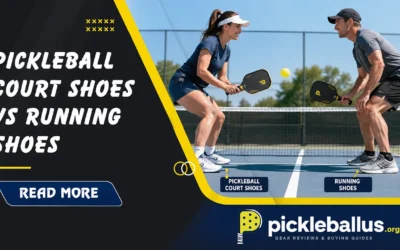
Yes, pickleball does require special court shoes — not as a marketing gimmick, but because the sport’s movement pattern makes generic footwear a mechanical mismatch and an injury risk. Running shoes, cross trainers, and regular sneakers are engineered for forward momentum on forgiving surfaces. Pickleball puts you on a hard court demanding explosive lateral cuts, abrupt stops, and rapid directional changes that those shoes were never built to handle.
The distinction matters more than most new players expect. The three features that separate court-specific shoes from everyday footwear — lateral support structure, court-grip traction patterns, and multi-directional cushioning — directly affect whether you stay upright during a scramble at the kitchen line and whether your knees and ankles hold up across a season of play.
The nuance is in how frequently you play and what surface you’re on. A casual player stepping on the court twice a month can survive in tennis shoes without immediate consequences. A player logging two or more sessions per week without proper footwear is accumulating joint stress and ankle instability risk that tends to surface as a nagging injury rather than a single dramatic event.
This guide breaks down exactly what pickleball court shoes do differently, how they compare to tennis and running shoes, and the specific point in your pickleball journey where the upgrade stops being optional.
Do You Actually Need Special Shoes for Pickleball?
Yes, you need court-specific shoes for pickleball once you play more than once a week, because the sport’s lateral demands exceed what running shoes, cross trainers, or casual sneakers are engineered to support. The short answer often gets blurred because pickleball is low-barrier — anyone can walk onto a court with whatever’s on their feet — but “can” and “should” are different questions.
What Makes Pickleball Different From Other Sports
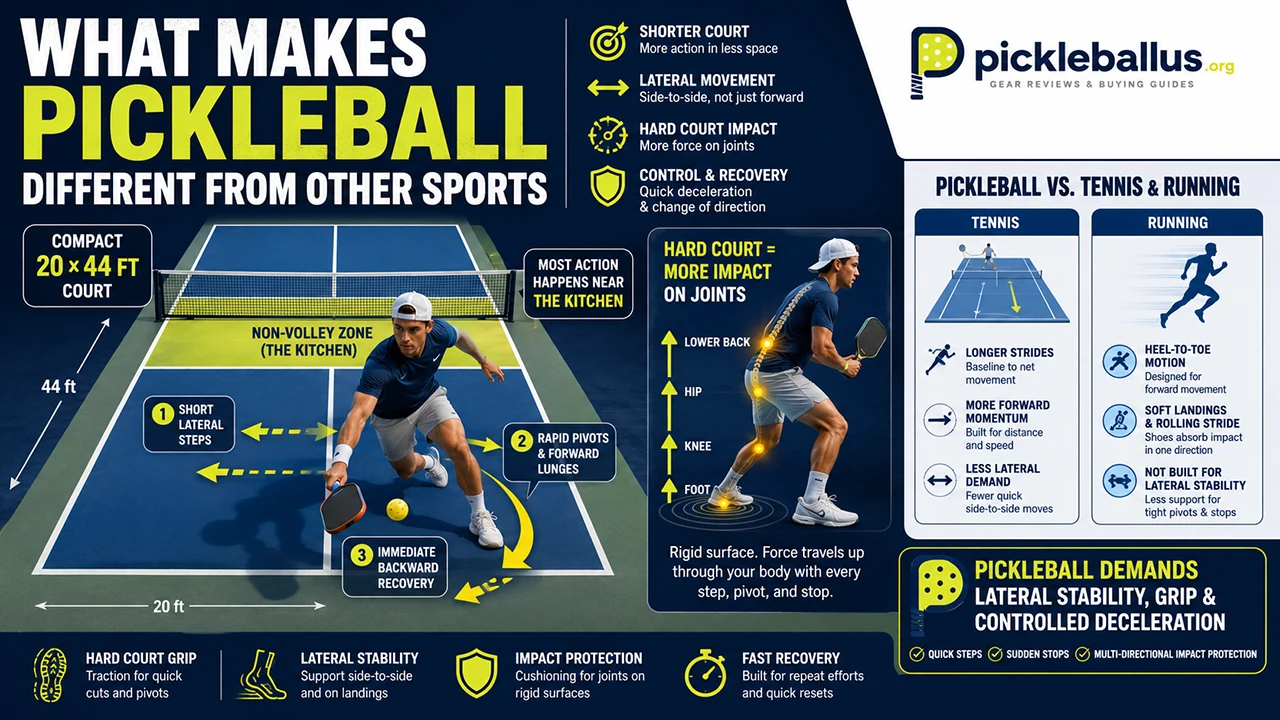
Pickleball is played on a compact 20 × 44-foot court where most of the action happens within a few feet of the non-volley zone line. That tight geometry creates a specific movement profile: short, explosive lateral steps, rapid pivots, sudden forward lunges to the kitchen, and immediate backward recovery. Unlike tennis, where baseline-to-net sequences give you longer strides and more forward-dominant movement, pickleball is almost entirely about side-to-side stability and controlled deceleration.
The court surface amplifies the demand. Both indoor gym floors and outdoor asphalt or concrete pickleball courts are unforgiving — there is no shock absorption in the ground itself. Every landing, every pivot, and every sudden stop transmits force directly through the foot and up the kinetic chain into the knee, hip, and lower back. The shoe you wear is the only buffer between that impact and your joints.
This is the mechanical reality that running shoes are not designed for. They are optimized for a heel-to-toe gait cycle moving in one direction on variable terrain. Pickleball demands the opposite: a shoe that stays planted laterally, grips a hard court surface, and absorbs multi-directional impact without the outsole rolling inward under a lateral cut.
Why Running Shoes and Sneakers Fall Short
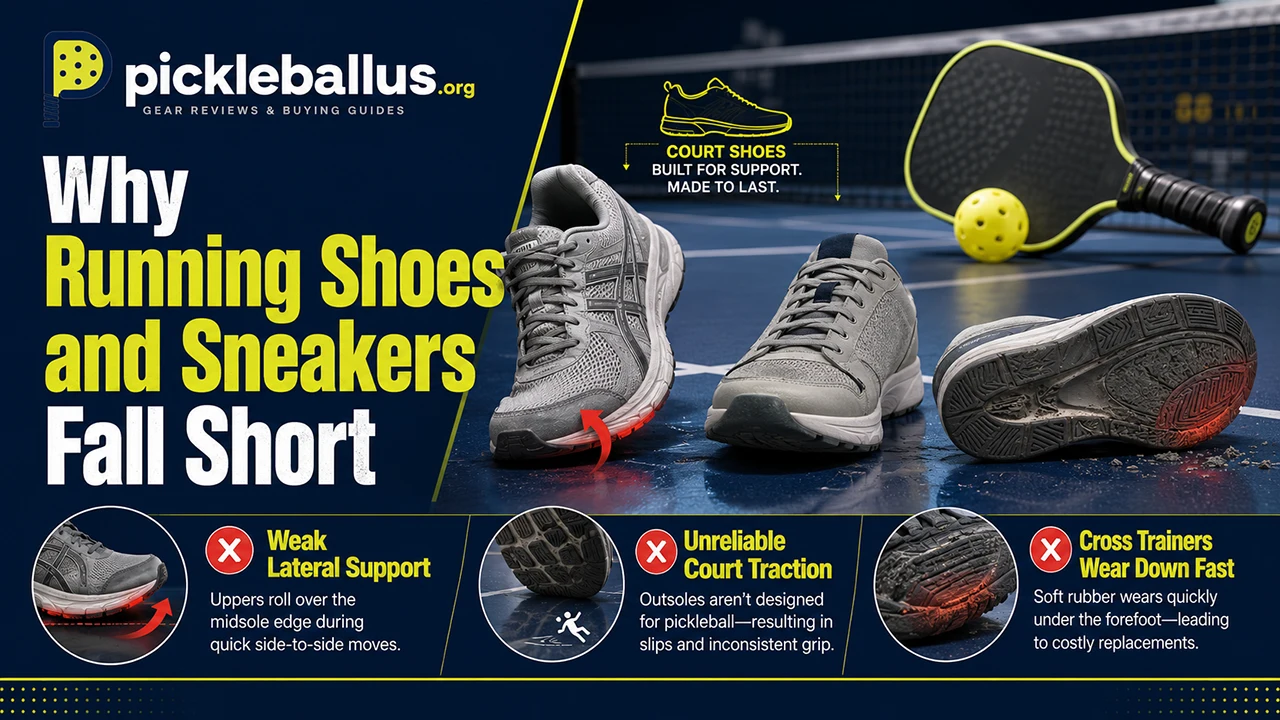
Running shoes lack two features pickleball courts demand: lateral reinforcement and court-specific traction patterns. A running shoe’s upper is intentionally flexible through the midfoot to allow natural foot flex during a forward stride. That same flexibility becomes a liability during a lateral cut in pickleball — the shoe’s upper allows the foot to roll over the midsole edge, which is the mechanical precursor to an ankle sprain.
The outsole compounds the problem. Running shoe tread is designed for traction on pavement and trail surfaces with forward-direction grip. On a smooth indoor gym floor or an outdoor hard court, that tread pattern produces inconsistent grip — sometimes too much friction creating a sudden catch, sometimes too little causing a slip. Neither outcome is safe during a fast dink exchange.
Cross trainers fall slightly closer to acceptable but still miss the mark. They are built for gym floor movement but lack the toe-drag reinforcement and court-grade outsole durability that dedicated court shoes carry. After a few months of regular pickleball on a rough outdoor surface, a cross trainer’s outsole will wear down in patterns that compromise grip precisely where you need it most — under the forefoot during lateral push-offs.
What Do Pickleball Court Shoes Actually Do Differently?
Pickleball court shoes are engineered around three mechanical priorities: lateral containment to prevent ankle roll, court-matched traction patterns for grip without marking, and multi-directional cushioning that absorbs impact from stops and pivots rather than just heel strikes. Each feature addresses a specific vulnerability that general athletic footwear leaves exposed.
Lateral Support and Stability
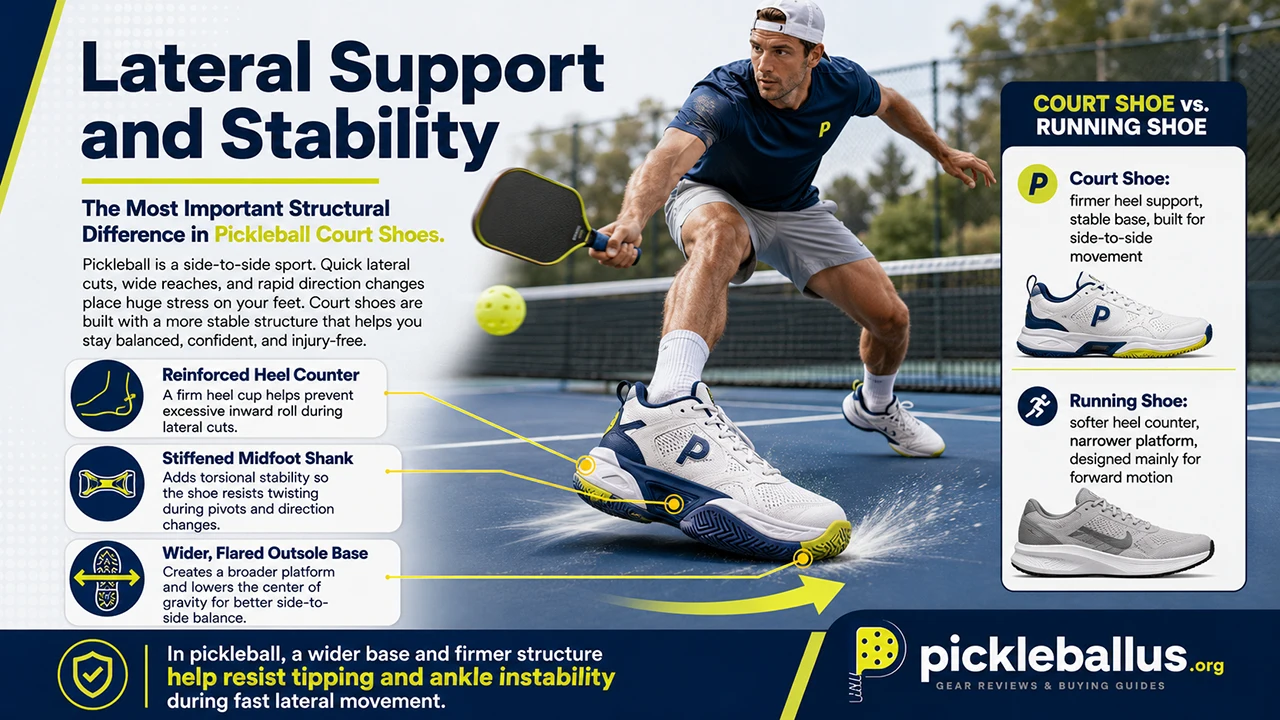
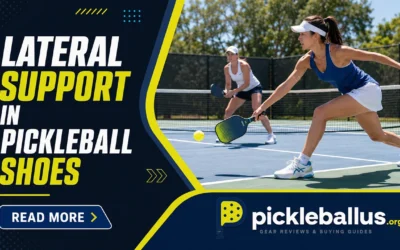
Lateral support is the most structurally significant difference between a court shoe and any other athletic shoe category. Pickleball court shoes achieve it through a combination of a reinforced heel counter, a stiffened midfoot shank, and a wider outsole base that lowers the center of gravity during side-to-side movement.
The heel counter — the rigid cup wrapping the back of the foot — in a court shoe is noticeably firmer than in a running shoe. During a lateral cut, when your foot pushes off sideways and your ankle is loaded at an angle, that heel counter acts as a physical wall preventing excessive inward roll. In a running shoe with a softer, more flexible heel counter, that same lateral load can push the foot past the midsole edge, rotating the ankle beyond its stable range.
The outsole width matters in ways that aren’t obvious from looking at the shoe. Court shoes typically have a flared outsole perimeter — the sole extends slightly wider than the upper — creating a larger stable base during lateral stance. This is the same principle behind why basketball and volleyball shoes look chunky: the wider base resists tipping under side-loaded stress. Pickleball court shoes apply the same logic at a lighter weight to match the sport’s pace.
Traction and Outsole Design
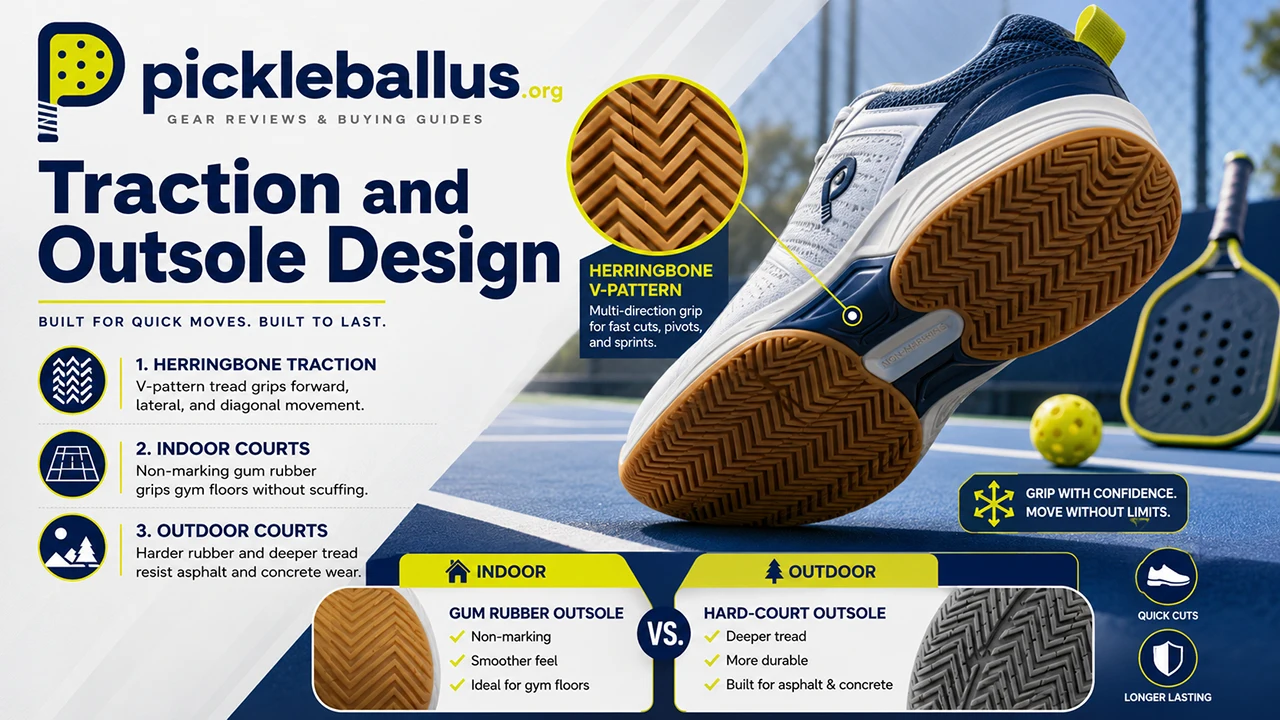
Court shoe traction is surface-matched, which means the tread pattern and rubber compound are chosen specifically for hard court performance rather than general athletic use. The dominant pattern in court shoes is the herringbone tread — angled rubber fins arranged in a V-pattern across the outsole. This pattern grips in multiple directions simultaneously, providing traction during forward sprints, lateral slides, and the diagonal cuts that happen constantly at the kitchen line.
For indoor courts, court shoes use non-marking gum rubber outsoles — a softer, lighter-colored compound that grips synthetic gym floors without leaving scuff marks. This is not aesthetic — most indoor pickleball facilities and gyms have a no-marking-sole policy to protect floor surfaces, and standard black rubber running shoe soles will mark. An indoor player in the wrong outsole compound will be asked to leave or will damage a polished court surface.
Outdoor court shoes use a harder, more aggressive rubber compound that resists the abrasive wear of asphalt and concrete surfaces. The tread is slightly deeper to handle light moisture and surface debris without losing grip. Outdoor outsoles sacrifice some of the feather-light responsiveness of indoor gum rubber in exchange for a lifespan measured in months of hard use rather than weeks.
Cushioning and Shock Absorption
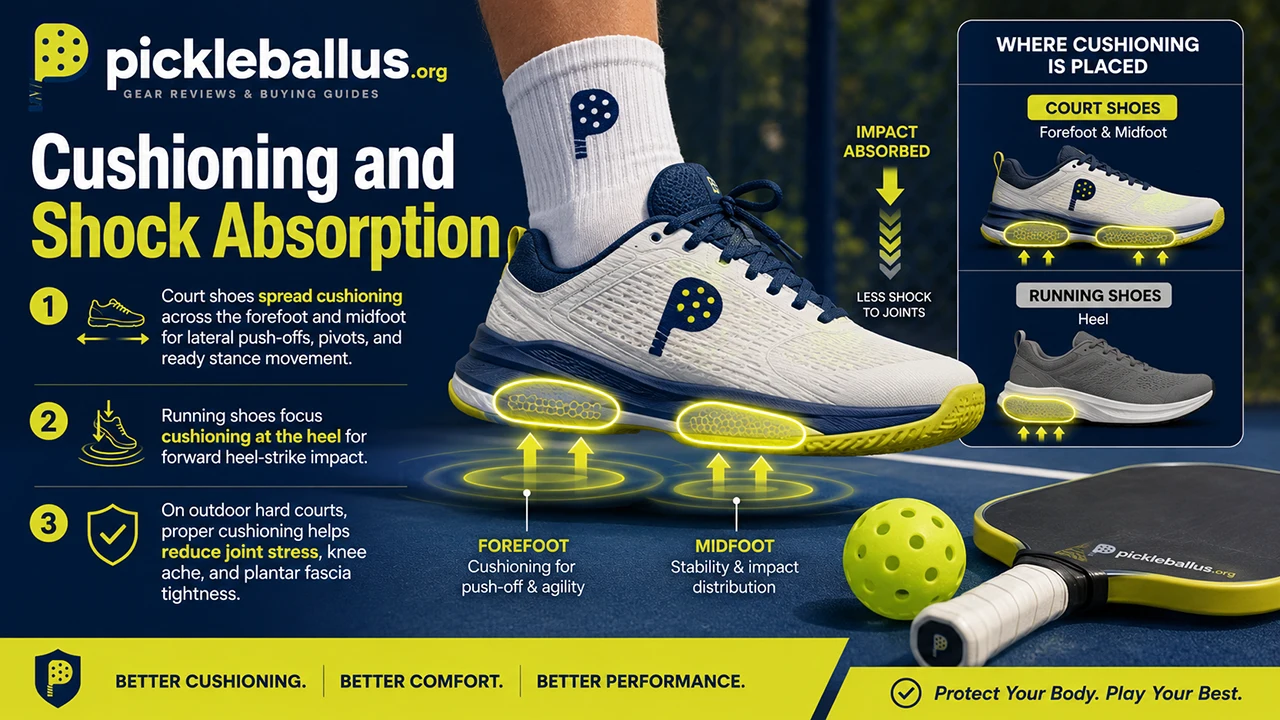
Court shoe cushioning is distributed differently than running shoe cushioning. Running shoes concentrate cushioning at the heel to absorb the impact of a heel strike during a forward stride. Court shoes distribute cushioning more evenly across the forefoot and midfoot — the zones that bear load during lateral pushoffs, pivots, and the flat-footed stance most players adopt at the non-volley zone.
This matters particularly on outdoor hard courts, where surface hardness magnifies every impact. Playing several hours per week on concrete without multi-directional cushioning creates cumulative joint stress — the kind that shows up as knee ache after sessions or plantar fascia tightness in the morning. The cushioning system in a court shoe is designed to interrupt that force transmission at the foot level before it travels up the chain.
Pickleball Shoes vs. Tennis Shoes — Are They the Same?
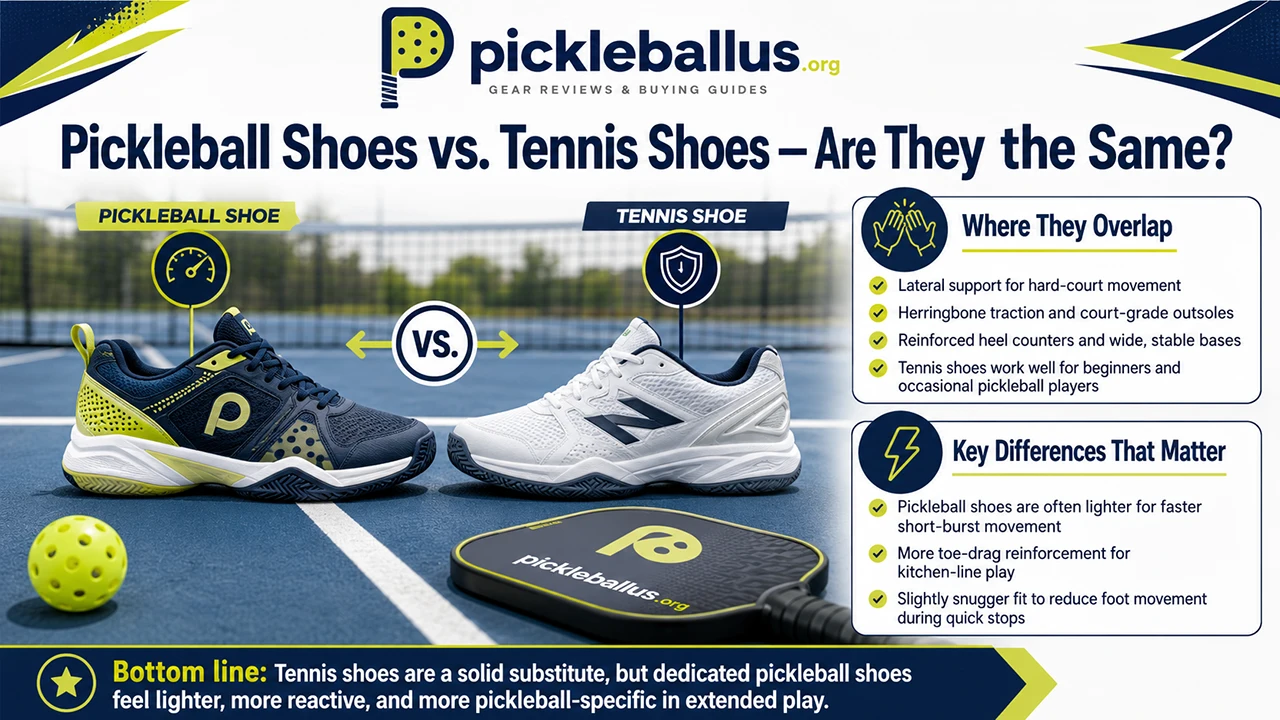
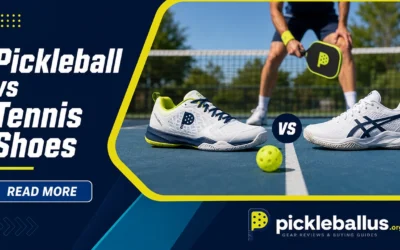
Tennis shoes and pickleball shoes are the closest alternatives to one another, sharing lateral support construction, herringbone tread patterns, and court-grade outsole compounds. For players who already own a quality pair of tennis shoes, those will perform better on a pickleball court than any running shoe or cross trainer. However, several meaningful differences emerge in extended play.
Where They Overlap
Both tennis and pickleball shoes are built around lateral movement on hard court surfaces. They share reinforced heel counters, wide-base outsoles for stability, and non-marking or hard-compound rubber outsoles depending on surface type. Best pickleball shoes in the dedicated category borrow heavily from tennis shoe construction — many are made by the same brands (ASICS, K-Swiss, New Balance, HEAD) using similar platform architectures.
For a beginner or occasional player, a quality tennis shoe is a functionally appropriate substitute. The support structure translates directly, the traction pattern handles both surfaces, and the cushioning system handles court impacts. If you own tennis shoes and are picking up pickleball, you do not need to buy immediately — your tennis shoes will serve you well through the early learning phase.
Key Differences That Matter on the Pickleball Court
The differences emerge in three areas: weight, toe reinforcement, and court-specific fit. Pickleball involves more frequent, shorter bursts of movement than tennis baseline play, so the game rewards lighter shoes that allow faster reaction time. Many dedicated pickleball shoes are designed to a lighter weight without sacrificing the lateral structure, because the shorter court distances make heavy-duty durability less critical.
Toe drag reinforcement is more prominent in pickleball vs tennis shoes — the areas where pickleball-specific footwear reinforces the toe box for the dragging motion that happens during kitchen-line volleys differs from how tennis shoes handle it. Fit tends to be slightly snugger in pickleball shoes to prevent internal foot movement during quick stops — a feature more players notice after their first extended session in properly fitted court shoes.
When Should You Upgrade to Dedicated Pickleball Shoes?
The upgrade from casual footwear to dedicated court shoes becomes necessary at two thresholds: when you play twice or more per week consistently, and when you start experiencing foot fatigue, ankle discomfort, or traction issues during play. Before those thresholds, the urgency is lower. Past them, continuing without proper footwear is compounding avoidable physical stress with every session.
Beginners: Can You Start Without Them?
Beginners can start pickleball in tennis shoes or quality cross trainers without immediate risk, as long as the footwear provides basic lateral support and is not a pure running shoe or fashion sneaker. The first few weeks on court involve lower intensity movement, shorter sessions, and the learning curve naturally limits the explosive lateral cuts that demand the most from footwear.
The caution for beginners is that pickleball is addictive — most players go from once-a-week curiosity to multiple sessions quickly. The footwear upgrade timeline should track that progression. If you find yourself booking court time three times a week within your first month, that’s the moment to prioritize proper shoes rather than waiting for an ankle to tell you.
Regular Players (2x+/Week): The Point Where It Matters
Players logging two or more sessions per week are at the threshold where footwear directly affects injury risk and performance. At this frequency, the cumulative impact on knees, ankles, and the plantar fascia from court surfaces in sub-optimal shoes becomes measurable. Research and clinical observation consistently link court sport injuries — particularly ankle sprains, plantar fasciitis, and patellar tendon stress — to inadequate lateral support in footwear.
Performance is also affected. A player in running shoes on a gym floor is managing traction uncertainty alongside every shot decision — unconsciously adjusting footing rather than committing fully to movement. Proper lateral support features in pickleball shoes remove that background cognitive load, allowing full attention to the game rather than to staying upright.
Players With Foot Conditions or Joint Issues
Players with pre-existing foot conditions should prioritize proper court shoes immediately, regardless of play frequency. Plantar fasciitis, Achilles tendonitis, high arches, flat feet, and chronic ankle instability are all conditions that pickleball’s movement pattern will aggravate in footwear without the appropriate support structures.
For these players, the question is not just “pickleball shoe vs. running shoe” — it’s which pickleball shoes for foot conditions provide the specific support their anatomy requires. Arch support height, heel cup depth, toe box width, and ankle collar stiffness all vary across court shoe models. Players with plantar fasciitis need deep heel cushioning and arch support that neutralizes fascia tension. Players with ankle instability benefit from higher collars and stiffer heel counters. These are not features you find by accident in a general athletic shoe.
By now you have a clear answer to whether special pickleball shoes matter — and why the physics of lateral court movement make generic footwear a liability past a certain play frequency. Choosing the right category of shoe is only the first layer of the decision, however; the finer details of indoor versus outdoor outsoles, foot-condition-specific features, and what to look for when actually shopping separate a good purchase from a frustrating one. The sections below go deeper into those specifics, covering the nuances that experienced players use to match footwear to their exact playing conditions.
What Else Should You Know Before Buying Pickleball Shoes?
Indoor vs. Outdoor Pickleball Shoes — Which Do You Need?
The split between indoor and outdoor pickleball shoes comes down to outsole compound and tread depth. Players who primarily play on indoor gym or sport court surfaces need non-marking gum rubber outsoles — soft, light-colored rubber that grips polished or synthetic floors without leaving marks. Players on outdoor asphalt or concrete need harder rubber with deeper tread to handle abrasion and light moisture. If you split time between both, a dedicated indoor vs. outdoor pickleball shoe guide is worth consulting before purchase — using an indoor shoe on rough outdoor concrete will shred the soft gum rubber outsole within weeks, and the mismatch in traction performance is noticeable immediately.
Foot Conditions That Change Everything
For players with plantar fasciitis, wide feet, or ankle instability, the standard court shoe selection process needs an additional filter. Plantar fasciitis demands deeper arch support and heel cushioning that keeps the fascia from being stretched under load during lateral pushoffs. Wide feet require a wider toe box to prevent metatarsal compression during fast footwork — a constraint that narrows the field of compatible models significantly. Chronic ankle instability benefits from a higher ankle collar and a stiffer heel counter that physically limits excessive inversion. Buying a court shoe without accounting for these needs risks trading one pain source for another.
Do Court Shoes for Pickleball Replace Tennis Shoes or Running Shoes?
Dedicated pickleball court shoes are specialized tools, not replacements for your entire shoe wardrobe — but they should not be treated as interchangeable with running shoes on the court. The mistake many players make is trying to get one shoe to handle everything: road runs in the morning, pickleball in the afternoon, errands in between. A running shoe used for pickleball degrades its lateral support with every court session; a court shoe used for road running lacks the heel cushioning and flex needed for forward-gait biomechanics. Keeping court shoes for pickleball court use only also extends their lifespan — the outsole and midsole last far longer when not subjected to the abrasion of sidewalk and pavement use.
Write Your Review
No reviews yet. Be the first to share your experience!