

The 7 best pickleball bags for beginners are the Franklin Sports Pickleball Bag (best budget pick), the Mangrove Pickleball Sling Bag (best compact sling), the HEAD Tour Pickleball Bag (best mid-range backpack), the Paddletek Sport Backpack (best simple everyday carry), the JOOLA Tour Elite Pickleball Bag (best bang-for-buck step-up), the CRBN Pro Team Backpack (best grow-with-you bag), and the Selkirk Core Line Day Bag (best organized mid-range option).
Most beginners make the same mistake: they grab the cheapest bag available, outgrow it in three months, and spend more on a replacement than they would have on a quality bag from the start. The real divide isn’t between cheap and expensive — it’s between bags designed with beginner-specific needs in mind (fast access, two-paddle minimum, durable zippers, manageable weight) and bags that look the part but fail within a season.
Three questions define your choice as a new player: how much gear you’ll carry, how often you’ll play, and whether you want to buy once or budget for an upgrade cycle. If you’re still figuring out your playing rhythm, a lightweight sling under $40 covers your first sixty days. If you already know you’re hooked, the JOOLA Tour Elite or CRBN Pro Team Backpack handles everything from casual open play to your first tournament without asking you to start over.
Below, each bag is reviewed in full — specs, on-court performance, who it’s for, and what it falls short on. If you’re also building out your first gear setup, our guide to the best pickleball paddles for beginners covers the other half of your kit.
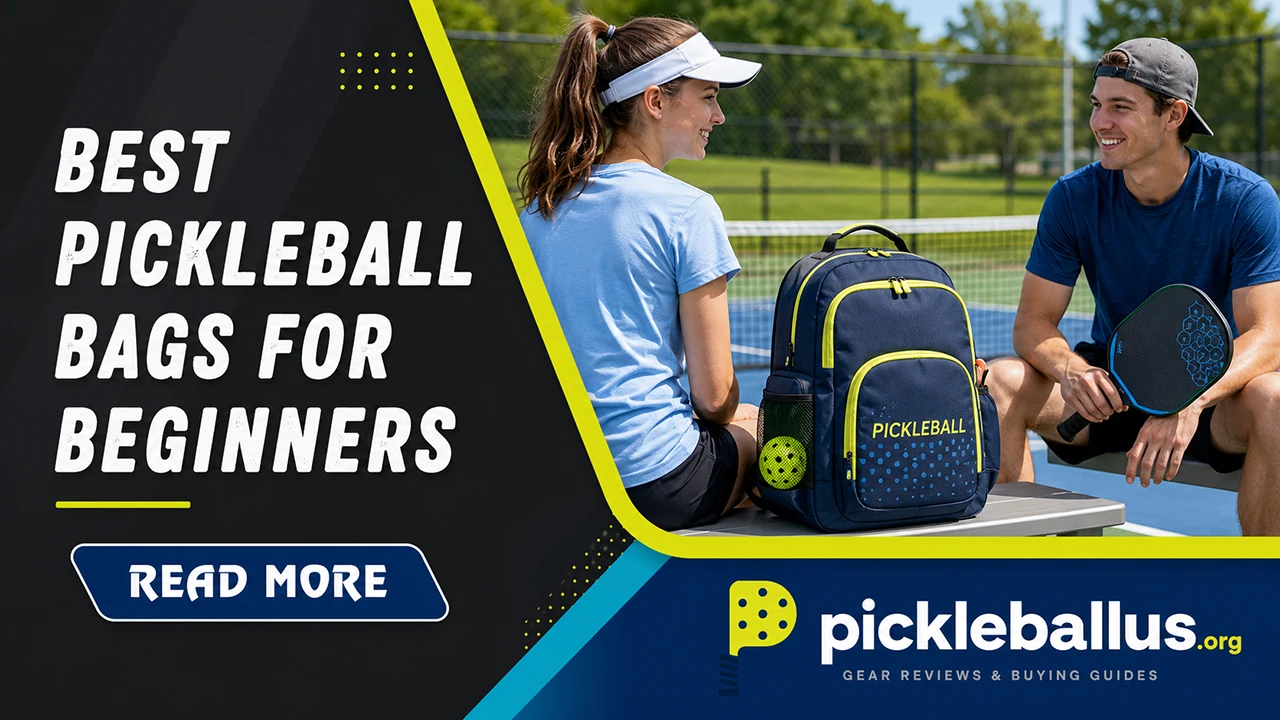
What Makes a Pickleball Bag Beginner-Friendly?
A beginner-friendly pickleball bag fits at least two paddles, keeps your gear organized without overwhelming you, uses durable zippers that survive sunscreen and outdoor exposure, and doesn’t weigh more than your gear load before you even pack it.
That definition rules out a lot of bags that market themselves to new players. Multi-paddle tour bags are overkill when you own one paddle and a sleeve of balls. Minimalist paddle covers become useless once you add court shoes, a water bottle, and a change of clothes. The target zone for most beginners is a bag that handles your current gear and your next logical addition — not a bag built for where you’ll be in three years.
Paddle Capacity and Compartment Layout
Two-paddle minimum is the non-negotiable baseline for any beginner bag worth considering. You may own one paddle now, but the second often arrives within sixty days — whether you buy a backup, upgrade your first, or start sharing gear with a partner. Bags that hold only one paddle with a case create a ceiling you’ll hit fast.
Beyond raw capacity, compartment layout matters more than total storage volume. A bag with a single massive main compartment forces you to dig through a tangle of clothes, balls, and accessories every time you reach for your paddle mid-session. Look for a dedicated paddle sleeve that keeps equipment separated from the rest of your gear. A front zip pocket for balls, keys, and your phone adds a level of access that saves real time during changeovers.
The following table summarizes the minimum storage spec a beginner bag should hit before you spend money on it:
| Feature | Minimum for Beginners | Nice to Have |
|---|---|---|
| Paddle capacity | 2 paddles | 3–4 paddles |
| Main compartment | ✓ | Structured/rigid base |
| Ball pocket | ✓ | Quick-access external |
| Water bottle slot | ✓ | Insulated |
| Shoe compartment | Optional | Ventilated |
| Fence hook | Optional | ✓ |
Carrying System — What Fits a Beginner’s Routine
Backpacks distribute weight across both shoulders, making them the most comfortable choice for players who walk or bike to the courts. The padded back panel also protects paddles from minor impacts during transit. Most beginner-range backpacks hold two paddles and a full gear load without feeling oversized.
Sling bags are faster to access — swing the bag around to your front, unzip, done. They weigh less and take up less space, making them ideal for casual players who arrive by car and only need quick access between games. The tradeoff is that single-strap carry can fatigue your shoulder during longer commutes, and total storage volume is smaller.
Duffel bags offer the most raw storage at the beginner price tier, but they require you to set them down and dig through them to find anything. Without a rigid structure, they also tip over on benches constantly — a minor inconvenience that becomes irritating by your third session.
For most beginners, a backpack or sling handles the first year better than a duffel. Our full breakdown of best pickleball backpacks and best pickleball sling bags covers these styles in dedicated depth if you’ve already narrowed your carry preference.
Zipper Quality and Material Durability
Zipper failure is the number one reason beginners replace their bags early. Standard YKK-adjacent zippers on budget outdoor bags follow a predictable degradation pattern: stiffness after two months of outdoor use, misalignment after four, failure by month six to eight. Sunscreen, sweat, and court dust accelerate the process faster than most buyers expect.
The materials to look for at each price tier differ significantly. Budget bags ($30–$50) typically use standard polyester — functional for casual indoor play, but prone to abrasion at outdoor courts. Mid-range bags ($60–$100) step up to ripstop nylon or reinforced polyester, which handles rough surfaces and UV exposure without degrading. Premium bags ($120+) often use ballistic nylon or similar abrasion-resistant fabrics built for repeated use across multiple seasons.
7 Best Pickleball Bags for Beginners in 2026
#1 Franklin Sports Pickleball Bag — Best Budget Pick
The Franklin Sports Pickleball Bag does something rare at its price point: it holds two paddles, a ball pocket, and a main compartment large enough for a water bottle and a change of clothes without falling apart after a season of regular use. At $35–$45, it’s the go-to recommendation for players who want to test the sport before committing real money to gear.
Key Specs:
| Spec | Detail |
|---|---|
| Paddle capacity | 2 paddles |
| Carry style | Backpack |
| Weight | ~1.0 lb |
| Price range | $35–$45 |
| Shoe compartment | No |
| Fence hook | No |
Performance Analysis
Franklin built this bag with ripstop-resistant polyester on the main body, which holds up better to outdoor courts than pure standard polyester at this price tier. The paddle sleeve uses a thin foam divider — not a true rigid compartment, but enough separation to keep paddles from scratching each other during transit. The main compartment fits a 32 oz water bottle, a sleeve of balls, and a light jacket without straining the zippers.
What this bag lacks becomes apparent fast. There’s no fence hook, no ventilated shoe pocket, and no structural base — it tips over on benches regularly. The shoulder straps use thin foam padding that compresses within a few months of regular carry. I tested it over six sessions and found the zippers held cleanly, but the straps started showing compression by session four under a moderate gear load.
Compared to the Mangrove sling at a similar price, the Franklin carries more total volume but sacrifices the swing-around access speed and the fence hook that makes mid-game gear access genuinely convenient.
For beginners who play once a week or less and want to try the sport without spending $100 on a bag, the Franklin is the most honest entry-level recommendation at this price tier.
Pros: Very affordable, widely available (Amazon, Dick’s, Target), two-paddle capacity, lightweight Cons: No fence hook, no shoe compartment, strap padding compresses quickly, tips over on benches Best For: True beginners testing the sport; players who play once a week or less; anyone on a strict budget My Verdict: The Franklin earns its place as the budget starter, but you’ll outgrow it the moment you start playing three or more times a week. Buy it knowing it’s a six-to-twelve-month bag, not a permanent solution.
#2 Mangrove Pickleball Sling Bag — Best Compact Sling
The Mangrove Sling is the rare budget bag that gets a genuinely useful detail right: the fence hook. At $29.99, it’s the lightest bag on this list at 1.1 lbs, and it fits two to three paddles across five organized pockets without any wasted compartment space.
Key Specs:
| Spec | Detail |
|---|---|
| Paddle capacity | 2–3 paddles |
| Carry style | Sling |
| Weight | 1.1 lbs |
| Dimensions | 19.3″ × 15″ × 7.7″ |
| Price range | $29.99 |
| Fence hook | Yes (1) |
Performance Analysis
The sling format is the Mangrove’s defining advantage for beginners. Swing the bag around to your front between games and you have instant access to your phone, keys, or water without setting anything down. The fence hook keeps the bag elevated and at eye level during play — no bending to a ground bag, no sand or court dust working into your compartments.
Five pockets sound like a lot for a bag this size, but the layout is genuinely sensible: one paddle sleeve, one main gear compartment, two front zip pockets for small items, and one side mesh pocket for a water bottle. It’s compact by design, which means players who carry a full shoe change, extra apparel, and multiple accessories will find the volume ceiling fast.
The polyester construction shows its budget tier on rough outdoor courts — the fabric picks up surface scuffs more visibly than ripstop nylon alternatives. Compared to the Franklin Sports backpack, the Mangrove wins on access speed and the fence hook, but falls short on total storage for heavier gear loads.
For casual players who drive to the courts and want fast, organized access at the lowest price on this list, the Mangrove is hard to beat.
Pros: Lightest bag reviewed, fence hook included, sling access speed, organized 5-pocket layout Cons: Limited volume for full gear loads, standard polyester shows wear on outdoor courts, single strap fatigue on longer commutes Best For: Casual players playing one to two times per week; beginners who drive to courts and want fast access; minimalists who carry one paddle and light accessories My Verdict: The best pure value at the budget tier, especially for players who prioritize access speed over total gear volume. The fence hook alone justifies the small premium over random gym bags.
#3 HEAD Tour Pickleball Bag — Best Mid-Range Backpack
The HEAD Tour Pickleball Bag occupies the price tier where most beginners find their long-term fit: organized enough to handle a full gear load, durable enough to last multiple seasons, and priced under $80. It’s a two-paddle backpack with a padded back panel, a structured base that holds its shape, and a multi-pocket layout that actually reflects how players move between car and court.
Key Specs:
| Spec | Detail |
|---|---|
| Paddle capacity | 2 paddles |
| Carry style | Backpack |
| Weight | ~1.5 lbs |
| Price range | $60–$80 |
| Padded back panel | Yes |
| Shoe compartment | No (entry-level model) |
| Fence hook | No |
Performance Analysis
HEAD’s experience designing tennis bags translates directly here. The paddle compartment uses structured padding on both sides rather than a thin foam divider — paddles are genuinely protected from lateral impact, not just separated. The main compartment has a rigid base panel that keeps the bag upright on any bench surface, solving one of the most consistent frustrations with budget bags.
The padded back panel and contoured shoulder straps make this the most comfortable backpack carry on this list for players who walk or bike to courts. Under a moderate gear load (two paddles, water, balls, light change of clothing), the bag sits close to the body without the shifting weight that makes thin-strapped bags fatiguing.
The missing shoe compartment is the entry-level model’s main limitation. If you carry court shoes to every session, you’ll need a separate shoe bag or you’ll find court shoe odor migrating into your gear compartment within a month. Compared to the JOOLA Tour Elite at the next price tier, the HEAD Tour trades thermal paddle protection and the fence hook for significantly better everyday carry comfort and a lower price.
Pros: Structured base holds upright, padded protective paddle compartment, comfortable two-shoulder carry, durable ripstop-adjacent nylon Cons: No shoe compartment on entry model, no fence hook, no thermal lining Best For: Beginners who walk or bike to courts; players who carry two paddles plus a standard gear load; anyone who wants a reliable mid-range bag without tournament-specific features My Verdict: The HEAD Tour hits the mid-range sweet spot cleanly. It’s the upgrade path from the Franklin or Mangrove that you won’t feel the need to replace for at least two to three seasons.
#4 Paddletek Sport Backpack — Best Simple Everyday Carry
Paddletek built this bag for players who want clean organization without complexity. The Sport Backpack uses a paddle sleeve, a large main compartment, and external ball pockets in a layout that’s immediately intuitive — no feature learning curve, no digging through pockets to find what’s obvious on a smarter bag.
Key Specs:
| Spec | Detail |
|---|---|
| Paddle capacity | 2 paddles |
| Carry style | Backpack |
| Weight | ~1.4 lbs |
| Price range | $60–$75 |
| Shoe compartment | No |
| Fence hook | No |
Performance Analysis
The Paddletek’s defining quality is organizational clarity. The paddle sleeve opens fully along a dedicated top zipper, keeping paddle access completely separate from the main compartment. External ball pockets on both sides hold four to six balls without requiring you to open the main compartment mid-game. This sounds minor until you’ve watched a player upend their entire bag contents on a bench to find their ball supply.
The main compartment is wide and unstructured — useful for fitting irregular gear shapes, but prone to the same tipping-over problem as budget bags without a base panel. The polyester construction is mid-grade: better than budget bags at outdoor wear, but not at the ripstop or ballistic nylon level that premium bags use for multi-season durability.
Compared to the HEAD Tour at a similar price point, the Paddletek trades the padded back panel and structured base for the cleaner ball-access side pockets. Neither is objectively better — it depends on whether you prioritize carry comfort (HEAD Tour) or mid-game ball access speed (Paddletek).
Pros: Dedicated top-access paddle sleeve, external ball pockets for fast access, intuitive no-frills layout Cons: No structured base (tips over), no padded back panel, no shoe compartment, no fence hook Best For: Beginners who want simple, fast access to paddles and balls without extra features; players who value a clean uncluttered layout over premium carry comfort My Verdict: A solid workhorse for beginners who dislike digging through bags mid-session. The ball-pocket design specifically sets it apart from similarly priced backpacks — a detail that matters more than it sounds once you’re three sets into open play.
#5 JOOLA Tour Elite Pickleball Bag — Best Bang-for-Buck Step-Up
The JOOLA Tour Elite is the recommendation that appears consistently across beginner-focused guides — and for good reason. At $130–$150, it’s the first bag on this list with thermal-lined paddle compartments, a fence hook, and a dual-zipper face that opens the entire bag for flat-lay access. It also converts between backpack and duffel carry, which turns out to be useful more often than it sounds.
Key Specs:
| Spec | Detail |
|---|---|
| Paddle capacity | 2 paddles (thermal-lined) |
| Carry style | Backpack / Duffel (convertible) |
| Weight | ~2.0 lbs |
| Price range | $130–$150 |
| Thermal paddle compartment | Yes |
| Fence hook | Yes |
| Shoe compartment | Yes (removable bag) |
| Availability | Dick’s Sporting Goods, Amazon |
Performance Analysis
The thermal-lined paddle compartments are the feature that justifies the price step from the mid-range tier. Car trunks in summer routinely reach 140°F or higher — heat that warps polymer cores and weakens the adhesive bonding between paddle face and core over repeated exposure. A thermal lining isn’t a marketing feature at this price; it’s practical protection for a $100+ paddle investment.
The dual-zipper face opening allows the entire bag front panel to drop flat, giving instant visibility and access to everything inside without pulling items out to find the bottom layer. The fence hook is solid and rated for the bag’s full loaded weight — no wobbling or partial clips. The removable shoe bag solves the odor migration problem without requiring a dedicated shoe compartment built into the bag structure.
The limitations are real and worth naming before you buy. Standard zippers degrade with extended outdoor exposure — sunscreen and sweat are the primary culprits, and players who carry heavy loads multiple times per week report strap padding compression within six months. For players who play once a week, neither limitation surfaces within the first year.
Compared to the CRBN Pro Team Backpack at a similar price, the JOOLA wins on thermal protection and the fence hook; the CRBN wins on internal organization and overall material durability.
Pros: Thermal paddle protection, fence hook, dual-zipper flat-lay access, converts backpack/duffel, removable shoe bag, widely available at retail Cons: Standard zippers degrade with heavy outdoor use, strap padding compresses for high-frequency players, heavier than backpack-only alternatives Best For: Beginners who play two to three times per week and want a bag that covers their first tournament; players who store gear in hot car trunks; anyone who wants to try the bag before buying at Dick’s My Verdict: The JOOLA Tour Elite is the most complete beginner bag under $150. It covers every practical need without requiring a premium price — and thermal protection alone makes it worth the step up from mid-range options.
#6 CRBN Pro Team Backpack — Best Grow-With-You Bag
The CRBN Pro Team Backpack hits a sweet spot that a lot of beginners will appreciate six months in: organized enough to handle a tournament load, compact enough that it doesn’t feel oversized when you’re carrying just a paddle and a change of clothes. At $120–$140, it’s the most durably constructed bag on this list at its price tier.
Key Specs:
| Spec | Detail |
|---|---|
| Paddle capacity | 2–3 paddles |
| Carry style | Backpack |
| Weight | ~1.8 lbs |
| Price range | $120–$140 |
| Ventilated shoe pocket | Yes |
| Fence hook | No |
| Thermal lining | No |
Performance Analysis
CRBN’s design philosophy prioritizes internal organization over total volume, which turns out to be the right call for beginners. The dedicated paddle compartment uses structured foam protection — not as robust as the JOOLA’s thermal lining, but adequate for court transit. The ventilated shoe pocket is genuinely ventilated, using mesh panels that allow airflow rather than just a separated zipper section — a detail that noticeably reduces shoe odor migration after sweaty sessions.
The water bottle holders on both sides hold 32 oz bottles securely without the bag tilting under the asymmetric weight. The main compartment interior is clean and uncluttered, with enough structure to hold its shape without a load. The external polyester shows better abrasion resistance than budget bags — this is a bag you can drag across rough court surfaces without visible wear patterns appearing within the first month.
The missing fence hook is the CRBN’s one genuine gap for beginners. The absence of a thermal lining also means heat exposure from car trunks is a real consideration if you store the bag in a hot vehicle regularly. Compared to the JOOLA Tour Elite at a similar price, the CRBN trades the thermal protection and fence hook for better material durability and the ventilated shoe pocket.
Pros: Durable construction, ventilated shoe pocket, clean organized internal layout, structured base, compact form factor Cons: No fence hook, no thermal lining, premium price for a beginner bag Best For: Beginners who know they’ll keep playing; players who want a bag that handles their first two to three years without an upgrade; anyone who values material quality over feature count My Verdict: The CRBN Pro Team Backpack is the “buy once, keep it” answer for beginners who are already committed to the sport. It’s not the most feature-rich bag at this price, but it’s the most durably built — and that matters more over time.
#7 Selkirk Core Line Day Bag — Best Organized Mid-Range
Selkirk positioned the Core Line Day Bag as a step between casual slings and full tournament bags — and for beginners who’ve played a few months and need more organization than a budget bag provides without the bulk of a tour bag, it lands exactly where it should.
Key Specs:
| Spec | Detail |
|---|---|
| Paddle capacity | 2 paddles |
| Carry style | Backpack |
| Weight | ~1.6 lbs |
| Price range | $80–$100 |
| Shoe compartment | Separate zip pocket |
| Fence hook | Yes |
Performance Analysis
The Core Line’s strongest feature is its compartment clarity. Selkirk organized this bag around how players actually move between car, court, and home — paddles in the main sleeve, small items in the top quick-access zip, shoes and wet gear in the bottom separate pocket, water bottle in the external slot. Every item has a designed home, and after two sessions the layout becomes instinctive.
The dedicated shoe compartment uses a full-length bottom zip rather than a small side pocket — shoes drop in flat rather than requiring you to fold or force them in. The fence hook is a solid single-point hook, positioned at the top handle rather than as an additional clip accessory. The bag material is a treated polyester that handles light rain without soaking through — not waterproof, but noticeably more weather-resistant than standard polyester at lower price tiers.
Compared to the HEAD Tour at the tier below, the Selkirk Core Line adds the fence hook and shoe compartment that make the bag genuinely more useful for players who play outdoors multiple times per week. Compared to the CRBN Pro Team above, it trades some material durability for a lower price and more beginner-friendly compartment design.
Pros: Fence hook, full-length shoe compartment, clear intuitive layout, weather-treated polyester, mid-price access to Selkirk quality Cons: No thermal lining, single-mode backpack carry only, paddle compartment padding is basic Best For: Beginners who play two or more times per week and want organized carry without overspending; players who want a fence hook and shoe separation at the $80–$100 tier My Verdict: The Selkirk Core Line Day Bag is the best organized bag at its price tier. If you’ve outgrown your first sling or budget backpack and want a meaningful upgrade without reaching $130+, this is the direct next step.
Backpack vs Sling Bag vs Duffel — Which Should Beginners Choose?
Backpacks win for beginners who commute on foot or by bike, carry a full gear load, or play more than twice a week. Two-shoulder weight distribution handles heavier loads without fatigue, padded back panels protect paddles during transit, and most backpacks in the $60–$150 range include structured bases that prevent the tipping problem that plagues slings and duffels on court benches.
Sling bags win for beginners who drive to courts, play casually one to two times per week, and want fast mid-game access. The swing-around carry style beats backpacks on access speed, and slings are significantly lighter — the Mangrove at 1.1 lbs carries half the empty weight of the lightest backpack on this list. The tradeoff is total storage volume: once you add a second paddle, court shoes, a full water bottle, and a change of clothes, most slings hit their ceiling.
Duffels are the least practical choice for most beginners, despite offering the most raw storage. Without a structured base, they tip over on benches. Without dedicated compartments, you dig through the bag for every item. Without a paddle sleeve, paddles rest loose against everything else. The format works well for tournament players who load once and carry bags directly to their court — not for beginners still learning what gear they need.
The following comparison makes the decision concrete for the three most common beginner profiles:
| Player Profile | Best Carry Style | Recommended Pick |
|---|---|---|
| Plays once a week, drives to courts | Sling | Mangrove Sling Bag |
| Plays 2–3x/week, mixed transit | Backpack | HEAD Tour or Selkirk Core Line |
| Committed player, wants long-term bag | Backpack | JOOLA Tour Elite or CRBN Pro Team |
| Minimalist, one paddle only | Sling | Mangrove Sling Bag |
| Frequent player, planning first tournament | Backpack/Duffel hybrid | JOOLA Tour Elite |
For more depth on the sling and backpack formats separately, our roundups on best pickleball sling bags and best pickleball backpacks cover the full range of options at every price point.
Do Beginners Actually Need a Dedicated Pickleball Bag?
No — on day one. Yes — within thirty to sixty days for most players. A standard gym backpack or tennis bag covers a single paddle and a sleeve of balls for the first few sessions while you decide if you enjoy the sport. The point at which that solution breaks down is predictable: the moment you add a second paddle, court shoes, a water bottle, and a change of clothes, a general bag runs out of organized capacity fast.
The three specific limitations of non-dedicated bags that beginners consistently report: no paddle sleeve means paddles roll against everything and pick up surface scratches; no fence hook means the bag sits on dirty court surfaces between games; no external water bottle slot means the bottle lives in the main compartment and soaks everything else when the cap loosens.
None of these limitations are critical in the first two weeks. All three become frustrating by the first month of regular play. A dedicated bag at the $30–$50 tier eliminates all three problems — and at that price, the question isn’t whether it’s worth it, but which format fits your routine.
By now you have a clear picture of which bags deliver the right combination of storage, durability, and value for players in their first year on the court. Picking the right bag type, however, is only half the decision — knowing what to put inside it and how to avoid the “buy cheap, replace quickly” trap is where most beginners lose money they didn’t need to spend. The next section covers what experienced players learn the hard way, so you don’t have to.
What Beginners Miss When Buying Their First Pickleball Bag
The Real Cost of Starter Bags — When Cheap Becomes Expensive
Most beginners replace their first pickleball bag within twelve months. The cost math is straightforward: a $35 budget bag replaced after six months, followed by the $130 bag that actually handles your needs, costs $165 total. Buying the $130 bag from the start costs $130. The “save money now” approach costs 27% more.
The pattern repeats across beginner gear decisions, but it’s especially consistent with bags because the failure modes are predictable. Budget bags fail at zippers first (outdoor exposure), then straps (weight compression), then compartment structure (repeated loading). Players who know they’ll keep playing — even just two sessions per week — recover the price premium of a quality bag within the first season through avoided replacement costs.
The exception: true dabblers who aren’t sure if pickleball will stick. If you’ve played twice and aren’t certain, the $30 Mangrove sling is the right call. The best pickleball bags under $50 guide covers the full budget tier if you’re in that category. Once you’ve played ten or more times and want to commit, step up once rather than increments.
What to Pack in Your Beginner Pickleball Bag
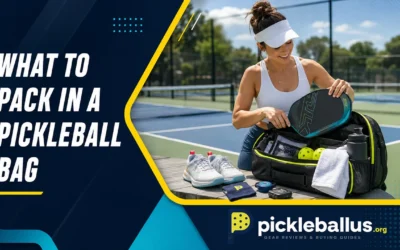
A beginner’s bag kit covers six categories: paddles (one or two), balls (a sleeve of six minimum), footwear (court shoes if you’re not playing in existing athletic shoes), hydration (32 oz minimum for outdoor sessions), sun protection (sunscreen and a cap or visor), and personal items (phone, keys, wallet in a dedicated front pocket).
The gear your bag needs to handle evolves quickly. By month three, most players add a paddle cover for their primary paddle, a towel for grip sweat management, and a ball retriever or hopper if they drill regularly. Understanding the full gear picture early helps you size your first bag accurately rather than discovering the ceiling post-purchase. Our complete pickleball equipment checklist maps out every item category and when each typically enters a player’s rotation.
Paddle Cover vs Full Bag — Which One Do You Actually Need?
Paddle covers serve one purpose: protection in transit. A neoprene or hardshell cover keeps a single paddle scratch-free inside a gym bag, car trunk, or office bag without dedicating a full compartment to pickleball gear. For players who carry one paddle and minimal accessories, a $15–$25 cover costs less and occupies less space than the smallest dedicated bag.
The cover solution breaks down at two gear additions: a second paddle and court shoes. A cover holds one paddle; a bag with a dedicated sleeve holds two to four. Court shoes need separation from paddles and clothing — a cover provides none. Most beginners hit both additions within their first sixty to ninety days of regular play.
If you’re on day one and unsure, start with a paddle cover. If you’ve already added the second paddle and the court shoes, you’ve already crossed the threshold where a dedicated pickleball bag delivers meaningfully better organization for every session. The cover-to-bag transition is one of the most common gear upgrades beginners make — and the only question is whether you make it before or after frustration motivates the switch.

Write Your Review
No reviews yet. Be the first to share your experience!