

The best pickleball backpacks of 2026 are the CRBN Pro Team Backpack (best overall), the FORWRD Ranger V2 (best value), the Selkirk Core Series Backpack (best everyday pick), the JOOLA Tour Elite Backpack (best for tournament players), the Six Zero Pro Tour Backpack (best for paddle collectors), the Franklin Sports Pro Series Paddle Bag (best budget), the Holbrook Pickleball Backpack (best for beginners), and the sportsnew Pickleball Bag (best lightweight option). Each was selected for how well it balances paddle protection, storage organization, and on-court practicality — not just how it looks in a product photo.

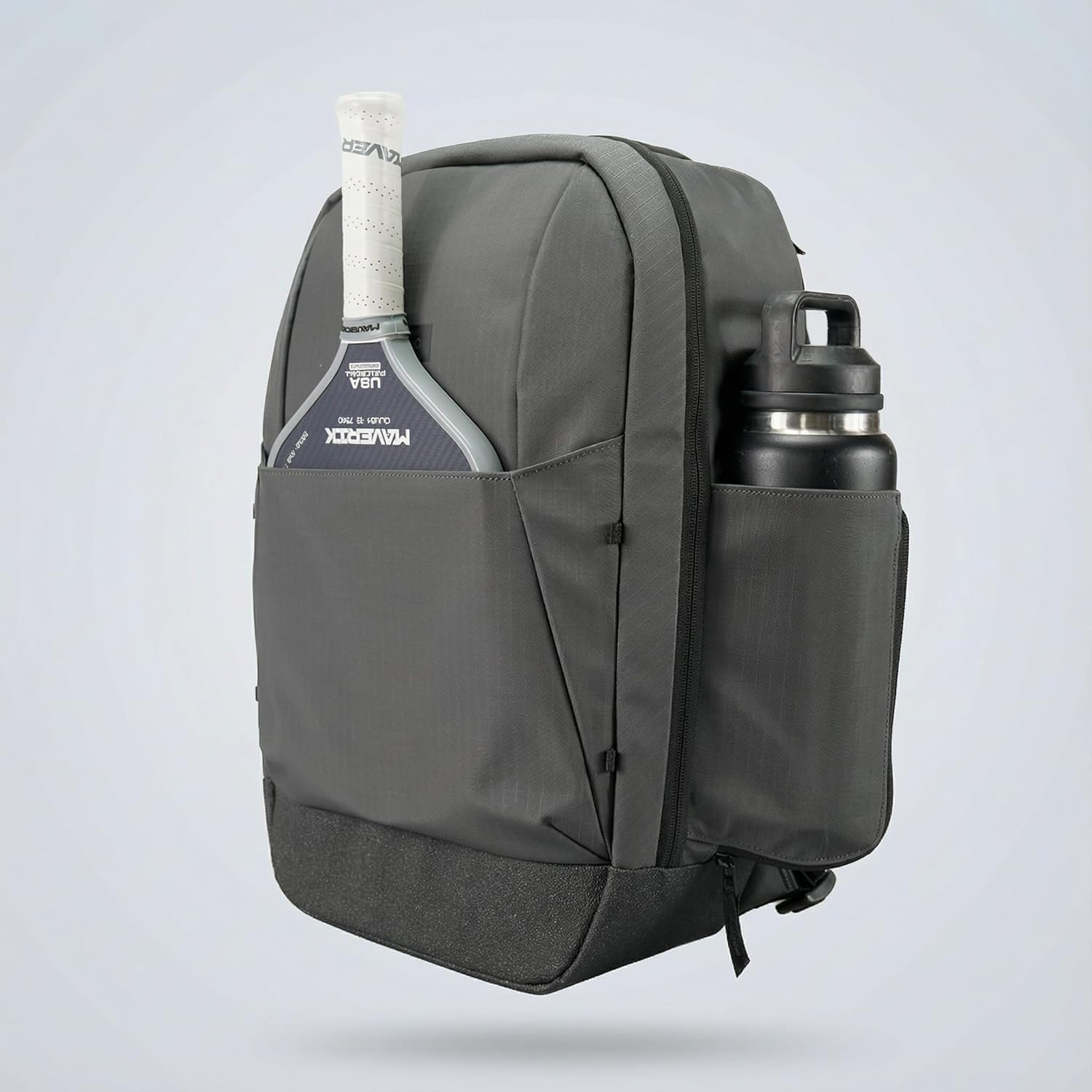


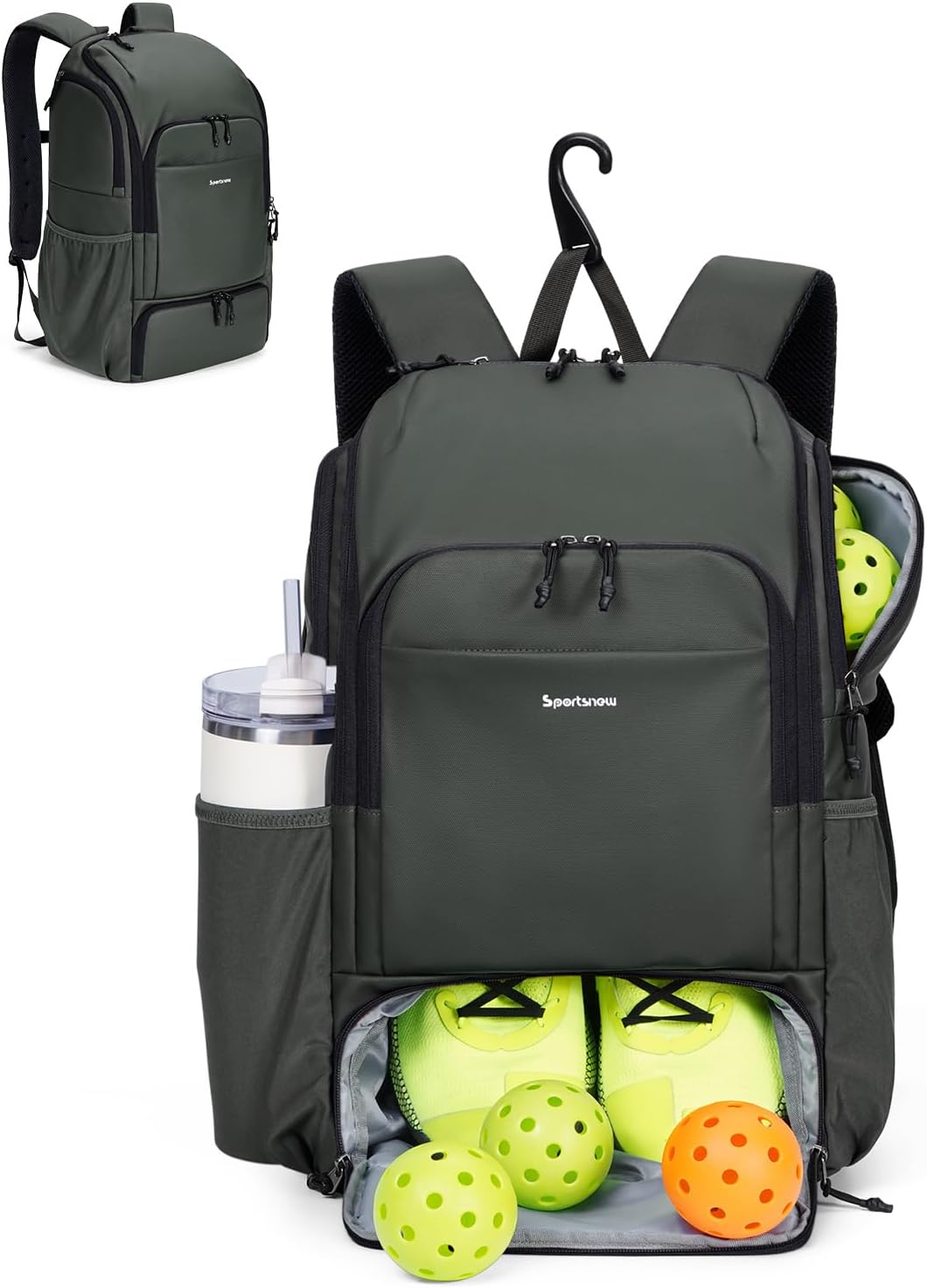
Picking the right backpack comes down to three things: how many paddles you carry, how long your sessions run, and whether you commute to the courts. A two-paddle recreational player needs something fundamentally different from a competitive doubles player rotating between three paddle setups and a full change of clothes. A bag that works for a 90-minute pickup game will feel cramped on a tournament day.
The bigger problem with most bag guides is that they mix backpacks, slings, and tour duffels without clear separation — so you end up comparing a compact sling against a full-size tour bag as if they serve the same purpose. This list covers backpacks only, with clear notes on capacity, compartment design, and price so you can match the right carry to your routine.
Below are eight pickleball backpacks reviewed for storage layout, build quality, and real-court usability, from everyday picks to premium tournament options.

What Makes a Pickleball Backpack Different from a Regular Bag?
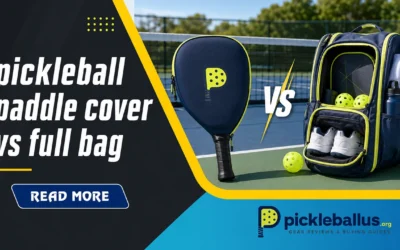
A pickleball backpack differs from a standard sports bag in its compartment architecture — the internal layout is built around protecting paddles, organizing court accessories, and surviving repeated use in outdoor conditions. Most generic backpacks have one or two open main compartments. A purpose-built pickleball backpack separates storage by function: paddles go in one zone, shoes in another, and valuables in a lockable pocket away from damp gear.
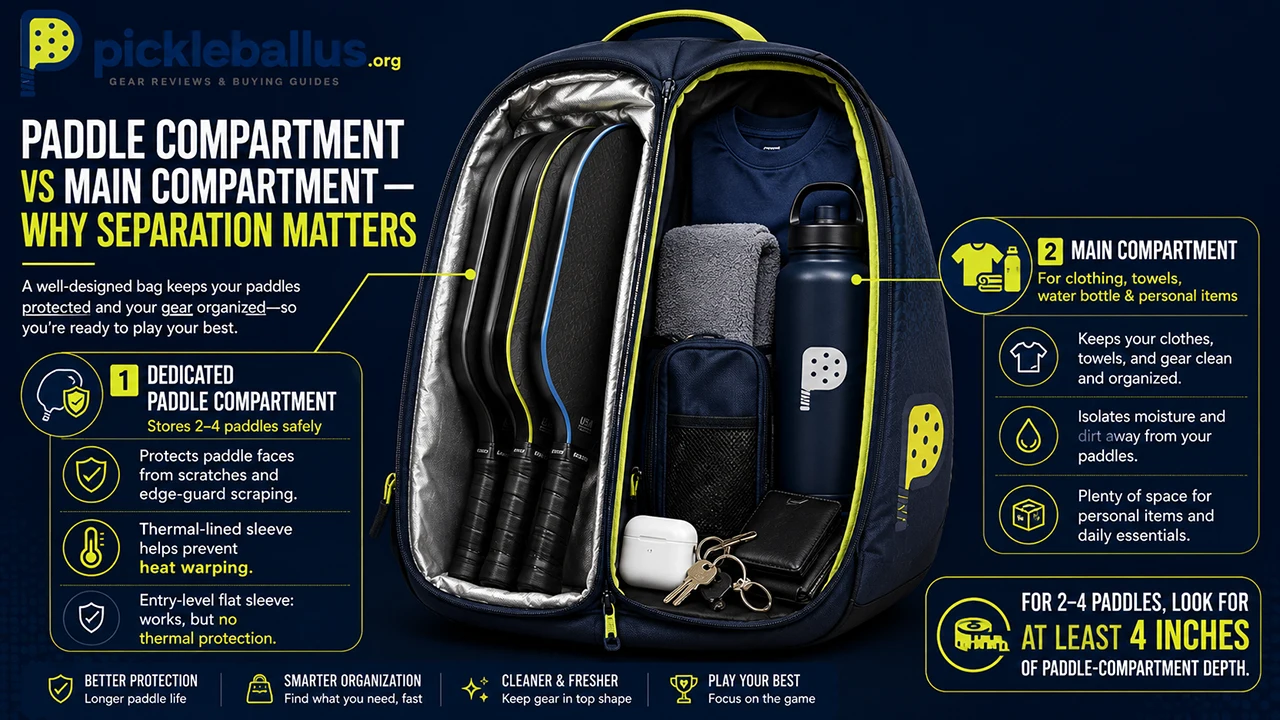
Paddle Compartment vs Main Compartment — Why Separation Matters
The dedicated paddle compartment keeps paddle faces protected from keys, zippers, and hard accessories that would scratch the surface in a shared main compartment. Higher-end backpacks like the CRBN Pro Team place paddles in a thermal-lined sleeve that protects against heat warping when the bag sits in a hot car or on a sun-exposed court bench. Entry-level backpacks often use a flat sleeve behind the main compartment — it works but offers no thermal protection.
Separation also matters for organization. When paddles live in a dedicated slot, the main compartment stays clean for clothing, towels, and personal items. Players who carry two to four paddles need at least 4 inches of depth in the paddle compartment to avoid edge-guard scraping between paddle faces.
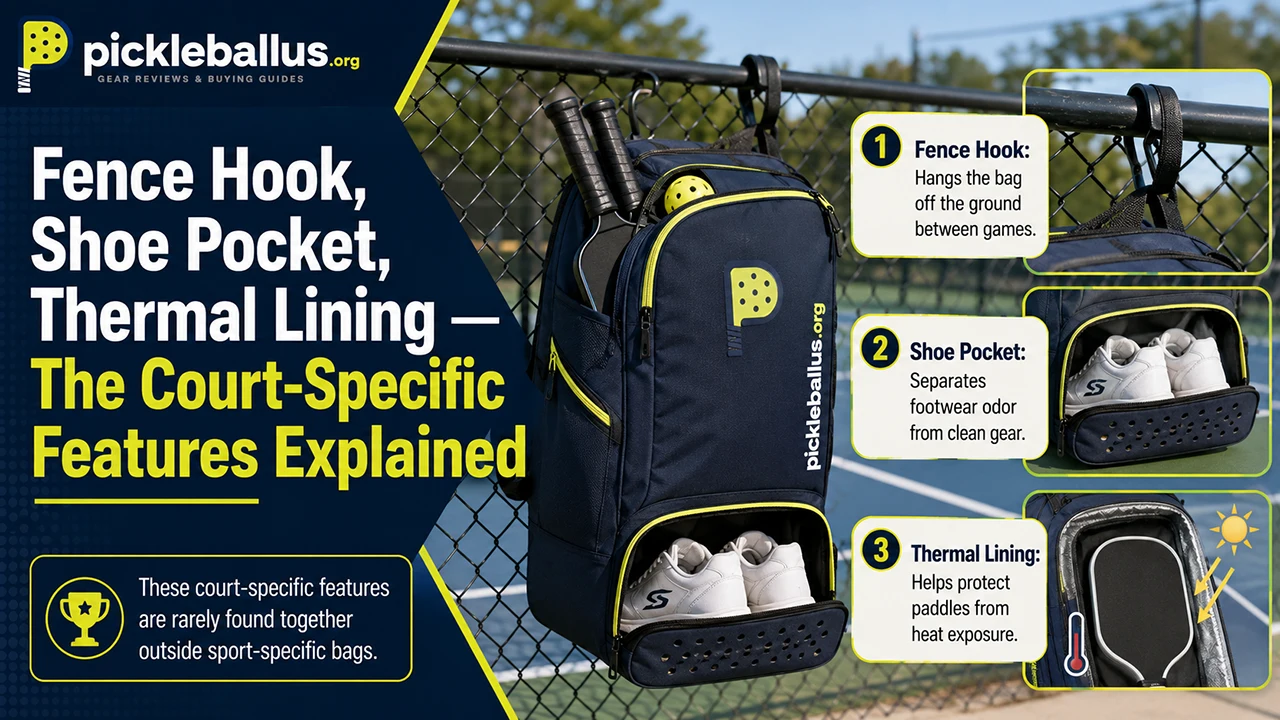
Fence Hook, Shoe Pocket, Thermal Lining — The Court-Specific Features Explained
Three features separate a true court bag from a repurposed hiking pack. The fence hook — a reinforced loop or clip on the bag’s exterior — lets you hang the bag at net-post height so it stays off dirty ground between games. The ventilated shoe compartment isolates footwear odor from clean clothes, a feature absent on almost every non-pickleball backpack. The thermal-lined paddle sleeve maintains a more stable internal temperature, reducing the risk of delamination in composite paddles exposed to summer heat. None of these features are expensive to add, but they’re rarely found together outside sport-specific bags.
The 8 Best Pickleball Backpacks of 2026
The following backpacks are actively sold on Amazon with strong review histories, established brand reputations, and verified customer feedback. Pricing reflects standard retail as of 2026.
#1 CRBN Pro Team Backpack — Best Overall
The CRBN Pro Team earns the top spot not by having the most features, but by getting every feature right. Where a lot of bags pile on compartments without thinking through access or organization, CRBN’s layout is deliberate: the thermal-lined paddle compartment fits three paddles without scratching, the ventilated shoe pocket keeps footwear isolated from clothing, and the back panel stays structured enough to carry comfortably even when the bag is only half-full.
Key Specs
- Paddle capacity: 3 paddles
- Shoe compartment: Yes, ventilated
- Water bottle pockets: 2 external
- Laptop sleeve: Yes
- Fence hook: Yes
Performance Analysis
The thermoformed structure of the paddle compartment is the defining feature. The foam-padded walls don’t just prevent scratches — they hold paddle faces apart so there’s no edge-guard contact during transit. The main compartment is wide enough for a full change of clothes plus a towel, and the internal organizer pocket handles small accessories without them migrating to the bottom. I played a four-session tournament week while using this bag and never had to dig for gear — everything stayed exactly where I put it. Compared to the JOOLA Tour Elite, the CRBN is better organized inside but sits lower on total paddle capacity. For players who play four or more times per week and travel between multiple courts, this bag handles the volume without becoming a burden on the shoulders.
Pros
- Thermal-lined paddle compartment protects against heat warping
- Ventilated shoe pocket prevents odor transfer to clothing
- Structured back panel stays comfortable with a full load
- Fits a laptop — doubles as a work-to-court commute bag
Cons
- Three-paddle capacity limits players who rotate multiple setups
- Higher price point than most recreational players need
Best For: Competitive recreational players and advanced players who play multiple times per week and need organized, all-day carry.
My Verdict: The CRBN Pro Team is the standard against which other pickleball backpacks should be measured. If your budget allows one quality bag that covers everyday play through tournament days, this is it.
#2 FORWRD Ranger V2 — Best Value
The FORWRD Ranger V2 is the kind of bag that surprises you on first use. It doesn’t look dramatically different from a premium bag, and it doesn’t cost like one — the Ranger V2 retails around $159 and delivers features that many $180–$200 competitors underdeliver on. The original Ranger built a loyal following, and V2 adds a laptop sleeve, dual water bottle pockets, and a refreshed color range without changing what made the first version work.
Key Specs
- Paddle capacity: 2–3 paddles
- Shoe compartment: Yes
- Water bottle pockets: 2 (dual external)
- Laptop sleeve: Yes
- Fence hook: Yes
Performance Analysis
The construction quality on the Ranger V2 punches above its price. The zipper pulls are reinforced, the stitching at stress points holds firm, and the shoulder straps have enough padding to stay comfortable through a full day of court-to-court carry. The paddle compartment holds two paddles flat with room for a third if they’re edge-guard-wrapped. The main compartment is one of the more efficiently sized in this range — not oversized to the point of collapsing when empty, not too shallow for a change of clothes. Compared to the CRBN Pro Team, the Ranger V2 gives up thermal lining on the paddle sleeve, but for players in moderate climates who don’t leave bags in hot cars, this is a manageable trade-off for a meaningful price difference. The dual water bottle pockets are a minor but real upgrade over single-pocket designs — one for a hydration bottle, one for a recovery drink or sunscreen tube.
Pros
- Excellent build quality for the price
- Dual water bottle pockets add carry flexibility
- Laptop sleeve makes it a legitimate commuter bag
- Wide color range for style preference
Cons
- No thermal lining on paddle compartment
- V2 was in pre-order through late April 2026 — check stock availability
Best For: Intermediate players who want near-premium features without crossing into premium pricing.
My Verdict: The Ranger V2 is the best overall value on this list. For most players who don’t need a thermal paddle sleeve, this bag delivers everything that matters at a price that’s hard to argue with.
#3 Selkirk Core Series Backpack — Best Everyday Pick
The Selkirk Core Series doesn’t try to be a tournament bag. It’s designed for the player who drives to the courts three times a week, keeps one or two paddles, and wants a clean, functional carry without extra bulk. The daypack-profile keeps it slim on the back, and the construction is solid enough to handle daily use without the bag losing its shape over months of wear.
Key Specs
- Paddle capacity: 2 paddles
- Shoe compartment: Limited side pocket
- Water bottle pocket: 1 external
- Laptop sleeve: Yes (small)
- Fence hook: Yes
Performance Analysis
The Core Series trades raw capacity for portability. The paddle sleeve sits behind the main compartment and holds two paddles flat without squeezing — paddle faces stay clean and separated. The main compartment fits enough for a light game kit: shirt change, socks, phone charger, and a few accessories. Where other bags add compartments that end up creating confusion, Selkirk keeps the layout minimal and intuitive. I found myself reaching into the right pocket without thinking after two sessions. Compared to the FORWRD Ranger V2, the Core Series is noticeably slimmer and lighter — for players who walk or cycle to courts, this matters more than extra paddle capacity. Players who carry three or more paddles or pack extra clothes for post-game activities will find this bag too compact.
Pros
- Slim profile, lighter than most competition
- Clean layout that’s intuitive to organize
- Good build quality for the price
- Backed by Selkirk’s established brand warranty
Cons
- Two-paddle capacity only
- Smaller main compartment limits packing for longer sessions
Best For: Recreational players who play two to three times per week and keep one to two paddles in regular rotation.
My Verdict: If you don’t need maximum capacity and value a clean, lightweight carry over features you’ll never use, the Core Series is the most practical everyday backpack on this list.
#4 JOOLA Tour Elite Backpack — Best for Tournament Players
The JOOLA Tour Elite sits at the intersection of backpack and duffel — it can be worn as a backpack or carried by the top handle, which makes it flexible across different court environments. Designed for advanced and tournament-level players, it carries up to four paddles and builds in enough compartments to keep every item organized through a full-day event.
Key Specs
- Paddle capacity: 4 paddles
- Shoe compartment: Yes, separate zippered
- Water bottle pockets: 2 external
- Laptop sleeve: Yes (advertised as paddle pocket in some configurations)
- Fence hook: Yes
Performance Analysis
The paddle compartment is the most practical on this list for players who rotate between setups during a session — the depth accommodates four paddles without hard edge contact, and the wide zipper opening makes swapping paddles mid-match fast. The separate shoe compartment is genuinely isolated, not just a mesh pocket on the side, which matters for tournament players who wear court shoes in and casual shoes out. The main compartment has a structured sleeve that works as either a laptop carry or a secondary paddle area depending on your needs. Compared to the CRBN Pro Team, the JOOLA Tour Elite carries more paddles but has less thermal protection for each one. For tournament players who cycle paddles between games at outdoor events, this trade-off is usually acceptable because paddle time between rounds is short.
Pros
- Four-paddle capacity accommodates tournament rotation
- Backpack/duffel hybrid carry versatility
- Separate ventilated shoe compartment
- Internal layout stays organized under heavy use
Cons
- Heavier than everyday backpacks when fully loaded
- No thermal lining on paddle compartment
Best For: Tournament-level and advanced players who carry multiple paddles and need a bag that handles full-day events without becoming disorganized.
My Verdict: For serious competitive players, the Tour Elite covers every base a tournament day throws at it. The hybrid carry style is a genuine advantage when navigating venue logistics.
#5 Six Zero Pro Tour Backpack — Best for Paddle Collectors
The Six Zero Pro Tour is built for one type of player: someone who travels with a lot of paddles. The bag’s defining feature is its oversized paddle compartment, which accommodates up to six paddles — enough for testing multiple setups, sharing gear with a partner, or rotating between indoor and outdoor paddle preferences in a single carry.
Key Specs
- Paddle capacity: Up to 6 paddles
- Shoe compartment: Yes, large
- Water bottle pockets: 2 external
- Laptop sleeve: Yes
- Fence hook: Yes
- Approximate price: $160–$200
Performance Analysis
The depth and width of the Six Zero’s paddle zone is noticeably larger than any other bag on this list. Six paddles sit comfortably without face contact when wrapped in individual covers — without covers, four to five fit cleanly. The main compartment is similarly oversized, handling a full tournament kit including extra apparel and accessories. The trade-off is weight and bulk: fully loaded, this is one of the heavier bags in the category, and the backpack straps need to be well-adjusted to distribute load evenly over a long carry. Compared to the JOOLA Tour Elite, the Six Zero carries more paddles but is less versatile as a convertible carry. For instructors, coaches, or equipment-testing enthusiasts, the capacity justifies the size.
Pros
- Six-paddle capacity — highest on this list
- Large main compartment handles full tournament kit
- Durable construction built for frequent travel
- Dedicated shoe compartment
Cons
- Bulky and heavy when fully loaded
- Oversized for players who carry one to two paddles
Best For: Coaches, pickleball instructors, equipment testers, or competitive players who carry multiple paddle setups to every session.
My Verdict: If paddle capacity is your primary requirement, nothing else on this list comes close. Players who carry two paddles should look elsewhere — this bag is purpose-built for high-volume carry.
#6 Franklin Sports Pro Series Paddle Bag — Best Budget Option
The Franklin Sports Pro Series is the most recognizable budget-friendly pickleball backpack on the market, and it earns that position honestly. At roughly $80, it provides four external zippered pockets, a large main compartment, and enough paddle storage for two to three setups — more than adequate for recreational players who don’t want to spend close to $200 on a bag.
Key Specs
- Paddle capacity: 2–3 paddles (external paddle sleeve)
- Shoe compartment: Interior section (not fully isolated)
- Water bottle pockets: 2 external
- Laptop sleeve: Yes (interior)
- Fence hook: Yes
Performance Analysis
The Franklin Sports Pro Series packs more features into its price point than any other option here. The four external pockets create genuine organization without requiring the user to dig through a single large compartment — there’s a clear spot for balls, a spot for accessories, and a separate slot for paddles. The materials are lighter-weight than the premium options, which shows over time (zipper pulls and seam stitching aren’t as reinforced), but for players who play two to three times per week and aren’t traveling to tournaments, the durability is more than sufficient. Compared to the Selkirk Core Series, the Franklin Sports bag offers more external pockets and similar internal capacity at a lower price — but the Core Series wins on build quality and overall durability. For players newer to pickleball or recreational players on a clear budget, this bag removes any reason to haul gear in a generic backpack.
Pros
- Best price-to-features ratio on this list
- Four external zippered pockets for organized carry
- Laptop sleeve makes it usable as a commuter bag
- Widely available on Amazon with strong review history
Cons
- Lighter-weight materials show wear faster than premium options
- Shoe compartment not fully isolated from main interior
Best For: New players, recreational players on a budget, or anyone who wants a dedicated pickleball bag without a significant investment.
My Verdict: The Franklin Sports Pro Series is the clearest recommendation for players who want the organizational benefits of a pickleball-specific bag without spending over $100. It’s well-designed for the price.
#7 Holbrook Pickleball Backpack — Best for Beginners
The Holbrook Pickleball Backpack sits at the same price point as the Franklin Sports Pro Series (~$80) but takes a slightly different approach: it prioritizes comfort and simplicity over compartment count. The cushy shoulder straps and clean two-compartment layout make it an easy first pickleball bag for players who are still figuring out what they need to carry.
Key Specs
- Paddle capacity: 2+ paddles (main compartment + front sleeve)
- Shoe compartment: No dedicated section
- Water bottle pockets: 2 (dual external)
- Laptop sleeve: No
- Fence hook: Yes (built-in hook)
Performance Analysis
The Holbrook’s standout feature for beginners is the built-in fence hook — it’s more sturdily constructed than the hook on most bags in this price range, handling a fully loaded bag on a chain-link fence without pulling the attachment point. The shoulder straps are padded well enough for a full session carry, which matters for newer players who aren’t used to the weight of a gear-laden sports bag. The front paddle sleeve keeps paddles accessible and separate from clothing, though the main compartment is spacious enough that two paddles could sit inside without crowding. Compared to the Franklin Sports Pro Series, the Holbrook is more comfortable to wear but offers fewer dedicated pockets. Players who prioritize clean, simple carry over maximum organization will prefer this bag. It won’t grow with a player who eventually needs tournament-level capacity, but as an entry point into sport-specific gear, it does the job cleanly.
Pros
- Comfortable padded shoulder straps for extended carry
- Sturdy built-in fence hook
- Clean, simple layout easy to keep organized
- Competitive price at under $80
Cons
- No dedicated shoe compartment
- Fewer pockets than other budget options
- Limited growth capacity as play frequency increases
Best For: New pickleball players who want a comfortable, no-fuss first bag that covers basic carry needs without complexity.
My Verdict: The Holbrook is the most beginner-friendly bag on this list. The comfort and simplicity make it the right starting point for players who are building their kit from scratch.
#8 sportsnew Pickleball Bag Large Sports Pickleball Backpack — Best Lightweight
Eleven pockets and a 30L frame that fits the whole crew’s gear — the sportsnew Large Sports Pickleball Backpack earns its spot before you’ve even unzipped the first compartment. This isn’t a minimalist sling for the solo player who packs light; it’s built for the person who shows up to open play with spare paddles, a full change of clothes, and a handled 40oz tumbler they refuse to leave in the car. This review covers the Black-Fluo Zip variant — Army Green, Navy Blue, and Gray colorways are also available.
Key Specs
- Capacity: 30L
- Paddle Fit: 4–6 paddles (up to 16.33″ including handle)
- Ball Capacity: 8 pickleballs across 2 dedicated quick-access pockets
- Total Pockets: 11
- Hydration: 2 side pockets sized for handled 40oz water bottles
- Shoe Compartment: Yes, separate ventilated compartment
- Fence Hook: Yes, reinforced/thickened construction
- Dimensions: 12″ × 7.87″ × 20.07″
- Material: Waterproof & wear-resistant fabric
Performance Analysis
The two dedicated ball compartments sit at quick-access positions, so you’re not unpacking the main cavity every time you need to reload between games. The bottom-accessed shoe compartment fully isolates court shoes from paddles and clean gear — a detail that matters after a hard doubles session when your shoes carry serious court grime. I loaded this for a four-player round-robin: four paddles, eight balls, two full kits, court shoes. Everything landed cleanly, main compartment still had breathing room. Where the sportsnew pulls ahead of options like the DBXINY Pickleball Backpack, which runs a comparable compartment count, is those side pockets — the DBXINY’s slots are slightly narrower and struggle with handled tumblers, while the sportsnew’s dual openings swallow a 40oz bottle with ease. The reinforced fence hook has been thickened at the attachment point specifically, which is the failure zone on budget bags; under a fully loaded 30L, it doesn’t flex. Players building out their gear setup and exploring the full range of best pickleball bags will find the sportsnew checks the high-priority boxes — waterproofing, organizational depth, and carry comfort — at the everyday-hauler tier.
Pros
- 30L volume handles 4–6 paddles, 8 balls, and 3–5 full outfits simultaneously — genuinely built for group-play volume
- Two quick-access ball pockets allow court-side reloads without touching the main compartment
- Separate shoe compartment keeps dirty footwear isolated from clean gear and paddle faces
- Thickened fence hook attachment survives a fully loaded bag — one of the more common budget bag failure points
- Waterproof, wear-resistant fabric plus extended zipper pulls that hold up under daily use and wet conditions
Cons
- The 20″ tall profile makes under-seat airline storage unrealistic — overhead bin is the only viable travel option
- No insulated thermal pocket for temperature-sensitive drinks during summer play
- As a newer brand, long-term durability data is limited compared to established names like Franklin Sports
Best For
Recreational to competitive players who regularly carry gear for 2–4-person sessions, or anyone who wants one bag that moves between court, gym, and travel without needing to repack. Skill level doesn’t factor in — this bag scales with how you load it.
My Verdict
For high-volume daily hauling without stepping up to a full tour bag, the sportsnew Large Sports Pickleball Backpack covers the essentials and then some. The reinforced fence hook, dual 40oz bottle slots, and isolated shoe compartment are the details that show up on every court visit — not just the first few. Players running regular group sessions will use every inch of the 30L and appreciate how cleanly the pockets are laid out.
Backpack vs Sling vs Duffel — Which Carry Style Fits Your Game?
Pickleball bags split into three distinct carry styles, and choosing between them comes down to your session length, paddle count, and how far you travel to get to the court. None of the three is universally better — each solves a different problem.
Pickleball Backpack: Two-Strap Comfort and Organized Storage
A backpack distributes weight across both shoulders, which makes it the most comfortable option for players who carry a full kit — paddles, shoes, clothing, hydration, and accessories. Two-strap carry is especially important for players who walk or cycle to courts. Backpacks are the best choice for players who carry two or more paddles, play for multiple hours, or go directly from work to the courts. The organized compartment layouts found in purpose-built pickleball backpacks — like the ones from CRBN, JOOLA, and Selkirk — make on-court access fast and post-session cleanup easy.
For players who need the full range of pickleball bag options, the broader guide to best pickleball bags covers slings, duffels, and tournament options alongside backpacks.
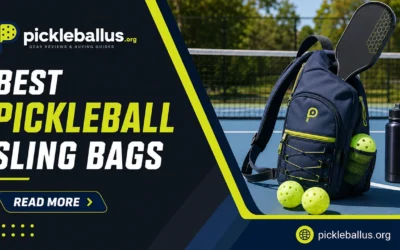
Sling Bag: Compact and Fast-Access for Minimalists
A sling sits across one shoulder and typically carries two to four paddles in a compact profile. The trade-off for lightness is limited storage: most slings don’t accommodate shoes or full clothing changes. Best pickleball sling bags suit players who walk to a nearby court with a minimal kit — one to two paddles, a few balls, and personal items — and finish their session without changing or showering at the facility.
Duffel/Tour Bag: Maximum Capacity for Serious Competitors
A tour-style duffel carries four to eight paddles alongside a full tournament kit. It’s the largest and typically the heaviest carry option, designed for players who spend full days at competitive events. If you’re considering this style, best pickleball duffel bags outlines the top options in the category with detailed capacity and feature comparisons.
How to Choose a Pickleball Backpack: 4 Features That Actually Matter
Not every feature on a pickleball backpack’s spec sheet translates to practical value. These four are worth evaluating before any purchase.
Paddle Capacity and Compartment Design
Carry only as much capacity as your regular session requires, then add one paddle slot. Players who use two paddles regularly should look for a three-paddle compartment — the extra slot prevents edge-guard contact between paddle faces during transport. Players who carry four or more paddles need a purpose-built tour-style bag, not a standard backpack. The compartment design matters as much as the count: a flat sleeve behind the main compartment keeps paddles accessible but offers no padding; a structured, foam-lined paddle pocket protects face texture and finish.
Material, Weatherproofing, and Build Quality
600D polyester is the most common material in mid-range pickleball backpacks. It’s abrasion-resistant and handles court conditions well. Premium bags add ballistic nylon (used in high-end luggage) or reinforced base panels that resist moisture when the bag is set on wet court surfaces. Look for weather-resistant zipper pulls — standard zippers let moisture into the bag on rainy days or dewy morning courts. At the sub-$100 price point, expect lighter materials that show wear at zipper attachment points and shoulder strap stitching over 12–18 months of daily use.
Carrying Comfort — Straps, Back Panel, and Weight
Padded shoulder straps are standard across all bags on this list. The differentiator is the back panel: a rigid or semi-rigid panel distributes load more evenly than a flat padded panel, which is why bags like the CRBN Pro Team stay more comfortable under a full load. For players who carry 15+ pounds of gear, a sternum strap (available on some models as an optional add-on) makes a significant difference for long transit to courts. Overall bag weight at empty matters most for commuters — a bag that weighs two pounds empty becomes meaningfully heavy after a two-hour session.
Price Range and What Each Tier Gets You
The pickleball backpack market breaks into three clear tiers. Under $100 gets you functional organization, adequate materials, and the core features (fence hook, paddle slot, water bottle pockets) — the Franklin Sports Pro Series and Holbrook sit here. The $100–$160 range adds thermal lining, better build quality, and more refined compartment layouts — the Selkirk Core Series, FORWRD Ranger V2 fall in this band. Above $160, you’re paying for premium materials, structured protection, and maximum capacity — the CRBN Pro Team, JOOLA Tour Elite, and Six Zero Pro Tour occupy this tier.
For players who want strong value options across all bag types, best pickleball bags under $50 covers the most affordable options worth considering.
By now you have a clear picture of which backpack delivers the best fit — by budget, paddle count, and the type of player you are on the court. Choosing a bag is the easy decision; what you do with it over the months of regular use will determine how long it performs at the level you need. The next section covers the finer details that most bag guides skip: how to pack efficiently, when thermal protection actually matters, and how to tell when a bag has genuinely worn out versus just showing cosmetic age.
After You Pick a Backpack, Here’s What Every Player Should Know
How to Pack Your Pickleball Backpack the Right Way
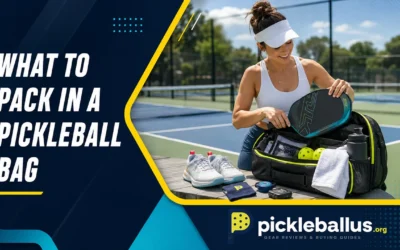
Packing order affects both compartment longevity and on-court access speed. Put shoes in the dedicated shoe compartment first — this prevents odor migration and keeps the shoe compartment from being used as overflow storage. Paddles go in next, face-to-face if no individual protection, face-forward and separated if covers are available. Heavy items (water bottles, extra clothing) sit at the bottom of the main compartment closest to the back panel — this lowers the bag’s center of gravity and reduces shoulder strain. Small accessories (grip tape, replacement grips, first aid basics) go in external zippered pockets where they’re accessible without opening the main compartment.
Does Your Backpack Actually Need a Thermal Compartment?
Thermal lining matters in specific conditions, not universally. If you leave your bag in a car during summer play — even for 30 minutes — paddle face delamination is a real risk for composite and carbon fiber paddles. A thermal-lined compartment measurably slows heat transfer to paddle faces. If you carry your bag in and park in shade, or play indoors, thermal protection is a nice feature but not a functional priority. Players in the US South or Southwest, or anyone who plays outdoor morning sessions and leaves gear in a vehicle during afternoon rounds, should treat thermal lining as a must-have, not an upgrade.
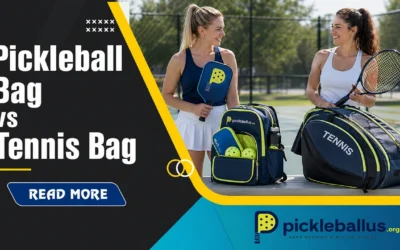
Pickleball Backpacks vs Tennis Bags — Can You Use One for Both?
Tennis bags and pickleball bags share some features but diverge in paddle compartment dimensions. Tennis rackets are significantly longer (27 inches) than pickleball paddles (15–17 inches), so tennis bag paddle compartments have dead space when used for pickleball. Conversely, pickleball-specific paddle compartments are too short for full tennis rackets. The accessories are cross-compatible — balls, grip tape, wristbands all pack the same way — but the primary carry function doesn’t transfer cleanly. Players who play both sports regularly are better served by a dedicated bag for each, or a large tour-style tennis bag where the pickleball paddle sleeve is a secondary compartment.
Signs It’s Time to Replace Your Pickleball Bag
A bag earns replacement when its structural function degrades, not just its appearance. Cosmetic wear — faded fabric, minor scuffing — doesn’t affect performance. The functional signals are zipper failures on the main or paddle compartment (which expose gear to moisture and damage), delamination of the paddle compartment lining (which can scratch paddle faces), fraying shoulder strap stitching at the attachment point (a load-bearing failure waiting to happen), and base panel moisture damage that allows water to seep into the bag during normal court conditions. Most mid-range pickleball backpacks from established brands last 18 to 36 months of regular use before showing functional degradation. Budget bags at the sub-$80 tier typically show wear sooner — 12 to 18 months under frequent use — particularly at zipper pulls and seam stress points.

Write Your Review
No reviews yet. Be the first to share your experience!