Best Pickleball Grip: Overgrip, Tape & Replacement Picks
The best pickleball grips of 2026 break into three distinct types, each built for a different job: the Tourna Grip Original (best overgrip for sweaty hands), the JOOLA Pickleball Overgrip (best for competitive players), the Gamma Supreme Overgrip (best all-around), the Gamma Ultra Cushion (best replacement grip), the Wilson Pro Comfort (best replacement grip runner-up), the Gamma Grip Tape (most versatile grip tape), and the UDRIPPIN Pro Tour (best premium option for high-sweat conditions). Choosing the wrong type wastes money and time — a fresh overgrip over a dead base grip solves nothing, and a full replacement grip is overkill when all you need is a quick tack refresh.




What separates a good grip choice from a bad one comes down to five variables: tackiness, thickness, moisture absorption, durability, and cushioning. Players in hot, humid climates need absorption-first options; competitive players running back-to-back games need grips that hold tack for 2–3 hours without slipping; casual recreational players need durability over peak performance to lower the cost per session.
The most common mistake players make is treating grip care as an afterthought. The grip is the only point of contact between your hand and the paddle — every mis-hit, every dropped reset, every forehand that runs long is at least partially a grip problem. A $2 overgrip replaced every six to eight sessions delivers more consistent performance improvement than a $250 paddle upgrade on a worn, slick handle.
Below are top picks for every grip category, with direct links to each full review for players who want the complete breakdown.
What Is a Pickleball Grip?
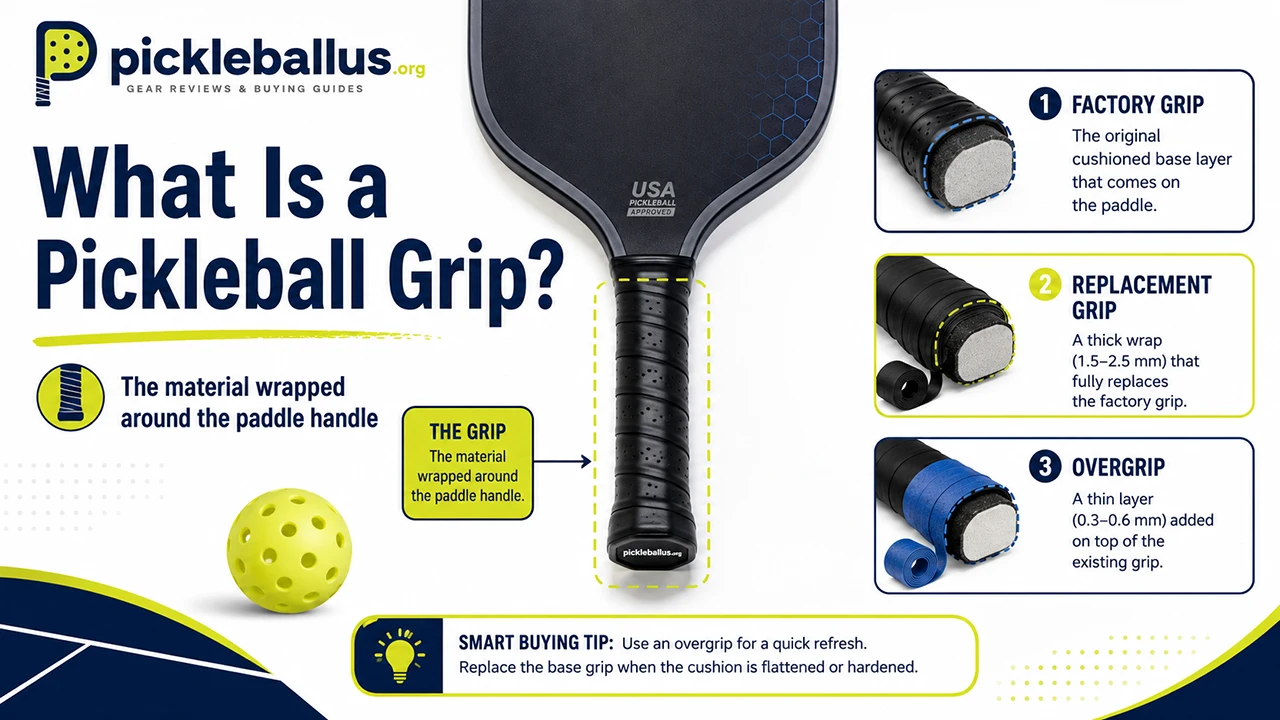
A pickleball grip is the material wrapped around the paddle handle — and it comes in three distinct forms that serve different functions. The factory grip is what your paddle ships with: a moderately cushioned base layer installed by the manufacturer. The replacement grip is a thick aftermarket wrap (1.5–2.5mm) that completely removes and replaces the factory grip. The overgrip is a thin layer (0.3–0.6mm) applied on top of whatever grip is already on the handle.
Understanding this distinction is the foundation of smart grip buying. Players who stack overgrips over a flattened, hardened factory grip are patching a structural problem — the tack refresh works temporarily, but the dead cushion underneath still transfers vibration and reduces feel. Players who buy a full replacement grip when their base is fine are spending $12–$20 on a job a $1.50 overgrip handles in two minutes.
Replacement Grip vs Overgrip vs Grip Tape — Key Differences
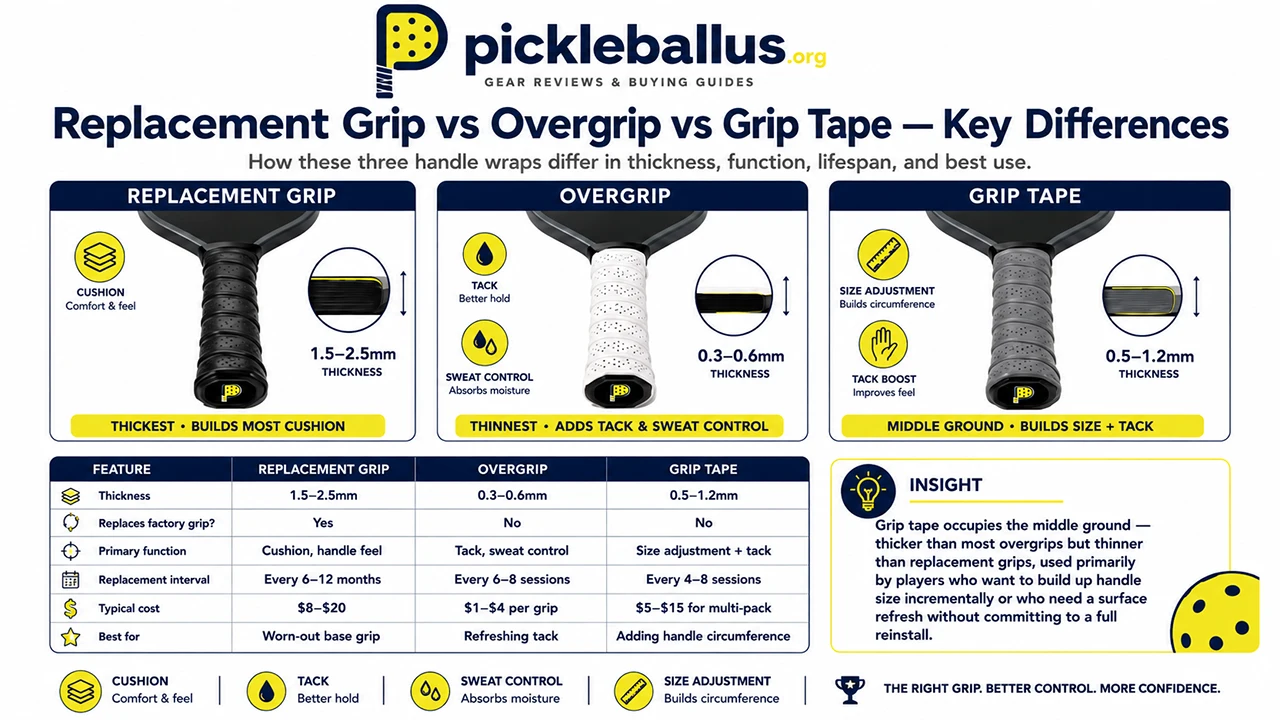
The table below summarizes how each type differs across the factors that matter most to buyers:
| Feature | Replacement Grip | Overgrip | Grip Tape |
|---|---|---|---|
| Thickness | 1.5–2.5mm | 0.3–0.6mm | 0.5–1.2mm |
| Replaces factory grip? | Yes | No | No |
| Primary function | Cushion, handle feel | Tack, sweat control | Size adjustment + tack |
| Replacement interval | Every 6–12 months | Every 6–8 sessions | Every 4–8 sessions |
| Typical cost | $8–$20 | $1–$4 per grip | $5–$15 for multi-pack |
| Best for | Worn-out base grip | Refreshing tack | Adding handle circumference |
Grip tape occupies the middle ground — thicker than most overgrips but thinner than replacement grips, used primarily by players who want to build up handle size incrementally or who need a surface refresh without committing to a full reinstall.
How to Choose the Right Pickleball Grip
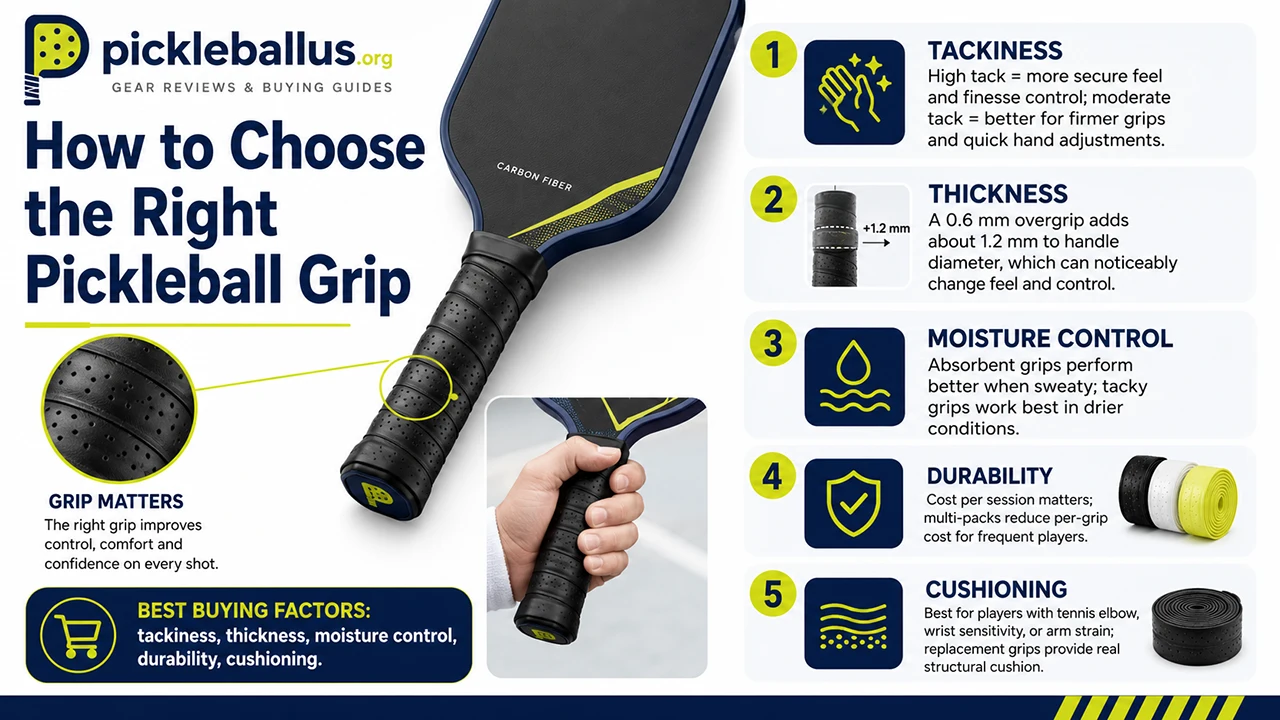
Five factors drive every grip purchase: tackiness level, thickness, moisture absorption method, durability, and cushioning.
Tackiness is how firmly the grip seats in your hand without you needing to squeeze. High-tack grips suit control players who rely on wrist action and finesse shots; moderate-tack grips work better for power hitters who grip more firmly through contact and want quick adjustability.
Thickness affects handle circumference directly. A 0.6mm overgrip adds approximately 1.2mm to handle diameter (both sides), shifting a 4″ grip toward 4 1/8″. For players near a size boundary, this can make a meaningful difference in shot feel — especially on volleys and dink sequences where hand position shifts frequently.
Moisture absorption splits into two fundamentally different mechanisms. Absorption-based grips (Tourna-type dry-tac material) actively pull sweat away from the surface — they perform better wet than dry. Tackiness-based grips (Gamma Supreme, Lizard Skins DSP) rely on surface texture and resin to maintain grip — they perform best in moderate, dry-hand conditions and degrade faster when sweat saturates the material.
Durability determines real cost per session. A $1.50 grip lasting 10 sessions outperforms a $1 grip lasting 4. For players who play three or more times per week, buying in multi-packs (10-pack, 12-pack, 30-pack) cuts per-grip cost by 30–50% compared to single-pack pricing.
Cushioning matters most for players with tennis elbow, wrist sensitivity, or any history of arm strain. Overgrips add minimal cushioning — if vibration is the concern, a replacement grip with integrated cushion layer is the structural fix; an overgrip on top simply adds surface comfort.
Best Pickleball Grips of 2026 — Top Picks by Type
The best pickleball grip varies by playing conditions, hand physiology, and how frequently you play — there is no single correct answer. The picks below represent the top performers in each category based on player feedback, verified purchase reviews, and performance testing across skill levels from 3.0 recreational to 5.0 competitive. Each section links to a full dedicated review for buyers who want in-depth specs, pros/cons, and more options.
Best Pickleball Overgrip
#1 Tourna Grip Original — Best Overall Overgrip
The Tourna Grip Original is the most widely used overgrip in racket sports — carried from tennis into pickleball by a loyal following built over decades. Its dry-feel, absorption-first material actively pulls moisture away from the surface rather than repelling it, which means performance improves under sweat rather than deteriorating. At 0.45mm, it adds minimal bulk while transforming a worn or slick base into a secure, dry surface.
Key specs:
- Thickness: 0.45mm
- Material: Proprietary dry-feel absorbent material
- Pack options: 10-pack, 30-pack
- Finishing tape: Included
Performance: The Tourna excels in outdoor summer play, high-humidity conditions, and any situation where hands get progressively wetter over a two- to three-hour session. The trade-off is feel in dry conditions — unlike tacky grips, the Tourna surface can feel slightly rough or dry when hands are cool. Players who sweat lightly may find it overly textured.
Best for: Outdoor players, natural sweaters, humid-climate play, anyone who has ever had a paddle spin or slip at contact during a power shot.
#2 JOOLA Pickleball Overgrip — Best for Competitive Players
The JOOLA Pickleball Overgrip was developed with input from Ben Johns, the world’s top-ranked player, and it shows in the details. It delivers consistent tackiness combined with strong sweat control — not quite the pure absorption of Tourna, but enough moisture management to hold through a multi-game competitive session without the slick-when-wet problem that plagues lesser tacky grips.
Key specs:
- Thickness: 0.6mm
- Material: High-tack synthetic with moisture-wicking channels
- Pack options: 3-pack, 12-pack
- Finishing tape: Included
Performance: The 0.6mm profile adds more cushion than Tourna, which benefits players who prefer a slightly softer, more padded feel at contact. The tack level sits at the higher end of the market — firm and deliberate without the sticky-trap sensation some ultra-tack grips produce. Compared to Tourna, it plays warmer and slightly more plush; against Gamma Supreme, it runs tackier with marginally better moisture handling.
Best for: Tournament competitors, frequent players (4+ sessions per week), players who need tack that survives warm-up through the third game of a match.
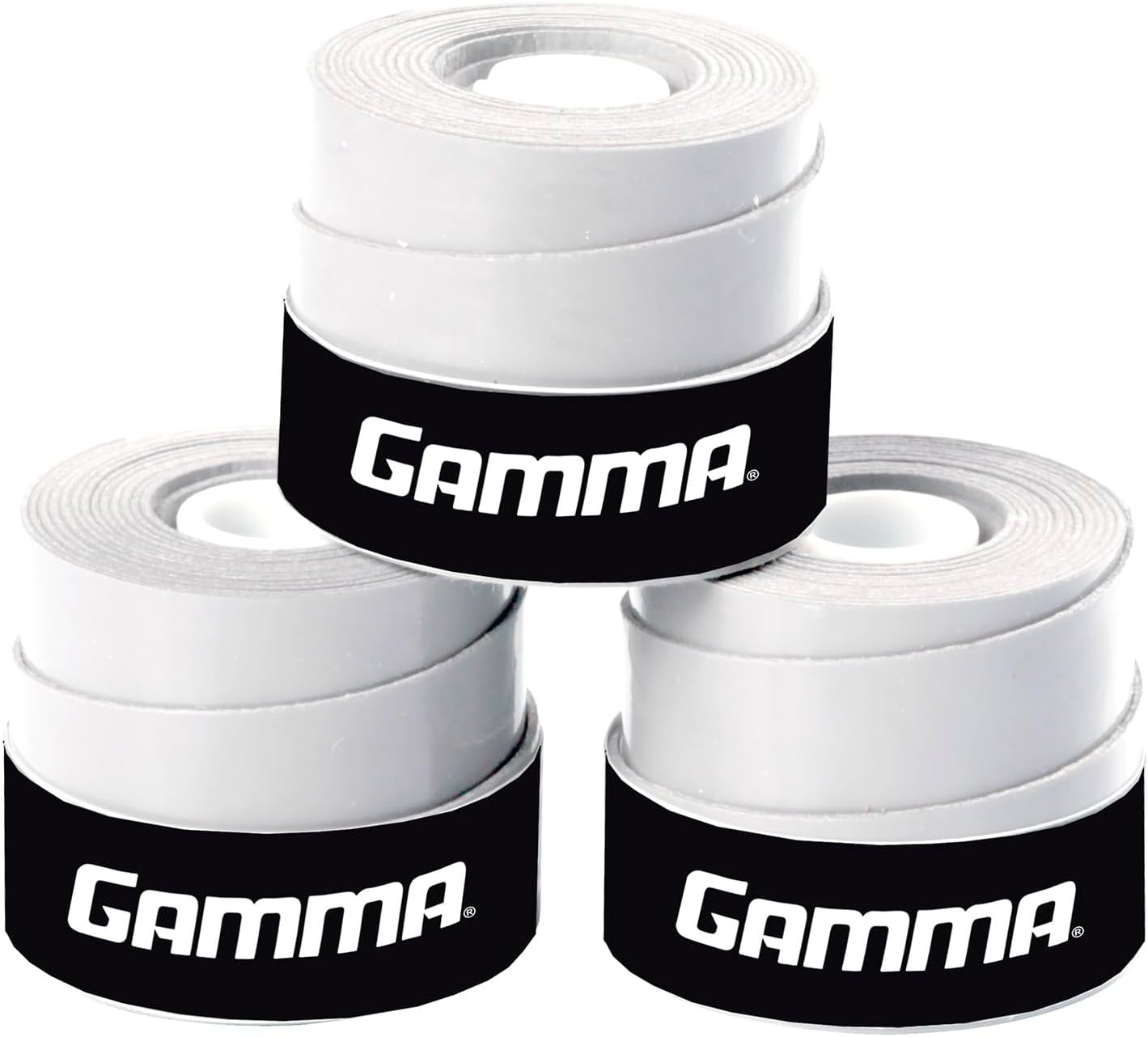
#3 Gamma Supreme Overgrip — Best All-Around
The Gamma Supreme Overgrip checks every box a recreational to intermediate player needs without requiring a climate-specific swap strategy. It provides balanced tack, moderate moisture absorption, consistent durability through 8–10 sessions, and the easiest installation process of any grip on this list. The Gamma Dri-Tac variant adds extra moisture-wicking for players in warmer conditions.
Key specs:
- Thickness: 0.6mm
- Material: Synthetic textile with balanced tac/dri hybrid
- Pack options: 3-pack, 12-pack
- Finishing tape: Included
Performance: The Gamma Supreme is the grip recommended most frequently by teaching pros to beginners and intermediate players for one reason: it is predictable. Tack holds consistently across a 90-minute recreational session, it installs cleanly without bunching, and it doesn’t leave residue on the hand. It’s not the best grip in any single specialized category — but it’s the least likely to be the wrong choice.
Best for: Players who want one grip that works across all conditions without overthinking; beginners and intermediates; coaches managing multiple paddles.
For the full ranked list of every overgrip worth buying, head to the best pickleball overgrip guide.
Best Pickleball Replacement Grip
A replacement grip is the right call when the base grip has flattened, hardened, or left residue on your palm — signs the cushion layer is structurally dead and no overgrip can compensate. Replacement grips install directly on the bare handle, adding 1.5–2.5mm of cushion and a fresh surface before any overgrip layer goes on top.
#1 Gamma Ultra Cushion Replacement Grip — Best Overall
The Gamma Ultra Cushion combines perforated cushion ridges with a contoured surface that channels moisture away from the palm without the spongy, over-stuffed feel that makes some replacement grips feel like squeezing a foam tube. Durability is the standout quality — the Ultra Cushion holds its structure through a full season of regular play, where most replacement grips flatten visibly after three to four months.
Key specs:
- Thickness: 1.8mm
- Surface: Perforated, contoured ridges
- Finish: Clean installation, no adhesive bleed
Performance: The tack level is moderate — not tacky enough to eliminate the need for an overgrip on top, but textured enough to provide secure contact as a standalone for casual players. Crucially, the grip does not leave black residue on the hand after heavy use, which is a recurring complaint with cheaper replacement grip options. For players adding an overgrip on top, the Ultra Cushion provides the best foundation for maintaining consistent handle feel.
Best for: Players rebuilding a worn handle foundation; anyone who prioritizes cushion and durability over peak surface tack.
#2 Wilson Pro Comfort Replacement Grip — Best for Easy Availability
The Wilson Pro Comfort is the most widely available replacement grip across retail and online channels, and its micro-dry technology provides light moisture absorption without the aggressive dry feel of a Tourna-type surface. It installs quickly, ships with a finishing strip, and delivers consistent performance that’s hard to fault — even if it doesn’t lead any individual performance category.
Best for: Players who want a proven, no-surprises replacement grip available at most sporting goods stores.
See detailed specs, installation notes, and more picks at the best pickleball replacement grip page.
Best Pickleball Grip Tape
Grip tape fills the gap between overgrips and replacement grips — thicker than an overgrip, thinner than a replacement, primarily used to add handle circumference or refresh a surface without a full reinstall. Players moving from a 4″ to a 4 1/4″ handle preference often layer grip tape rather than buying a new paddle.
#1 Gamma Grip Tape — Most Versatile
The Gamma Grip Tape is perforated, durable, and runs slightly tackier than most overgrips at 0.8mm. It’s the correct tool for players who need to build up handle size incrementally — adding one layer of Gamma tape brings a standard 4″ grip to approximately 4 1/8″, with a second layer reaching close to 4 1/4″ without the bulk or seams of a full replacement grip.
Key specs:
- Thickness: 0.8mm
- Surface: Perforated with mild tack
- Best used as: Handle size builder and surface refresh
#2 CRBN DryTec Overgrip / Grip Tape
The CRBN DryTec was designed specifically for pickleball paddle geometry — slightly longer than tennis overgrips to cover elongated handles — and adds both shock absorption and moisture management in one layer. At 0.6mm with a proprietary dry-texture surface, it performs strongly in outdoor summer conditions where most tape options lose integrity within the first hour of play.

For full picks and sizing guidance, visit the best pickleball paddle grip tape guide.
Best Pickleball Grip for Sweaty Hands
Players with naturally sweaty hands need grips built around absorption — not tackiness. The critical distinction: absorption-based grips pull sweat away from the surface and get more secure as hands get wetter; tackiness-based grips rely on surface texture that saturates and goes slick under heavy sweat.
#1 Tourna Grip Original — Top Pick for Sweaty Hands
Already covered in the overgrip section — the Tourna remains the undisputed standard for high-sweat conditions. Its patented dry-tac surface activates more aggressively as moisture increases, which means it outperforms nearly every competitor specifically during the hottest, most intense part of outdoor play.
#2 UDRIPPIN Pro Tour — Best Premium Option
The UDRIPPIN Pro Tour is the choice for players who want absorption-first performance with slightly more cushion than Tourna. It runs at 0.5mm, absorbs aggressively without the rough hand-feel some players report with Tourna’s dry surface, and carries endorsements from several touring pickleball pros who rely on consistent dry grip through back-to-back competition days.
For a side-by-side breakdown of every moisture-control grip available, read the best pickleball grip for sweaty hands guide.
Overgrip vs Replacement Grip — Which One Do You Need?
Replacement grips win when the base grip is structurally dead; overgrips win in every other situation. No overgrip on the market can revive a hardened, flattened factory grip — the dead cushion underneath still transfers vibration, kills feel on dinks, and prevents tack from seating properly.
The thumbnail test: press your thumbnail firmly into the grip and release. If a temporary indent remains, the grip still has usable cushion — an overgrip is the right fix. If the surface springs back immediately without any compression, or if it feels hard and plastic-like, the base grip needs full replacement.
The following table maps common playing situations to the correct grip type:
| Situation | Correct Choice |
|---|---|
| Stock grip is flat, cracked, or leaving residue | Replacement grip |
| Base grip has cushion but surface is slick | Overgrip |
| Playing outdoors in summer heat | Moisture-absorbing overgrip (Tourna, UDRIPPIN) |
| Want a thicker handle feel | Replacement grip or grip tape |
| Playing 4–5× per week | Budget overgrip replaced every 6–8 sessions |
| Playing 1–2× per week | Premium overgrip replaced monthly |
| Recovering from tennis elbow | Replacement grip with cushion layer + overgrip on top |
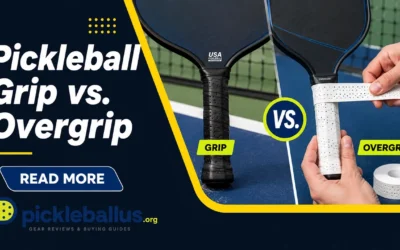
For a detailed comparison that goes beyond the table — including specific product matchups for each scenario — see the pickleball grip vs overgrip guide.
When Should You Replace Your Pickleball Grip?
Yes — replace your pickleball grip on a schedule, not just when it feels obviously worn. Most players wait too long, losing control and consistency weeks before they identify the grip as the source of the problem. The grip degrades gradually, making the performance loss easy to attribute to other causes — technique, fatigue, the ball — before a fresh grip installation immediately reveals how much had been lost.
Standard replacement intervals:
- Overgrips: Every 6–8 sessions for players who play 3× or more per week; at minimum monthly for casual players
- Replacement grips: Every 6–12 months of regular play, shorter in hot or humid climates where material degrades faster
- Grip tape: Every 4–8 sessions, on the same schedule as overgrips
Three signs requiring immediate replacement, regardless of session count: the surface looks visibly smooth and compressed with no texture remaining; the hand slides during high-force forehand drives; the grip material leaves discoloration or residue on the palm.
The freshness test: Drag a fingernail across the grip surface with light pressure. A fresh overgrip catches and provides slight resistance. A worn grip lets the nail slide without catching. That drag-point is when performance has already dropped — the grip should be replaced before it goes completely smooth.
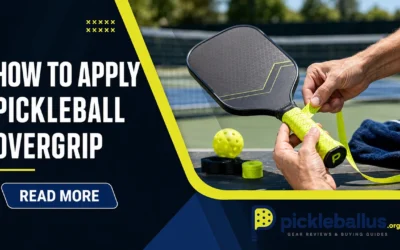
For step-by-step installation photos and technique to apply a new overgrip without wrinkles, air gaps, or uneven tension, see the how to apply pickleball overgrip guide.
By now, you have a clear framework for all three grip types, what to buy in each situation, and how often to replace. The overgrip-vs-replacement decision is settled by one thumbnail press on the base grip. What the above sections don’t address are the factors that work at a deeper level — specifically, how handle circumference interacts with shot mechanics, and what grip habits the top pros use in competition. The next section covers those finer points that separate players who manage their grip casually from those who treat it as a performance variable.
Beyond the Grip — Size, Pro Preferences & Climate Factors
Grip Size and Handle Circumference — Why It Matters
Grip size affects injury risk and shot control in ways that no overgrip swap can fix. Pickleball paddle handles range from 4″ to 4 1/2″ in circumference. A handle too thin forces the hand to overwork at contact — the grip muscles activate harder on every shot to compensate for the insecure fit, accelerating fatigue and increasing tennis elbow risk over time. A handle too thick reduces wrist snap and makes finesse volleys at the kitchen line feel rigid and slow to redirect.
The standard measurement method: extend the non-dominant hand palm-up and flat. Measure from the tip of the ring finger to the bottom lateral crease running across the palm. That distance in inches corresponds closely to the ideal grip circumference. Players between sizes — say, measuring 4 1/8″ — should go smaller (4″) and add an overgrip to fine-tune. Going larger and removing layers is harder and less precise.
For a detailed sizing breakdown across every major paddle brand, visit the pickleball paddle grip size guide.
How Pros Approach Their Grip Setup
Most professional pickleball players use overgrips — not replacement grips — as their primary performance tool, and they replace them far more often than recreational players. Ben Johns uses the JOOLA overgrip he helped design; several touring pros including Tyson McGuffin have worked with Tourna for its dry-tac reliability in variable outdoor conditions. The common thread: pro players change overgrips between games, not between seasons.
The practical takeaway for recreational players is direct: if professionals replace overgrips every game or two, the grip from three months ago is performing measurably below where it should. The $1.50 spent on a fresh overgrip before a league session is the cheapest performance upgrade in pickleball — cheaper than new balls, cheaper than new shoes, cheaper than a lesson.
Overgrips in Hot Weather vs Cool Weather — Does Climate Matter?
Yes — climate is one of the most underrated variables in grip selection, and treating it as irrelevant leads to wrong purchases. In hot, humid conditions above 80°F with direct sun, moisture-absorbing grips (Tourna, UDRIPPIN) significantly outperform tacky grips. Tacky material saturates under heavy sweat within 30–45 minutes of outdoor play and becomes progressively slicker rather than more secure.
In cool, dry conditions below 65°F, the dynamic reverses. Absorption-based grips can feel rough or overly textured when hands are dry and cool. Tacky grips (Gamma Supreme, Lizard Skins DSP) provide better feel in these conditions because their surface chemistry works without sweat activation.
A two-grip rotation is the practical solution for players in variable climates: one absorption-based grip (Tourna or UDRIPPIN) for summer outdoor sessions, one tacky grip (Gamma Supreme or JOOLA) for indoor or cooler weather play. At $1–$2 per grip, keeping both types on hand costs less per month than a can of balls — and eliminates the most common source of avoidable paddle slippage.