

The PPA Tour (Professional Pickleball Association) is pro pickleball’s most elite individual-player circuit — a tour built around exclusive contracts, high prize money, and the sport’s top-ranked players. Founded in 2018 and launched as a competitive tour in 2019, the PPA sits at the center of the professional pickleball leagues ecosystem alongside Major League Pickleball (MLP) and the Association of Pickleball Professionals (APP). If you’ve watched a Ben Johns singles match or followed Anna Leigh Waters through a tournament bracket, you were almost certainly watching a PPA Tour event.
Three professional tours now define the pickleball landscape, and each one operates with a fundamentally different philosophy. The APP is open-access and development-focused, MLP is a team-based franchise league, and the PPA is the most prestigious and exclusive of the three — functioning closer to how the ATP or WTA works in tennis than a recreational circuit. What distinguishes the PPA isn’t just prize money; it’s the contractual grip it holds on the sport’s biggest names.
For fans trying to understand why their favorite pro can’t show up at a certain event, or for competitive players wondering what it actually takes to join the tour, the details behind the PPA’s structure matter. The PPA’s model of exclusive player deals, proprietary governing rules, and a distinct ranking system creates a tour experience that’s unlike anything else in pickleball — for better and, occasionally, for worse.
Below is a complete breakdown of what the PPA Tour is, how it started, how it operates today, and where it’s heading in 2026 and beyond.
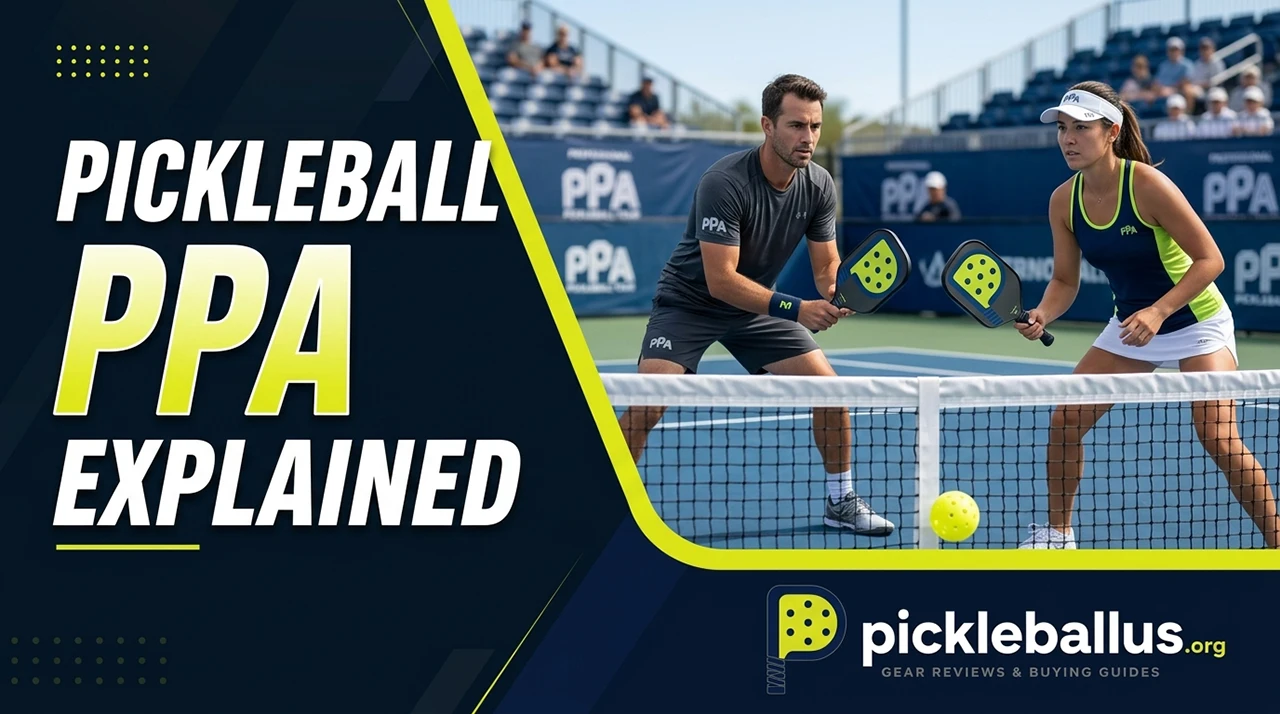
What Is the PPA Tour in Pickleball?
The PPA Tour stands for the Professional Pickleball Association Tour — the primary individual-format professional pickleball circuit for contracted elite players in the United States and, increasingly, the world. Think of it as the ATP Tour of pickleball: a tour where the sport’s best-ranked professionals play head-to-head in singles, doubles, and mixed doubles events at marquee venues across the country, with broadcasting, sponsorship, and prize money to match.
The PPA was founded with the goal of formalizing the elite tier of professional pickleball at a time when the sport was growing far faster than its organizational infrastructure could keep up. Unlike recreational leagues or open-draw tournaments, the PPA places its contracted players at the center of every event — these are the matches broadcast on TV and streamed globally.
How the PPA Differs from Other Sports Leagues
What truly sets the PPA apart from other professional sports organizations isn’t its size — it’s the exclusive contract model. PPA-contracted players cannot compete in APP Tour events. This is the most important structural feature of the tour and the one that generates the most debate in the pickleball community. In tennis, top pros play on a single unified ATP/WTA circuit. In pickleball, the PPA pulled many of the sport’s top names into an exclusive arrangement that effectively cleaved the professional field in two.
The financial terms of these contracts vary considerably. Some players receive entry fee coverage only, while others — typically those ranked inside the top tier — are reported to earn salaries of $100,000 or more per year through the PPA. The trade-off is exclusivity: once you sign with the PPA, the Association of Pickleball Professionals Tour is off-limits. For top earners, that trade makes financial sense. For mid-tier players, it’s a more complicated calculation.
PPA vs. APP vs. MLP — At a Glance
The three major professional pickleball organizations each occupy a different position in the ecosystem. The PPA is the most elite, operating as an individual-format tour with the sport’s highest-profile contracted players. The APP runs an open-access model where pros and amateurs compete at the same events, offering a pay-per-round structure rather than contracted salaries. Major League Pickleball explained — which operates as a sister entity to the PPA under the United Pickleball Association (UPA) umbrella — is a team-based franchise league built around drama, momentum swings, and fan entertainment rather than straight head-to-head standings.
The following table summarizes the three tours across the most common comparison points:
| Feature | PPA Tour | APP Tour | Major League Pickleball |
|---|---|---|---|
| Format | Individual (singles/doubles) | Individual + amateur mixed | Team franchise league |
| Player access | Contracted/exclusive | Open registration | Draft-based teams |
| Rating system | DUPR | UTR | DUPR (via UPA) |
| Governing body | UPA | USA Pickleball (USAP) | UPA |
| Broadcast focus | High-profile TV/streaming | Growing regional presence | Team-rivalry entertainment |
| Amateur participation | PPA Challenger Series | Yes — same events as pros | No |
How Did the PPA Tour Start?
The PPA Tour was founded in 2018 and held its first professional and amateur tournament in February 2019. At the time, pickleball was already growing rapidly in the United States, but professional infrastructure for the sport was minimal. The founding vision was direct: create a dedicated elite-tier circuit that would give top players a legitimate competitive and financial home — and give the sport a credible platform through which to reach broader audiences.
The Founding of the PPA (2018–2020)
The early years of the PPA were shaped by two parallel forces: the explosive growth of recreational pickleball and the absence of any unified, well-funded professional structure. Before the PPA, the APP had already established itself as a functional touring circuit, but its open, pay-per-round model was never designed to compete for the sport’s top talent financially. The PPA stepped into that gap with a different proposition — guaranteed income and dedicated professional development in exchange for exclusivity.
In those early seasons, the PPA secured contracts with several of the game’s emerging stars, including Ben Johns, who would go on to become arguably the most dominant singles player in the sport’s history. That early move to lock up elite talent defined the PPA’s identity from the start: it was always going to be the tour where the best played, or it was going to struggle to justify its exclusivity.
From Startup Tour to the United Pickleball Association (UPA)
The PPA’s relationship with Major League Pickleball, which launched in 2021 as a team-based alternative to the individual format, evolved over time from a complementary entity into a formal partnership. By 2024, both the PPA Tour and MLP were brought together under the umbrella of the United Pickleball Association (UPA) — a newly formed governing body designed to consolidate rules, paddle testing, sanctioning, education, and international outreach under one roof.
The UPA formation was a significant structural shift. Before the UPA, the PPA and USA Pickleball (USAP) operated as parallel and sometimes competing authorities — with different paddle approval lists, different rating systems, and different eligibility rules. The UPA was positioned as the answer to that fragmentation, though its relationship with USA Pickleball has remained an ongoing point of discussion within the professional community.
How Does the PPA Tour Work?
The PPA Tour runs a season-long individual circuit in which contracted professionals accumulate ranking points across tour stops to determine standing and qualification for championship events. The 2025–2026 season runs a fall-to-spring calendar, with the PPA Finals serving as the season’s culminating event before the MLP season takes over for the summer. From August 2026, the new 2026–2027 season begins under an expanded international format.
PPA Tour Format — Individual Events vs. MLP Team Format
PPA Tour events feature singles, doubles, and mixed doubles divisions. Matches are scored in a best-of-three sets format, with each set played to 11 points and required to be won by two. Critically, players can only score points on their serve — the same side-out scoring system that distinguishes pickleball from rally-scoring sports.
At major PPA events, the top players in each division compete in pool play and bracket rounds, with the highest-value events — called Slams — offering the most ranking points. The 2025–2026 season featured two Slams: the PPA Masters in Palm Springs and the Veolia Atlanta Pickleball Championships. The Pickleball World Championships in Dallas returns as a flagship annual event.
The PPA’s individual format stands in direct contrast to MLP, which operates on a team-franchise model featuring the Dreambreaker tiebreaker format — a singles-style competition that has become one of professional pickleball’s most dramatic moments.
The PPA’s Exclusive Player Contract System
The PPA’s exclusive player contract system is both its greatest strength and its most-criticized feature. Players contracted by the PPA cannot compete in APP Tour events — a restriction that effectively bifurcates the professional pickleball landscape. For fans, this means the sport’s top names are often missing from events on the competing circuit.
Contracts vary significantly in scope. Entry-level deals may simply cover a player’s tournament entry fees — saving anywhere from $500 to $700 per event. More established players receive structured salaries, with reported top-tier contracts exceeding $100,000 per year. The PPA has used its financial backing to lock up many of the sport’s highest-profile names, creating what amounts to an exclusive premier league while the APP operates more like an open-circuit alternative.
DUPR — The Rating System Behind PPA
The PPA Tour uses DUPR (Dynamic Universal Pickleball Rating) as its official player rating system. Unlike the UTR (Universal Tennis Rating) system used by the APP, DUPR was built exclusively for pickleball and focuses on tracking performance across all levels of competitive play — from recreational games to elite PPA events.
DUPR ratings are numeric and skill-level specific, ranging in a way that allows both a club recreational player and a PPA contracted professional to share a common rating currency. For players on the PPA circuit, DUPR scores influence rankings, event seeding, and long-term visibility within the professional ecosystem. The UPA’s adoption of DUPR as the standard across both the PPA Tour and MLP has further solidified its position as the de facto rating system for elite pickleball.
Prize Money and Player Pay on the PPA Tour
The PPA Tour offers among the highest prize pools in professional pickleball. At standard tour events, prize payouts reach into the top finishers in each division, with Slam-level events delivering substantially larger purses. The PPA Finals, the season-ending championship, puts 2,000 ranking points on the line for winners in each division.
Player compensation on the PPA differs from the APP’s pay-per-round model. While APP players earn based on how far they advance per event, PPA contracted players operate under a different financial structure. Their guaranteed salary (where applicable) comes through the contract itself, not just tournament performance. This model favors the sport’s most established stars but offers less direct earning flexibility for mid-tier signed players who perform inconsistently.
Who Are the Top PPA Tour Players?
The PPA Tour roster includes the majority of professional pickleball’s most recognizable names, largely because of the exclusive contract model that has drawn elite talent to the tour since its earliest seasons. For a broader overview of the full professional roster, the pro pickleball players guide covers the complete competitive landscape.
Men’s Singles and Doubles Stars
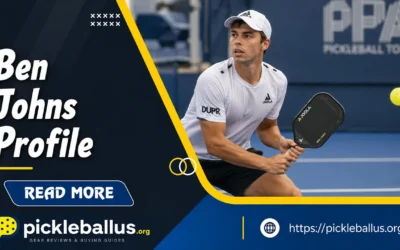
Ben Johns is the defining figure of PPA men’s play — a multi-time champion whose combination of singles brilliance and doubles versatility has made him the sport’s most studied professional. Johns has held the top overall men’s ranking for multiple consecutive seasons and remains the benchmark against which other pro men’s players are measured.
Alongside Johns, the men’s doubles scene features deep rosters of contracted pros including Tyson McGuffin, Riley Newman, JW Johnson, and Federico Staksrud — players whose names recur across podium finishes at every significant PPA event.
Women’s Singles and Doubles Stars
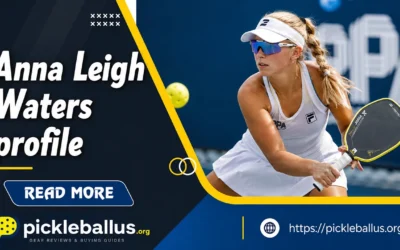
Anna Leigh Waters is the PPA’s most dominant women’s player and one of the sport’s most accomplished professionals regardless of gender division. Waters has claimed singles, doubles, and mixed doubles titles across multiple PPA seasons and remains the top-ranked women’s player on the circuit. At the 2026 PPA Finals, Waters was listed as the No. 1 player in the points standings before withdrawing from singles due to injury — a reminder of how central she is to the women’s competitive narrative.
Other prominent women’s PPA Tour players include Anna Bright, Catherine Parenteau, Parris Todd, and Rachel Rohrabacher — all of whom have collected PPA titles and maintained consistent finishes across tour stops.
Rising PPA Tour Talents to Watch in 2026
The PPA’s competitive depth has deepened considerably as the sport has grown. The PPA Challenger Series functions as a development pathway that gives emerging players the opportunity to earn ranking points and build toward contracted status. Several players who entered through Challenger events have since become regular presences on the main PPA Tour bracket.
Among the names making notable runs on the 2026 circuit: Liz Truluck stepped into the PPA Finals singles draw after Waters withdrew, finishing at No. 9 in the standings and demonstrating the caliber of talent waiting just outside the top eight.
What Does the 2026 PPA Tour Season Look Like?
The 2026–2027 PPA Tour season marks the most ambitious schedule in the organization’s history, featuring a fall-to-spring U.S. calendar bracketed by two flagship events plus an unprecedented international expansion. The new season kicks off on August 31, 2026 with the Pickleball National Championships and includes 20 U.S. tournament stops alongside major events on four continents.
Major U.S. Events on the PPA Calendar
The U.S. schedule retains its most iconic stops while introducing new markets. Dallas returns for the Pickleball World Championships in November, continuing its status as the tour’s flagship annual event. The PPA Finals in San Clemente, California serves as the season-ending championship.
New U.S. locations for 2026–2027 include Chicago and Malibu, joining perennial stops in Dallas, Mesa, Las Vegas, and Atlanta. The season is designed around a split-year structure that coordinates with the MLP schedule — PPA events run from late summer through spring, then give way to MLP’s summer season before the new PPA cycle begins again in the fall.
PPA’s Global Expansion: International Series
The most significant development in the 2026–2027 season is the PPA’s international expansion beyond anything it has previously attempted. The tour now includes regional circuits in Asia, Australia, Canada, and — new for 2026 — Italy. Key international events include stops in Kuala Lumpur, Brisbane, Hong Kong, Vancouver, Ottawa, Toronto, and multiple Italian locations.
PPA Australia will host a record-setting Australian Pickleball Open with a $500,000 prize pool, the largest single international event prize fund in PPA history. PPA Asia will offer its highest total ranking points ever. All points earned at international events count toward the global PPA Tour standings — meaning a pro who performs well in Asia or Australia can meaningfully shift their ranking heading into the U.S. calendar.
By now you have a clear picture of what the PPA Tour is, how it was built from a 2019 startup into a globally expanding circuit, and who the dominant players are across each division. Understanding the PPA’s structure and history sets the stage for a deeper question that both fans and competitive players eventually face: how does it actually compare head-to-head with the APP and MLP, and what do the governing body politics — paddle standards, rating systems, exclusive contracts — mean in practice? The next section digs into those finer distinctions, including the PPA’s controversial paddle approval framework, the Dreambreaker format, the amateur pathway through the Challenger Series, and the long-running debate over whether the PPA and APP will ever fully unify.
Beyond the Basics — What Serious Pickleball Fans Should Know About the PPA
The UPA Governing Body — Rules, Paddle Standards & Controversy
The United Pickleball Association (UPA), formed in 2024, is the governing body that now oversees both the PPA Tour and Major League Pickleball. One of the UPA’s stated goals was to reduce the fragmentation that had made professional pickleball confusing — different tours operating under different rules, with different approved paddle lists creating real problems for players.
The paddle approval conflict is one of the PPA’s most tangible structural quirks: a paddle certified by the UPA for PPA events may not appear on USA Pickleball’s approved list for APP events. For equipment companies seeking cross-tour approval, the divergence creates genuine friction. The PPA’s position outside USA Pickleball sanction means that pickleball paddle materials standards and approval criteria can differ depending on which circuit a player competes on — a situation that affects gear decisions at every level of the sport. The UPA and USA Pickleball have not yet resolved this into a single shared standard.
The Dreambreaker Format and MLP’s Role Under UPA
Within the UPA umbrella, the PPA Tour and Major League Pickleball operate as complementary rather than competing entities. MLP’s most distinctive feature — the Dreambreaker — is a singles-style team tiebreaker format where each team member plays one point in a rotating sequence until one side reaches 21. The format creates some of pro pickleball’s most dramatic moments and has become a signature reason to watch MLP specifically.
The UPA’s coordination between the PPA individual calendar and MLP’s team season is designed to reduce schedule conflicts and ensure the sport’s elite players can appear in both formats across the year. Whether the UPA has fully succeeded in eliminating conflicts remains a matter of ongoing debate among players and fans.
Can Amateur Players Compete on PPA Events?
Amateur players cannot enter main-draw PPA Tour events, which are reserved for contracted professionals and invited players. However, the PPA Challenger Series provides a genuine competitive pathway: a secondary circuit of roughly 20 events per season where non-contracted players can earn PPA Tour ranking points and build the kind of results that attract contract attention.
The Challenger Series is where most of the sport’s next generation of PPA pros begin their professional arc. Players who perform consistently at Challenger events gain visibility within the PPA organization, and standout results can accelerate a player’s path toward a main tour contract.
Will the PPA and APP Ever Merge?
The question of whether the PPA’s exclusive model and the APP’s open-circuit model will eventually unify is one of professional pickleball’s defining debates. The PPA’s financial strength and high-profile contracts make a quick consolidation unlikely on its terms. The APP’s partnership with USA Pickleball and its development-focused model gives it institutional legitimacy that the PPA, operating outside USAP sanction, does not automatically share.
No firm merger is on the horizon. What the UPA formation achieved was a closer alignment between the PPA and MLP specifically — not a resolution of the APP/PPA divide. Until the exclusive contract clause disappears, the sport’s professional ecosystem will remain split: with the PPA operating as pro pickleball’s premium, elite-focused circuit and the APP functioning as its open, development-oriented alternative.


Write Your Review
No reviews yet. Be the first to share your experience!