

Pickleball paddle weight is the single most influential factor determining how a paddle feels during play. Adding lead tape allows players to shift weight distribution without replacing their paddle, fine-tuning characteristics like power, control, and forgiveness on mishits. This guide covers everything from understanding weight categories to applying and customizing with lead tape.

Modern pickleball paddles range from ultra-light models under 7 ounces to heavy paddles exceeding 8.5 ounces, with each category producing distinctly different on-court experiences. Lead tape customization has become increasingly popular among players seeking to optimize their existing equipment rather than purchasing a new paddle. Understanding how to manipulate paddle weight gives players a competitive edge that matches their physical attributes and playing style.
Choosing the right paddle weight starts with assessing your hand size, arm strength, and preferred playing style—whether you prioritize quick reactions at the net or powerful drives from the baseline. For a deeper look at matching paddle characteristics to your game, see our guide on how to choose a pickleball paddle.
Why Does Pickleball Paddle Weight Matter?
Pickleball paddle weight directly affects swing speed, shot power, and arm fatigue during play. Heavier paddles generate more momentum for powerful drives but reduce reaction time at the net, while lighter paddles enable faster swings and quicker hand positioning but deliver less inherent power.
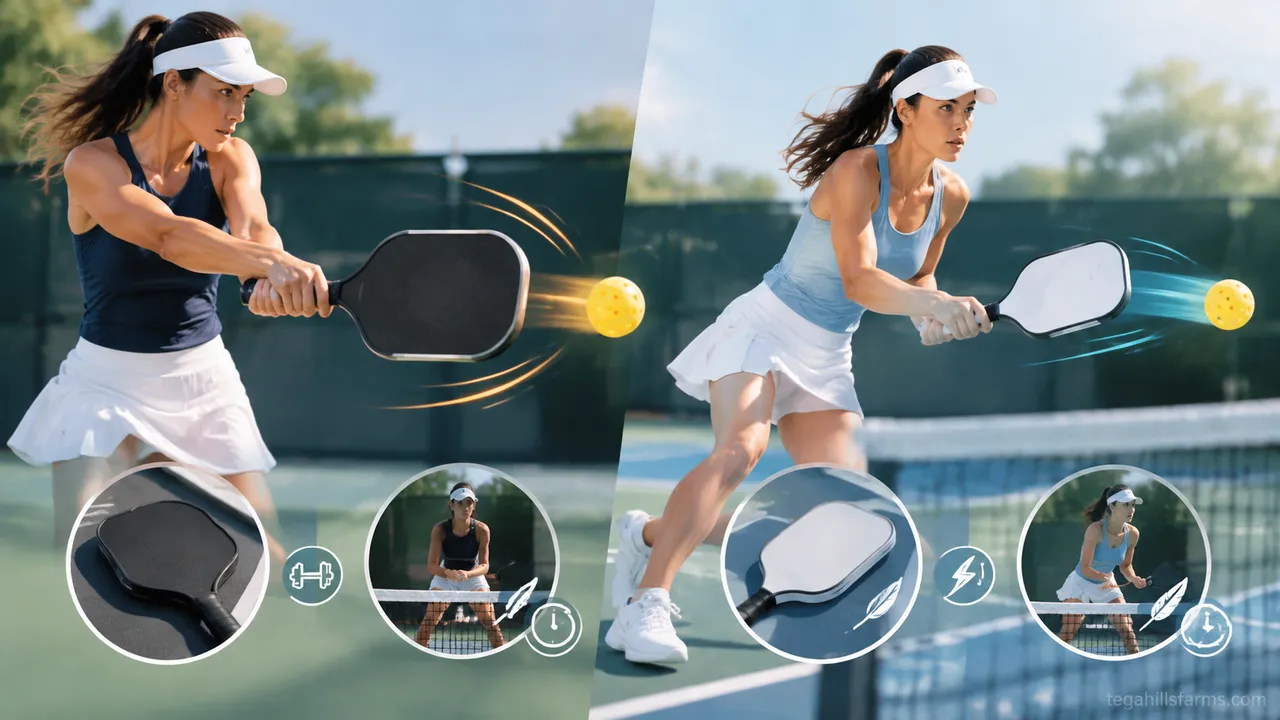
The relationship between weight and performance is biomechanical—your arm must accelerate and decelerate the paddle mass with every shot, thousands of times during a match. Players with smaller frames or previous arm injuries often struggle with heavier paddles, experiencing fatigue and joint strain that accumulates over extended play sessions. Conversely, strong players seeking maximum power may find lighter paddles feel underwhelming on baseline drives.
Manufacturers design paddles with specific weight targets, but individual manufacturing tolerances create variations—two paddles labeled “8.0 oz” might differ by several grams in practice. Lead tape customization addresses these limitations by allowing players to precisely calibrate their paddle’s weight distribution after purchase. This capability transforms an off-the-shelf paddle into a personalized tool optimized for specific court situations and player physiology.
Static Weight vs Swing Weight vs Twist Weight: What’s the Difference?
Three distinct weight measurements—static weight, swing weight, and twist weight—each influence paddle feel differently, and understanding their differences helps players make informed customization decisions for their best pickleball paddles.
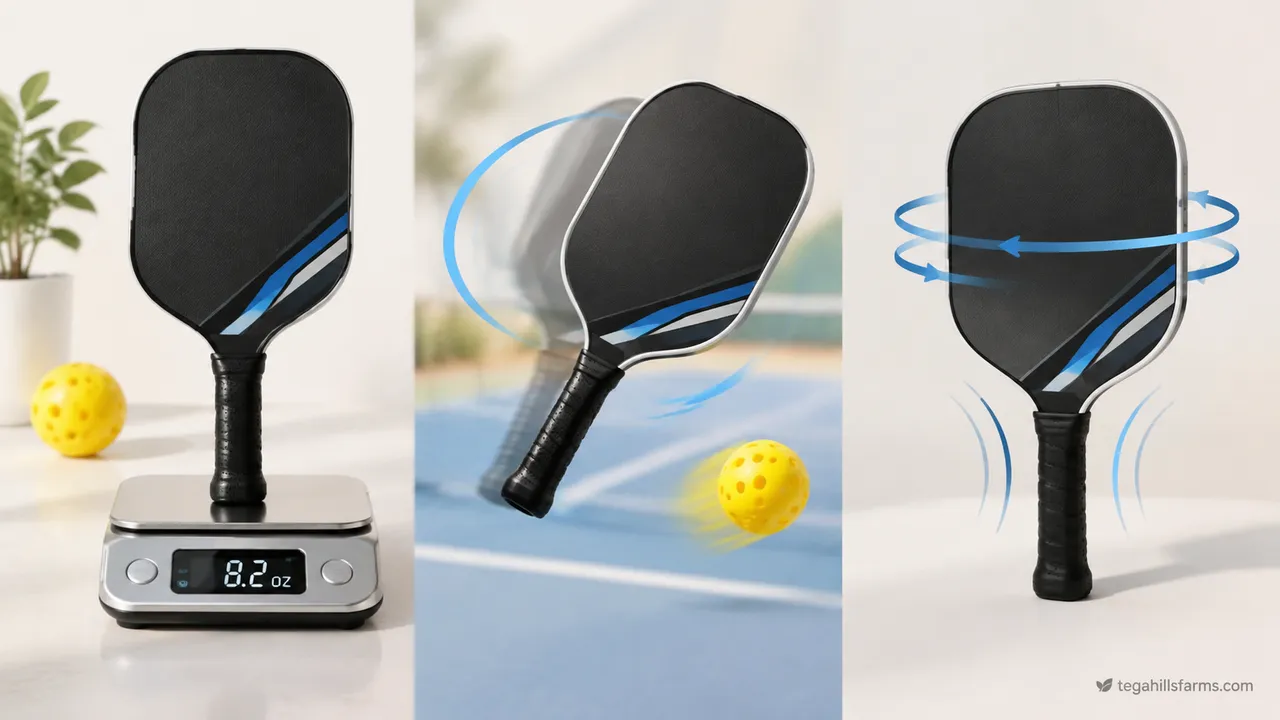
These measurements relate to how mass behaves during actual play versus when the paddle sits stationary. Static weight measures the complete mass, swing weight describes rotational inertia during swings, and twist weight governs stability on off-center contact. Modifying any one of these affects the others, requiring players to understand tradeoffs before applying lead tape.
Static Weight: The Total Mass of Your Paddle
Static weight is the complete mass of your paddle measured at rest, typically expressed in ounces or grams. This figure represents the total amount of material in your paddle and forms the baseline for comparing paddles across manufacturers.
Static weight most significantly influences overall arm fatigue during extended play sessions. A paddle that feels manageable during a short warm-up may become exhausting after a full match or tournament day. Players recovering from elbow or shoulder injuries often benefit from reducing static weight rather than accepting a heavy paddle as their baseline. Many competitive players weigh their paddles with a precision scale before play to ensure consistency across different paddles in their bag.
Swing Weight: How Your Paddle Accelerates
Swing weight measures rotational inertia—the resistance your paddle offers when accelerating through a swing. This measurement determines how much effort you expend to generate racket head speed and directly correlates with shot power and control feel.
Swing weight depends not just on total mass but on where that mass is distributed throughout the paddle. A lighter paddle with weight concentrated at the head may actually have higher swing weight than a heavier paddle with weight concentrated in the handle. Players seeking more power often add weight to the head region to increase swing weight, while those prioritizing quick net play may add weight to the handle to keep swing weight manageable while increasing static weight.
Twist Weight: Stability on Off-Center Hits
Twist weight represents the paddle’s resistance to rotation around its center axis when contact occurs away from the sweet spot. Higher twist weight means more stability on mishits, resulting in fewer shots that veer dramatically off course.
Twist weight becomes particularly important for players who frequently hit near the edges of the paddle face. The sweet spot on most paddles occupies roughly 30-40% of the face area—every shot outside this zone benefits from higher twist weight. Lead tape applied to the sides of the paddle (3 and 9 o’clock positions) effectively increases twist weight without dramatically affecting swing weight, making this a popular customization for players seeking forgiveness on off-center contact.
What Are the Standard Paddle Weight Categories?
Three main pickleball paddle weight ranges—lightweight under 7.5 oz, midweight from 7.5 to 8.2 oz, and heavyweight exceeding 8.2 oz—each produce different gameplay characteristics suited to specific player types and preferences.
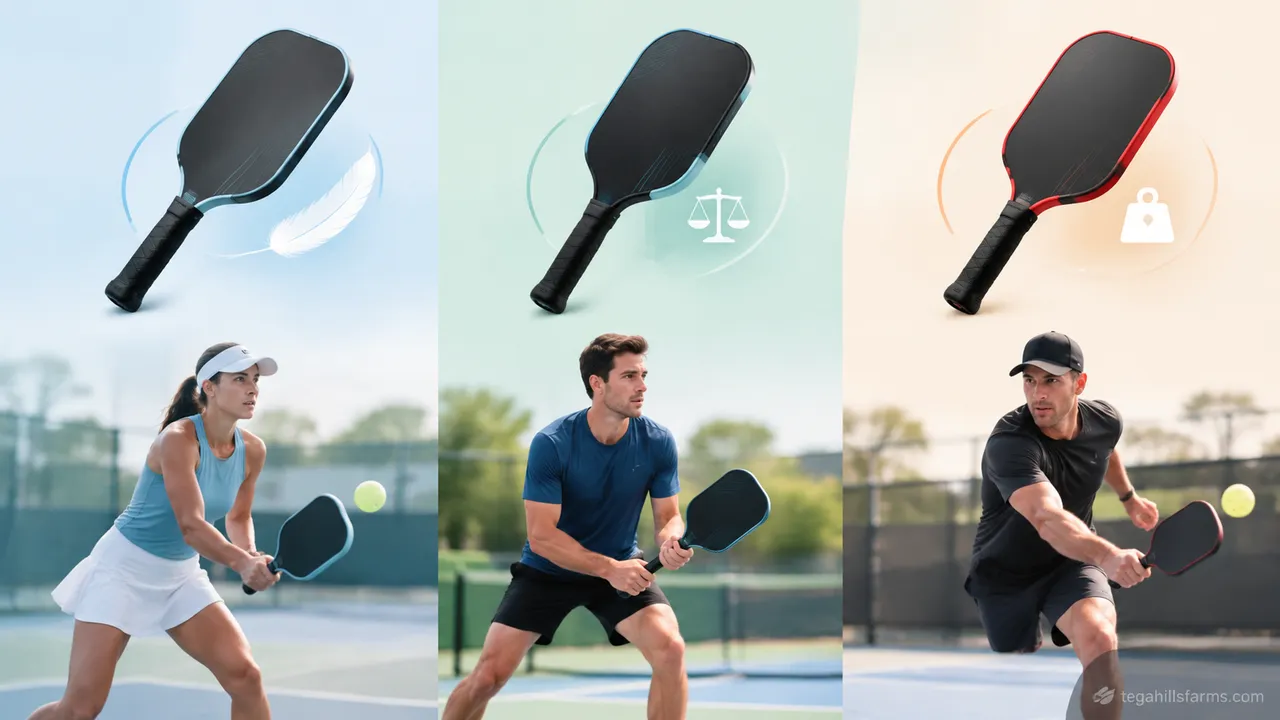
These categories represent general guidelines rather than strict regulations, and manufacturers often label paddles across overlapping ranges. Understanding where a paddle falls within these categories helps predict its behavior and determine whether customization might be beneficial. For a complete breakdown of paddles in each category, explore our guides on best pickleball paddles and best lightweight pickleball paddles.
Lightweight Paddles (Under 7.5 oz)
Lightweight paddles under 7.5 oz excel for players prioritizing quick reactions, wrist snap speed, and arm health during extended play. These paddles reduce strain on the shoulder and elbow joints, making them particularly suitable for players recovering from injury or those playing multiple matches daily.
The primary advantage of lightweight paddles lies in maneuverability—players can prepare faster, change direction quickly, and generate high racket head speeds with minimal effort. However, this comes at the cost of inherent shot power, meaning players must contribute more energy through their swing to achieve comparable ball speed. Competitive net players and those with fast hand speed often thrive with lightweight paddles, relying on placement and spin rather than raw power to dominate opponents.
Midweight Paddles (7.5 to 8.2 oz)
Midweight paddles between 7.5 and 8.2 oz offer the most balanced performance characteristics for the majority of recreational and competitive players. This range represents the sweet spot where power potential and maneuverability coexist without significant compromise in either direction.
Most paddles in this category feel manageable during extended play while providing enough mass to generate respectable drive power without requiring maximum swing effort. Players unsure of their ideal weight category typically find midweight paddles provide an excellent starting point for customization refinement. The versatility of midweight paddles makes them the best selling category for most manufacturers and the most commonly recommended starting point for players learning to assess their preferences.
Heavyweight Paddles (8.2+ oz)
Heavyweight paddles exceeding 8.2 oz deliver maximum power potential through sheer mass momentum but require greater physical strength and accepted fatigue tradeoffs. These paddles suit players with strong upper bodies who prioritize baseline power and drive game dominance.
The physics favor heavyweight paddles for power shots—the extra mass converts into ball speed without requiring elite swing mechanics. However, the same mass that generates power also slows preparation time and increases arm fatigue. Players transitioning from tennis racquets often appreciate the familiar weight, as do larger-framed athletes with the strength to manage the paddle effectively throughout long matches. For players seeking maximum power from a lighter base paddle, adding lead tape can shift a midweight into heavyweight territory.
What Is Lead Tape and Why Use It for Paddle Customization?
Lead tape is a thin, dense strip of material—typically lead or lead alloy—used to add weight to specific areas of a pickleball paddle. This customization tool allows players to modify their paddle’s weight distribution without replacing the entire paddle, targeting specific performance characteristics.
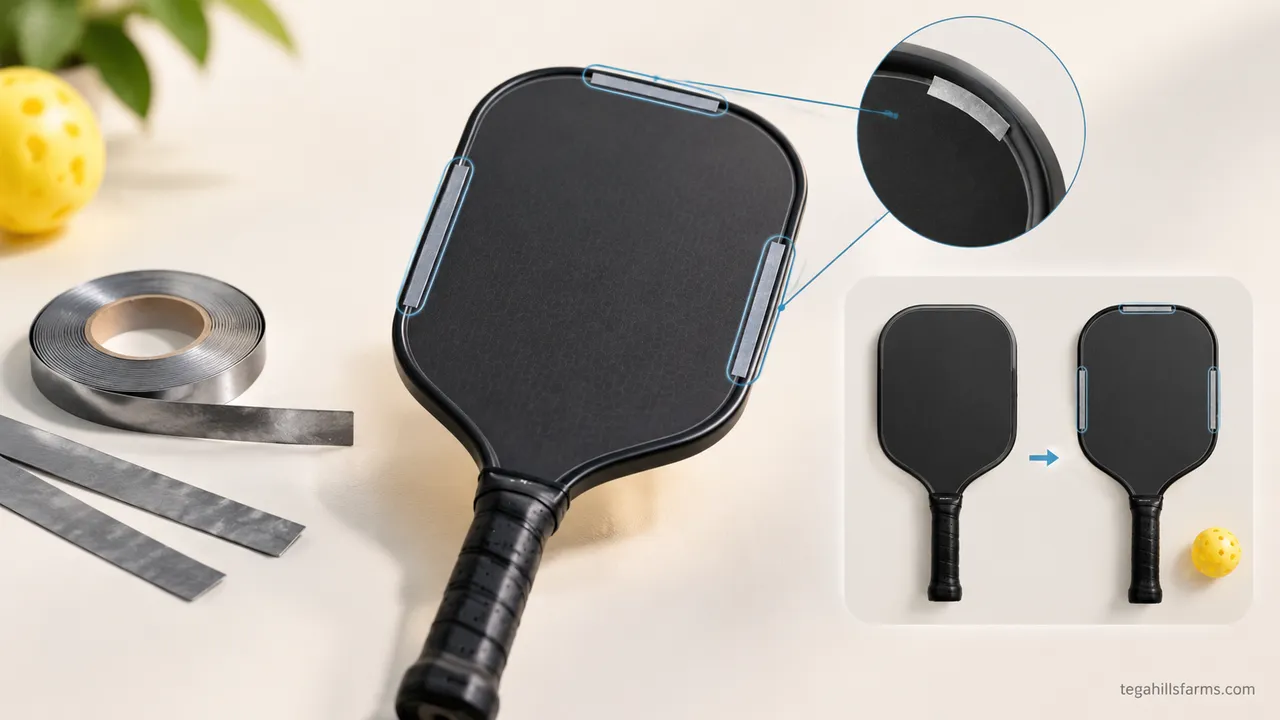
Lead tape typically comes in rolls or strips of specific widths and lengths, with each linear inch representing a predictable weight increase. Players can cut tape to custom sizes and apply it precisely where needed, creating personalized weight configurations impossible to find in off-the-shelf paddles. For players considering this customization, understanding the available options helps match equipment to goals—our guide on best pickleball paddles under $100 covers budget-friendly paddles that still accept lead tape customization well.
What Is Lead Tape Made Of?
Lead tape material consists primarily of lead or lead alloy, sometimes with small percentages of other metals for improved durability and handling characteristics. Lead’s exceptional density—approximately 11.3 grams per cubic centimeter—allows significant weight addition from minimal tape volume.
Traditional lead tape offers the highest density-to-cost ratio of any readily available customization material. However, concerns about lead toxicity have driven development of alternatives, most notably tungsten tape, which offers comparable density (approximately 19.3 grams per cubic centimeter for pure tungsten) without the health hazards. Lead tape requires careful handling to avoid skin contact and ingestion risks, while tungsten alternatives eliminate these concerns entirely at a higher material cost.
Why Customize Your Paddle with Lead Tape?
Lead tape customization offers three primary benefits: fine-tuning weight to match your physical attributes, adjusting weight distribution for specific playing characteristics, and optimizing paddle forgiveness on mishits. These modifications can transform an off-the-shelf paddle into equipment precisely matched to your game.
Players choose lead tape for various reasons—adding power through head weight, increasing stability through side weight, or shifting balance point through handle additions. A paddle that feels nearly perfect but slightly underpowered can gain the missing edge without the expense of upgrading. Competitive players often maintain multiple weight configurations for different opponents or court conditions, applying or removing tape between events. The relatively low cost of lead tape (typically under $20 for sufficient tape to customize multiple paddles) makes this customization accessible to players at every budget level.
How Much Lead Tape Should You Add to Your Paddle?
Lead tape quantity ranges from minimal 2-4 gram additions for subtle refinements to substantial 10+ gram additions that dramatically transform paddle characteristics. The appropriate amount depends on your current paddle weight, physical strength, and specific performance goals.
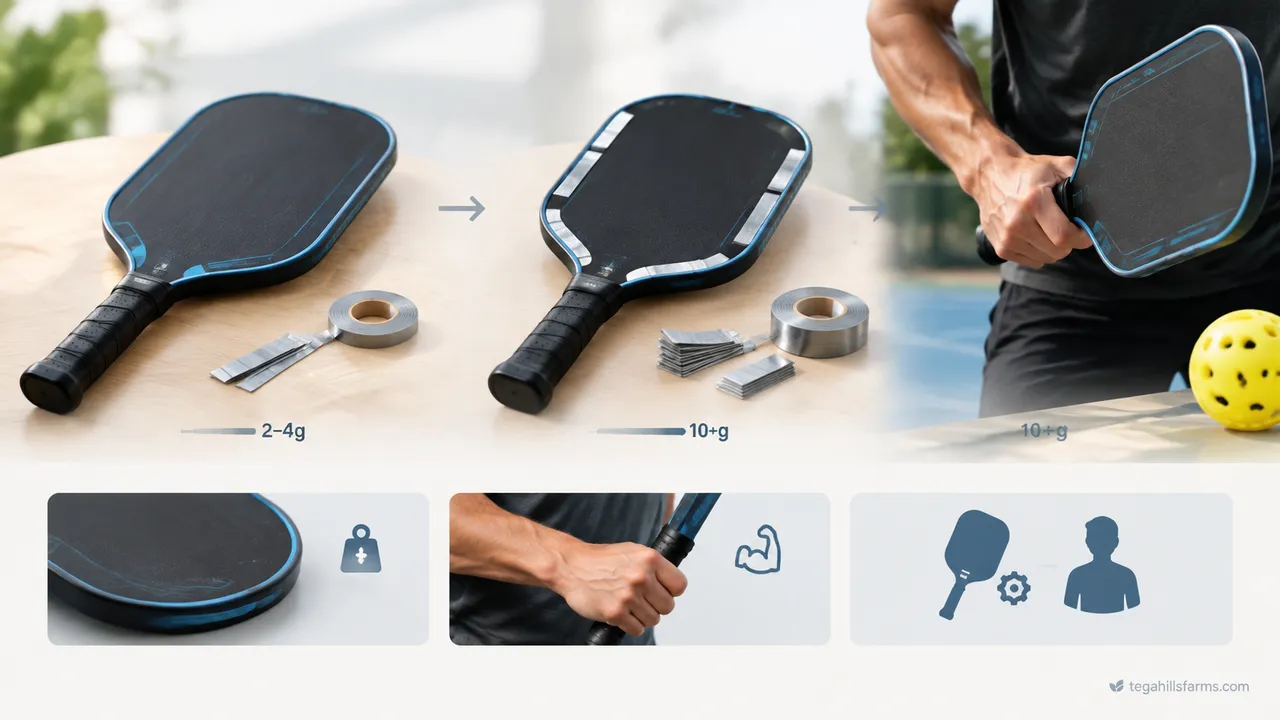
Adding lead tape affects multiple weight measurements simultaneously—static weight increases universally, while swing weight and twist weight changes depend on placement location. Understanding these relationships helps players choose quantities that target specific improvements without creating unintended side effects. For detailed recommendations matching your play style, see our guide on how to choose a pickleball paddle.
Minimal Additions: 2 to 4 Grams
Minimal lead tape additions of 2 to 4 grams provide subtle refinements that fine-tune paddle feel without dramatically altering characteristics. This range suits players satisfied with their current paddle but seeking minor improvements in specific areas.
At 2-4 grams, the changes are perceptible but not transformative—a slightly more stable paddle face, marginally increased power potential, or a subtle shift in balance point. Players new to customization often start here, adding small amounts and testing before committing to larger modifications. This conservative approach also minimizes risks associated with over-customization and allows gradual assessment of what works for your game.
Moderate Additions: 6 to 10 Grams
Moderate lead tape additions of 6 to 10 grams shift paddle characteristics noticeably and may effectively move a paddle into a different weight category. This range suits players seeking significant performance changes or those with specific physical requirements that their current paddle doesn’t meet.
At these quantities, the performance differences become obvious during play—dramatically improved off-center stability, noticeable power increases, or substantial balance point shifts. Players adding 6-10 grams often report their paddle feeling like genuinely different equipment compared to the unmodified version. This range requires careful consideration of the tradeoff between benefits and potential drawbacks like reduced maneuverability or increased fatigue.
Substantial Additions: 10+ Grams
Substantial lead tape additions exceeding 10 grams create dramatic paddle transformations that suit advanced players with specific performance requirements. This level of customization represents a significant commitment that fundamentally changes how the paddle plays.
Players adding 10+ grams typically have clear objectives—maximum power for baseline drives, extreme stability for competitive tournament play, or specific balance requirements based on detailed self-assessment. At these quantities, the paddle’s character changes completely, and players must substantially adjust their stroke mechanics to accommodate the new characteristics. This level of customization works best for experienced players who have tested moderate additions and determined they need even more pronounced effects.
Where to Place Lead Tape on Your Paddle?
Lead tape placement location determines which weight measurement changes most significantly—side placement increases twist weight, top placement increases swing weight, and handle placement increases static weight with minimal swing weight impact. Strategic placement targets specific performance improvements.
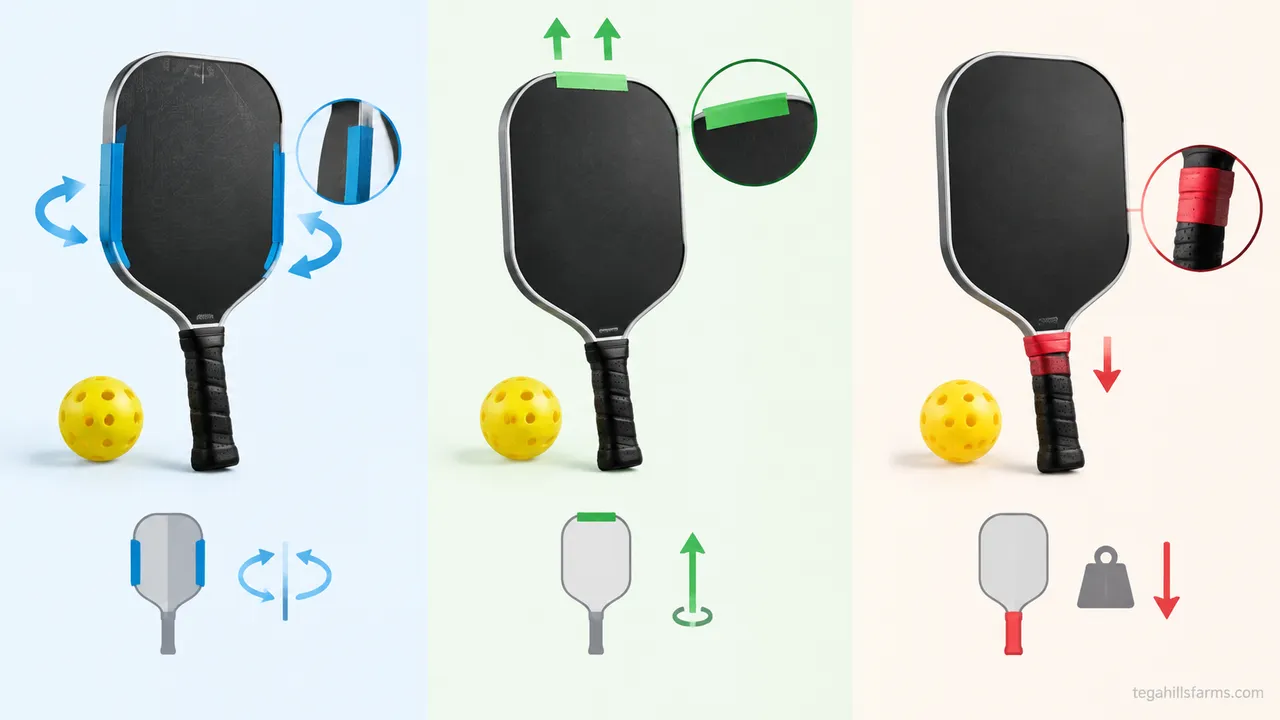
Understanding the physics of each placement helps players make informed decisions matching their needs. The same quantity of tape produces vastly different effects depending on location, making placement arguably more important than quantity for achieving specific goals. Players can combine multiple placements for customized effects, though this requires careful planning to avoid unintended consequences.
Placing Tape at the Sides (3 and 9 O’Clock)
Side lead tape placement at 3 and 9 o’clock positions effectively increases twist weight, improving paddle stability on off-center hits. This placement spreads the added mass perpendicular to the paddle’s long axis, creating resistance against rotation during mishits.
The primary benefit of side placement is forgiveness—shots hit toward the edges of the paddle face behave more consistently with shots hit at the sweet spot. Players struggling with mishits or those developing consistency often find side placement transforms their worst shots into playable rallies. This placement minimally affects swing weight, preserving quick maneuverability while adding stability—a combination that benefits players at every level.
Placing Tape at the Top (12 O’Clock)
Top lead tape placement at the 12 o’clock position increases swing weight by adding mass at the paddle’s head. This placement maximizes power potential but requires more effort to swing the paddle through contact.
Players seeking maximum drive power benefit most from top placement, as the added head weight generates more momentum on every shot. However, this comes with tradeoffs—slower preparation time, increased fatigue, and potentially reduced control on delicate net shots. Top placement works best for players with strong arms who prioritize power over all other characteristics, or for those playing primarily baseline games where quick net transitions aren’t required.
Placing Tape at the Handle or Butt Cap
Handle lead tape placement increases static weight substantially while affecting swing weight minimally. The added mass sits close to the rotation point (your grip), requiring less additional effort to swing while increasing overall paddle heaviness.
This placement suits players seeking more presence in their paddle without sacrificing maneuverability. The added handle weight creates a more solid feel on contact and can reduce vibration transfer to the arm. However, excessive handle weight shifts the balance point toward the grip, potentially making the paddle feel “head light”—a characteristic some players dislike despite the maneuverability benefits. Players dealing with arm fatigue might consider handle placement as a compromise between adding weight and maintaining swing speed.
Balanced Placement vs Extreme Configurations
Balanced weight placement distributes tape across multiple positions to achieve moderate improvements across characteristics, while extreme configurations concentrate tape in single positions for pronounced effects in specific areas. Both approaches have merit depending on player goals.
Balanced approaches suit players seeking overall improvement without dramatic tradeoffs—a paddle that’s slightly more stable, slightly more powerful, and slightly more substantial without excelling in any single area. Extreme configurations target specific weaknesses aggressively, accepting tradeoffs in other areas to achieve singular improvements. Most players benefit from starting with balanced placements and gradually moving toward extremes if specific needs aren’t met.
How to Apply Lead Tape to Your Paddle: Step-by-Step
Applying lead tape correctly requires proper surface preparation, precise measurement, careful placement, and post-application testing. Following these steps ensures secure adhesion and optimal customization results that last through regular play.
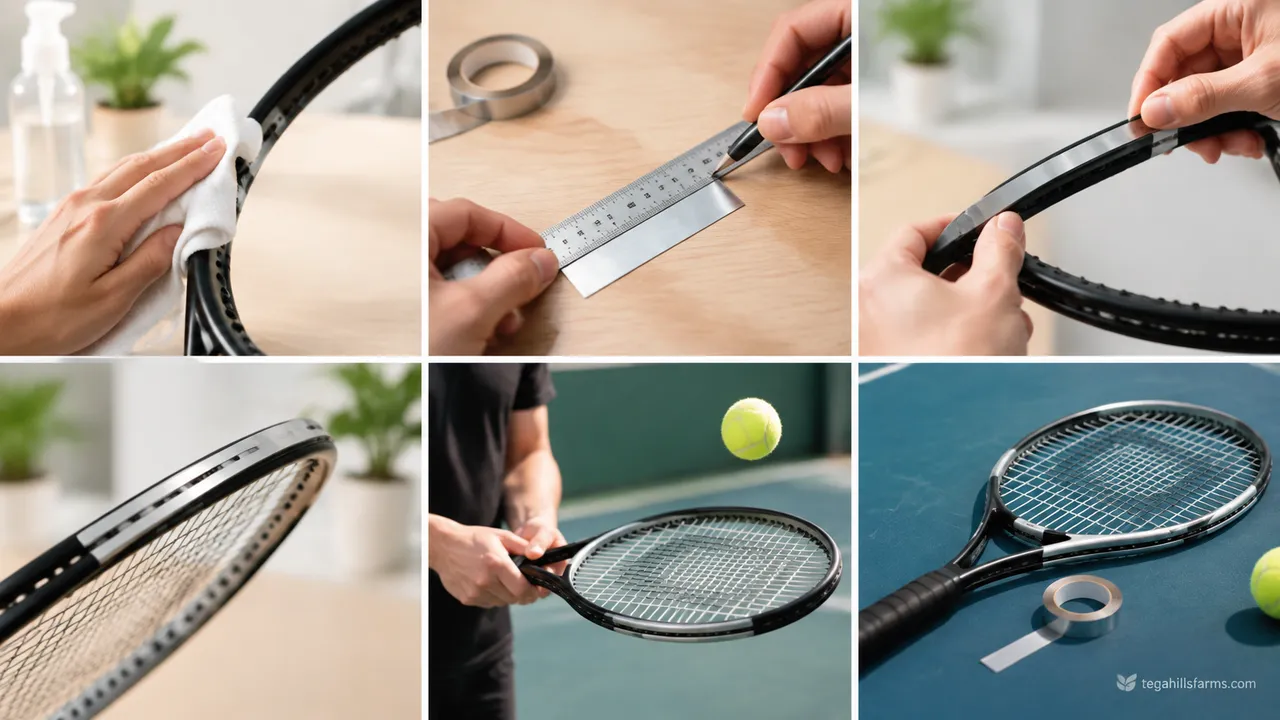
Lead tape application is reversible—improperly applied tape can be removed and reapplied, though multiple applications may reduce adhesive effectiveness. Taking time with preparation and placement prevents wasted tape and ensures the customization achieves intended effects.
Step 1: Clean and Prepare the Paddle Surface
Paddle surface preparation before lead tape application ensures clean adhesive bonding that lasts. Any contamination—oil from skin, dust, grip residue—reduces adhesion strength and may cause premature tape failure during play.
Use isopropyl alcohol and a clean cloth to wipe the intended application area thoroughly. Allow the surface to dry completely before applying tape, as moisture beneath the adhesive creates bonding problems. For textured paddle faces, cleaning becomes especially important as texture traps contaminants that interfere with adhesion. Some players lightly sand high-gloss paddle surfaces to improve bonding, though this risks damaging the paddle’s cosmetic finish.
Step 2: Measure and Cut the Lead Tape
Lead tape cutting to precise dimensions ensures accurate weight additions and clean application. Measure twice before cutting, as lead tape cannot be easily rejoined after separation.
Most lead tape products have a consistent weight-per-linear-inch specification. Calculate the length needed for your target weight addition, then add a small margin for trimming adjustments. Use sharp scissors or a craft knife for clean cuts—jagged edges indicate dull cutting tools that may also damage the tape material during use. Cutting strips to standard lengths (half-width, quarter-width) makes future adjustments easier and allows consistent application across multiple paddles.
Step 3: Apply the Lead Tape Carefully
Lead tape application technique determines how securely the tape bonds and how it affects paddle aesthetics. Peel the backing gradually while pressing the tape onto the paddle surface, starting from one edge and working across to eliminate air bubbles.
Apply firm pressure along the entire tape surface, paying special attention to edges where lifting most commonly occurs. Use a credit card or similar tool to press from center outward, forcing any trapped air toward the edges. For curved or contoured paddle surfaces, warm the tape slightly with a hairdryer to increase flexibility and improve conforming to complex shapes.
Step 4: Test Your Paddle After Application
Paddle testing after customization confirms the tape is securely bonded and validates that the modifications achieve intended effects. Never use a customized paddle in competition without thorough testing beforehand.
Start with gentle swings to check for tape shifting, then progress to controlled rallies before returning to competitive intensity. Pay attention to how the modified paddle performs on mishits, net shots, and power drives—these situations reveal whether the customization achieved its goals. Adjust tape placement or quantity if the results don’t match expectations, removing and reapplying as needed until the configuration is optimized.
Is Lead Tape Safe to Use on Pickleball Paddles?
Lead tape safety concerns center on lead’s toxicity, requiring specific handling precautions to minimize exposure risk during application and use. When handled properly, lead tape presents minimal risk, though alternatives exist for players seeking to avoid lead entirely.
Understanding the actual risk level helps players make informed decisions—lead tape has been used successfully in tennis and other racket sports for decades without widespread health incidents among recreational players. The key is following basic safety practices that prevent skin contact and ingestion.
Safe Handling Practices for Lead Tape
Lead tape safety precautions include wearing gloves during application, washing hands thoroughly afterward, and avoiding touching your face or eating while handling the material. These simple practices prevent the minimal exposure risk that lead presents.
Never handle lead tape with bare hands, as skin absorption, though limited, can occur with prolonged contact. Work in well-ventilated areas and avoid touching your mouth or eyes during application. Wash all tools and work surfaces after finishing, and store unused tape in sealed containers away from food preparation areas. Players with young children or pregnant household members should consider tungsten alternatives entirely to eliminate any exposure risk.
Tungsten Tape: A Safer Alternative?
Tungsten tape alternative offers comparable density to lead tape without toxicity concerns, making it the preferred choice for safety-conscious players. Tungsten provides approximately 70% more density than lead by volume, meaning less tape achieves the same weight addition.
The primary tradeoff is cost—tungsten tape typically costs three to five times more than equivalent lead tape. However, for players uncomfortable with lead handling or those with specific health concerns, tungsten provides peace of mind alongside excellent customization results. Tungsten’s higher density also means more precise weight additions from smaller pieces, potentially improving placement accuracy for players seeking fine-tuned modifications.
How to Choose the Right Paddle Weight for Your Play Style
Paddle weight selection should align with your dominant playing style, physical attributes, and specific court goals. Power players benefit from heavier paddles, control players prefer lighter weights, and seniors or beginners often find lighter paddles most manageable.
The connection between weight and play style isn’t absolute—individual preferences vary based on strength, technique, and experience. Players transitioning from other sports like tennis may prefer heavier paddles that match their established swing mechanics, while those focused on dinking and net play often benefit from lighter weights enabling quick exchanges.
Weight Recommendations for Power Players
Power player paddle weight typically skews toward midweight to heavyweight configurations, with lead tape additions focused on increasing swing weight and head mass. These players prioritize drive depth and shot velocity over all other characteristics.
Power players typically play from the baseline, trading net presence for shot velocity. Heavier paddles with top-placed lead tape amplify these characteristics, allowing powerful drives that push opponents deep into their court. However, power players must accept reduced maneuverability for net exchanges and increased fatigue during long matches. For players seeking maximum power, see our guide on best pickleball paddles for power.
Weight Recommendations for Control Players
Control player paddle weight favors lighter to midweight configurations that enable precise shot placement and quick net transitions. These players prioritize placement accuracy and touch over raw shot velocity.
Control players succeed through consistency and placement rather than power, forcing opponents into uncomfortable positions through precision rather than velocity. Lighter paddles with potential side-placed lead tape for twist weight provide stability without sacrificing the quick hands needed for effective net play. Players focused on control should explore our guide on best pickleball paddles for control.
Weight Considerations for Seniors and Beginners
Senior beginner paddle weight strongly favors lightweight configurations that reduce arm strain and enable participation without developing bad habits from equipment that’s too heavy. Proper weight selection at this stage prevents injury and establishes good technique.
Seniors and beginners share similar weight needs—minimizing fatigue while learning proper mechanics. A paddle that’s too heavy forces compensatory swing patterns that limit development and risk injury. Lightweight paddles with potential side-placed lead tape for twist weight allow focus on skill development rather than struggling with equipment. Our guides on best pickleball paddles for beginners and best pickleball paddles for seniors offer specific recommendations matching these player types.
Common Mistakes to Avoid When Adding Lead Tape
Lead tape mistakes often stem from adding too much weight, placing tape incorrectly, or failing to test modifications before competitive play. Avoiding these common errors prevents wasted time, money, and equipment damage.
Customization mistakes range from minor (suboptimal tape placement) to significant (adding excessive weight that ruins paddle feel). Most errors are correctable, but preventing them saves frustration and ensures the final configuration achieves intended improvements.
Adding excessive lead tape simultaneously is the most common mistake—players eager for results apply too much weight too quickly, creating a paddle that’s unplayable rather than optimized. Always start conservative and build gradually, testing each addition before adding more.
Neglecting to clean the paddle surface before application causes premature tape failure that wastes material and requires reapplication. This simple preparation step takes only minutes but dramatically improves long-term adhesion.
Failing to test modified paddles in practice before competition risks playing with an unfamiliar configuration against opponents who exploit the resulting weaknesses. Always validate customization results through deliberate practice.
The customization approaches outlined above demonstrate how targeted lead tape placement can transform your paddle’s performance characteristics to match your specific playing style. While adding weight at the sides creates a more forgiving paddle and top placement delivers power, the real artistry lies in finding the balance that works for your game—regardless of your current skill level. With the fundamentals of lead tape application covered, the following section addresses considerations that many players overlook when customizing their paddles for long-term use and injury prevention.
Can You Remove Lead Tape Without Damaging Your Paddle?
Lead tape removal is entirely possible and often advisable when customization needs change or tape begins degrading. With proper technique, tape comes off cleanly without damaging the underlying paddle surface or finish.
Reversibility is a key advantage of tape-based customization—players can experiment freely knowing they can return to baseline configuration at any time. This flexibility encourages exploration and refinement without permanent commitment to experimental configurations.
Safe Lead Tape Removal Process
Lead tape removal process involves warming the tape slightly, peeling carefully from an edge, and pulling at a low angle to avoid leaving material behind. Patience prevents damage that hasty removal causes.
Heat from a hairdryer softens the adhesive, making peeling easier with less force. Work from a corner, pulling slowly at a shallow angle close to the paddle surface. If resistance increases, apply more heat rather than pulling harder. Rushing causes adhesive stretching and residue buildup that complicates cleanup. Work in sections for larger tape areas rather than attempting to remove entire pieces at once.
Handling Adhesive Residue After Removal
Adhesive residue removal requires solvent-based cleaners that dissolve remaining adhesive without damaging paddle surfaces. Testing on an inconspicuous area first confirms compatibility.
Isopropyl alcohol works for many adhesives but may struggle with aged or heat-affected residue. Commercial adhesive removers (like Goof Off or similar products) dissolve stubborn residue more effectively but require cautious testing, as some formulations damage paddle finishes. Apply remover to a cloth first, then to residue—never apply directly to the paddle surface. Clean the area thoroughly after residue removal and allow complete drying before applying new tape or returning the paddle to service.
Does Lead Tape Affect Paddle Longevity?
Lead tape long-term effects are generally minimal when tape is properly applied and removed, though certain scenarios may affect paddle performance over extended periods. Understanding these effects helps players make informed decisions about permanent customization.
Modern paddles with composite faces and polymer cores tolerate lead tape application well. The primary longevity concerns involve adhesive degradation over time and potential surface finish changes from prolonged tape contact.
Properly applied tape rarely damages paddle surfaces, but leaving tape in place for many months may cause finish changes where tape contacts the surface. Players planning permanent customization should check their paddle periodically for any surface changes and remove tape if concerns develop.
The adhesive used in quality lead tape is designed for long-term contact and typically doesn’t degrade paddle materials when properly formulated. However, lower-quality tapes may use adhesives that break down over time, potentially leaving residue or affecting surface appearance.
Frequently Asked Questions About Lead Tape and Paddle Weight
Lead tape and paddle weight customization raises many common questions that players encounter during their first attempts at equipment modification. Addressing these directly helps players make informed decisions and avoid common pitfalls.
How much does one strip of lead tape weigh?
A standard 12-inch strip of lead tape typically weighs between 3-5 grams, depending on width and thickness specifications. Measure your specific tape product to calculate exact additions.
Can I use lead tape on any pickleball paddle?
Most composite and graphite paddles accept lead tape without issues. Wood paddles may experience surface damage during removal, and some paddle warranties may be voided by permanent modifications—check manufacturer policies before customizing.
Does lead tape affect my paddle’s sweet spot?
Lead tape doesn’t directly affect sweet spot size but improves performance on shots hit outside the sweet spot by increasing twist weight. The sweet spot itself remains unchanged.
How do I know if my paddle needs more or less weight?
Players experiencing fatigue or arm pain during play often benefit from lighter paddles. Those seeking more power who don’t mind slower swings may benefit from heavier configurations. Testing different weights during practice reveals personal preferences.
Can I combine different lead tape placements?
Yes, combining placements allows fine-tuned customization targeting multiple characteristics simultaneously. Common combinations include sides plus top (stability plus power) or sides plus handle (forgiveness plus solid feel).
Is tungsten tape worth the extra cost?
For players concerned about lead safety or those wanting the densest possible material, tungsten offers advantages. However, lead tape achieves similar results at lower cost for players comfortable with standard handling precautions.
How often should I replace lead tape?
Quality lead tape lasts many months without degradation when properly applied. Replace tape when adhesive begins failing, surface appearance changes, or customization needs evolve.







Write Your Review
No reviews yet. Be the first to share your experience!