

What Makes a Pickleball Paddle Great for Spin?
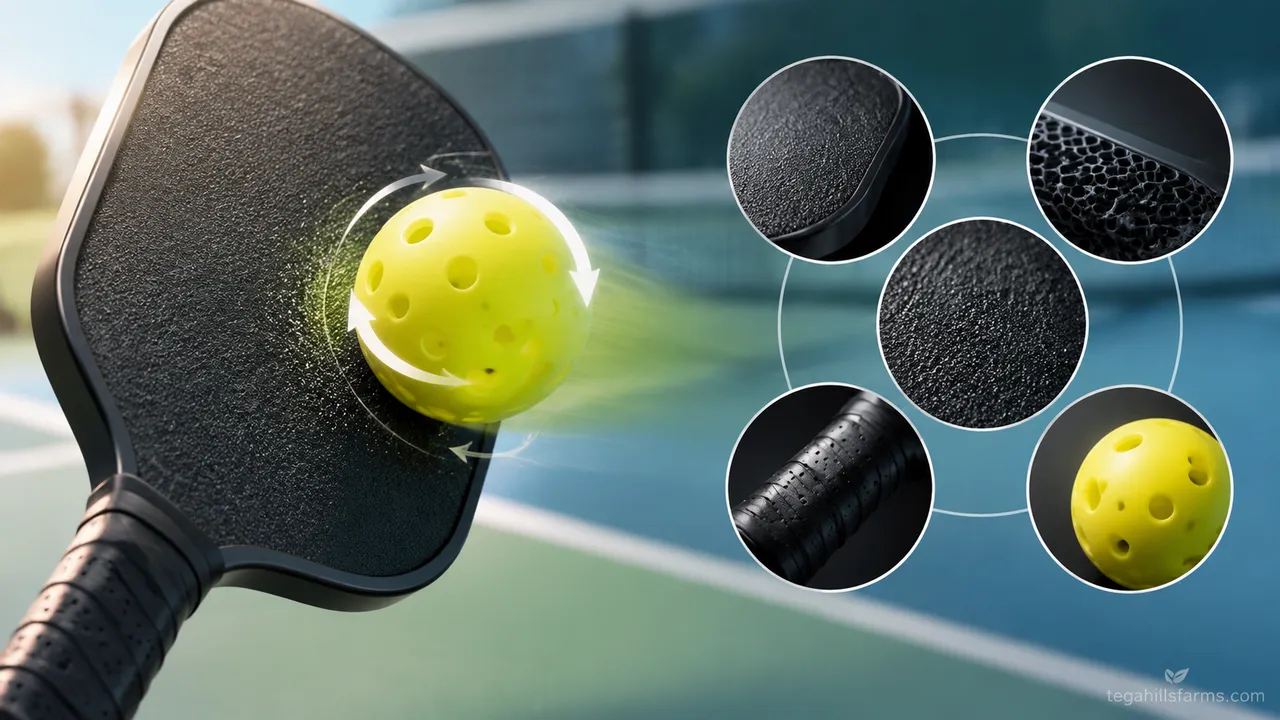
Surface texture determines spin potential more than any other factor — the gritty face grabs the ball, creating the friction needed for topspin, backspin, and sidespin. Beyond texture, four interconnected elements drive spin performance: the raw face material, core construction, grip tape pattern, and weight distribution. Each contributes to either generating spin, transferring it to the ball, or controlling it through contact.
Why Surface Texture Matters Most for Spin
Raw carbon fiber and specialized polymer coatings provide the gritty texture that generates spin on every shot. Unlike tennis racket strings that create spin through ball snap, pickleball paddles must rely on surface friction. The rough face literally grabs the ball during contact, allowing you to brush up, down, or sideways to impart rotation. Without adequate texture, the ball slips off the paddle face without meaningful spin transfer. Premium spin paddles use either raw carbon fiber with intentional grit or advanced polymer coatings engineered to maintain grip texture through heavy play. Higher grit ratings correlate directly with increased spin generation — but they also require more precise contact to avoid mishits.
How Core Construction Affects Spin Potential
Honeycomb polymer cores with 16mm thickness extend ball dwell time, allowing more complete spin transfer on every shot. The core compresses as the ball contacts the face, creating a brief moment where the ball essentially sticks before rebounding. During that dwell time, your brushing motion imparts rotation to the ball. Thinner cores (13–14mm) offer faster response and more “pop,” but reduce dwell time and therefore spin potential. Thicker cores (16mm and above) sacrifice some punch for that extended contact window — ideal for players prioritizing spin generation over raw power. The cell size and material of the honeycomb structure also matter: smaller cells provide more consistent response across the face, while larger cells can create dead spots.
The Role of Grip and Weight in Spin Control
A properly sized grip circumference and appropriate paddle weight let you execute the wrist mechanics required for spin — too thick or too heavy, and spin control suffers. Grip size affects wrist mobility: players with smaller hands often struggle to generate heavy spin with thick grips because their wrists cannot rotate freely through the brushing motion. Standard grip circumferences (4 to 4.25 inches) work for most players, but those with smaller hands should consider slim grips. Weight influences spin differently — heavier paddles (8.0+ oz) generate more momentum for heavy topspin drives but demand stronger forearm endurance for extended rallies with spin. Lighter paddles (7.0–7.5 oz) allow faster wrist snap for quick spin shots but produce less rotational force on drives. If you’re wondering how these factors balance against each other, see our full guide on how to choose a pickleball paddle for a complete breakdown.
The 5 Best Pickleball Paddles for Spin in 2026
The five paddles ranked for spin performance are the MTEN Set of 2 (best for beginners), the Leqqu Carbon Fiber Professional (best premium), the JoncAye Set of 4 (best value), the Selkirk SLK Atlas Max (best overall), and the Panel Sound Set of 4 (also great). Each was evaluated on surface grit retention, core construction, sweet spot forgiveness, and real-world spin generation across drives, serves, and third-shot drops.
#1 MTEN Pickleball Paddles Set of 2 — Best for Beginners
The MTEN fiberglass set delivers spin-friendly texture at an accessible price, making it the top choice for beginners learning topspin mechanics. The textured fiberglass face generates adequate friction for meaningful spin work without requiring perfect contact technique. For players just starting to develop brushing mechanics, that forgiveness matters more than maximum spin potential — you can still impart rotation on mishits that would kill spin entirely on a less forgiving surface. The composite core provides a larger sweet spot than carbon fiber alternatives, cushioning off-center contact and maintaining spin generation even on imperfect swings.
The 7.8–8.2 oz weight range keeps arm fatigue manageable during extended drilling sessions, which is critical for beginners putting in the reps needed to build spin consistency. Heavier paddles build muscle memory faster due to momentum, but beginners often fatigue before technique degrades — the lighter weight prevents that ceiling. The elongated shape extends the sweet spot toward the top of the face, giving more room for the brushing motion that creates topspin. This review covers the standard fiberglass version — graphite variants are also available.
For beginners prioritizing spin development, the MTEN removes the technique penalty that stiff carbon fiber paddles impose. You can focus on learning proper wrist snap and ball brushing without your paddle punishing every slight mishit with zero spin. At this price point for a two-paddle set, it is the clear entry point for spin-first learning. See our guide on best pickleball paddles for beginners for more options at this skill level.
#2 Leqqu Pickleball Paddle Carbon Fiber Professional — Best Premium
The Leqqu carbon fiber paddle’s raw textured face provides maximum grip retention, maintaining consistent spin generation far longer than polymer-coated alternatives. Raw carbon fiber has inherent surface roughness that does not wear smooth over time the way coatings do. Once you develop spin technique, this paddle rewards it with reliable ball grip on every contact — your brushing motion translates directly into rotation without the surface slipping. The graphite construction also adds stiffness that transfers energy efficiently, giving your spin shots both rotation and pace. For players who have moved beyond basic mechanics and want paddles that do not limit their potential, raw carbon fiber eliminates the surface bottleneck.
At 7.6 oz, the Leqqu sits at the heavier end of the standard weight range, providing momentum for heavy topspin drives while remaining light enough for quick net exchanges. The 16mm graphite core extends dwell time, letting the ball compress and grip the face longer during your brushing motion. That extended contact window directly translates to more spin transfer per swing — the difference between adequate rotation and the heavy topspin that forces opponents behind the baseline. The control-oriented grip circumference suits players with medium-to-larger hands who need wrist mobility for rapid spin direction changes.
The trade-off is forgiveness: the stiff carbon fiber face and smaller sweet spot punish off-center contact more harshly than composite alternatives. Mishits lose significant spin generation and feel jarring compared to the buttery contact on wider-faced paddles. This is the price of maximum performance — and for intermediate-to-advanced players committed to spin, it is worth paying. The Leqqu delivers professional-grade spin capability without the professional-grade price tag. This review covers the 16mm graphite version — other thickness options are available.
#3 JoncAye Pickleball Paddles Set of 4 — Best Value
The JoncAye four-pack offers USAPA-approved fiberglass paddles with spin-friendly textured faces at a per-paddle price that makes it the best value for families or groups prioritizing spin. Getting four paddles at this price point means multiple family members or training partners can all develop spin technique simultaneously — no one waits while someone else practices. The textured fiberglass face generates meaningful spin without the premium cost of raw carbon fiber, and the forgiveness of the composite core means less experienced players still produce usable rotation on imperfect contact. For groups where skill levels vary, that margin for error keeps everyone in the rally longer.
The fiberglass construction creates a livelier feel than graphite alternatives, adding extra pop to drives that can compensate for less refined technique. The 13–15mm core thickness varies across the set, but even the thinnest versions provide adequate dwell time for spin transfer during practice sessions. The four-paddle set includes outdoor balls and a carrying case, covering everything needed to start drilling spin shots immediately. The elongated shape appears consistently across paddles in the set, maintaining similar sweet spot positioning so players can switch between paddles without adjusting their swing plane.
The trade-off for the value and quantity is surface longevity: fiberglass textured faces tend to smooth out faster than carbon fiber alternatives under heavy use. For families sharing paddles or groups rotating through equipment, this means sooner-than-premium replacement timelines. But at this price point, that is an expected trade-off rather than a flaw. For groups prioritizing spin capability over premium construction, the JoncAye four-pack covers everyone without budget strain. This review covers the standard four-pack configuration.
#4 Selkirk Sport SLK Atlas Max — Best Overall
The Selkirk SLK Atlas Max combines Raw Spin Technology with an elongated shape and optimized weight distribution, earning its position as the best overall spin paddle for players who want maximum spin without sacrificing control. Selkirk’s proprietary raw carbon fiber face provides the grit needed for consistent spin generation across serves, third-shot drops, and drives. The elongated shape extends the sweet spot toward the top of the paddle, giving more real estate for brushing up through the ball — that extra face height translates directly to heavier topspin potential on every groundstroke and serve. The extended reach also helps on returns where you need to brush the ball while staying back from the net.
At 7.9–8.3 oz, the Atlas Max sits in the mid-heavy range, providing enough mass for powerful drives while remaining manageable for extended rallies. The weight distribution matters here: Selkirk engineers the balance point to favor control, meaning the head does not feel overly top-heavy during quick net exchanges. That balance lets you generate spin on fast exchanges without the paddle swinging away from you mid-rally. The cushioned grip reduces vibration transfer to your hand, letting you feel the ball contact without the jarring feedback that can disrupt wrist mechanics mid-swing.
The composite outer wrapping adds durability around the edge, protecting against dings that could affect spin consistency across the face. For players who practice daily or play competitively, that edge protection matters — surface damage near the sweet spot directly impacts spin generation on your most-used contact area. The Selkirk name also carries warranty coverage and customer support that third-party brands often cannot match, adding peace of mind for an investment piece. This review covers the standard carbon fiber version with the included carrying bag.
For intermediate-to-advanced players wanting the complete spin package — maximum grip, elongated reach, balanced weight, and durable construction — the Atlas Max delivers across every criterion. It earns the best overall designation by not forcing you to compromise on any dimension of spin performance.
#5 Panel Sound Pickleball Paddles — Also Great
The Panel Sound four-pack delivers spin-friendly fiberglass construction in a colorful design that stands out on the court, making it a solid alternative for players wanting value and visual appeal. The textured fiberglass face generates adequate spin for developing players, while the 13–15mm composite core provides the pop needed for drives without sacrificing too much dwell time. The four-paddle set covers families, training groups, or players wanting backup paddles without purchasing singles at premium prices. The colorful design options (available in multiple colorways) let players distinguish their paddle easily in group settings or if paddles get mixed up during social play.
The grip circumference averages around 4.125 inches, slightly thinner than standard, which benefits players with smaller hands who need wrist mobility for rapid spin direction changes. The cushioned grip tape adds comfort during extended rallies and provides the texture needed to prevent slippage during aggressive wrist snap motions. For players working on spin technique, a secure grip connection matters — any movement between hand and paddle during contact disrupts the precise brushing angle required for heavy rotation. The Panel Sound grip holds up well during extended practice sessions without becoming slick from sweat.
The trade-off for the four-pack value is consistency: fiberglass construction can vary slightly between paddles in the same set, meaning spin generation might differ marginally across the four. For casual social play or beginners not yet fine-tuning technique, that variation is negligible. For serious practice where you need predictable response, single paddles from premium brands offer tighter consistency. But for the price-to-quantity ratio and the colorful design appeal, the Panel Sound set earns its place as a practical alternative. This review covers the standard four-pack with balls and case.
How to Choose the Right Spin Paddle for Your Game
Choosing a spin paddle requires matching surface texture quality, core thickness, weight, and shape to your skill level, playing style, and whether you prioritize spin dominance or balanced performance. Beginners need forgiveness more than maximum grip; advanced players want every possible rpm. Shape determines reach and sweet spot positioning; weight affects momentum and endurance. Budget constrains which premium features you can access.
Matching Paddle Selection to Your Skill Level
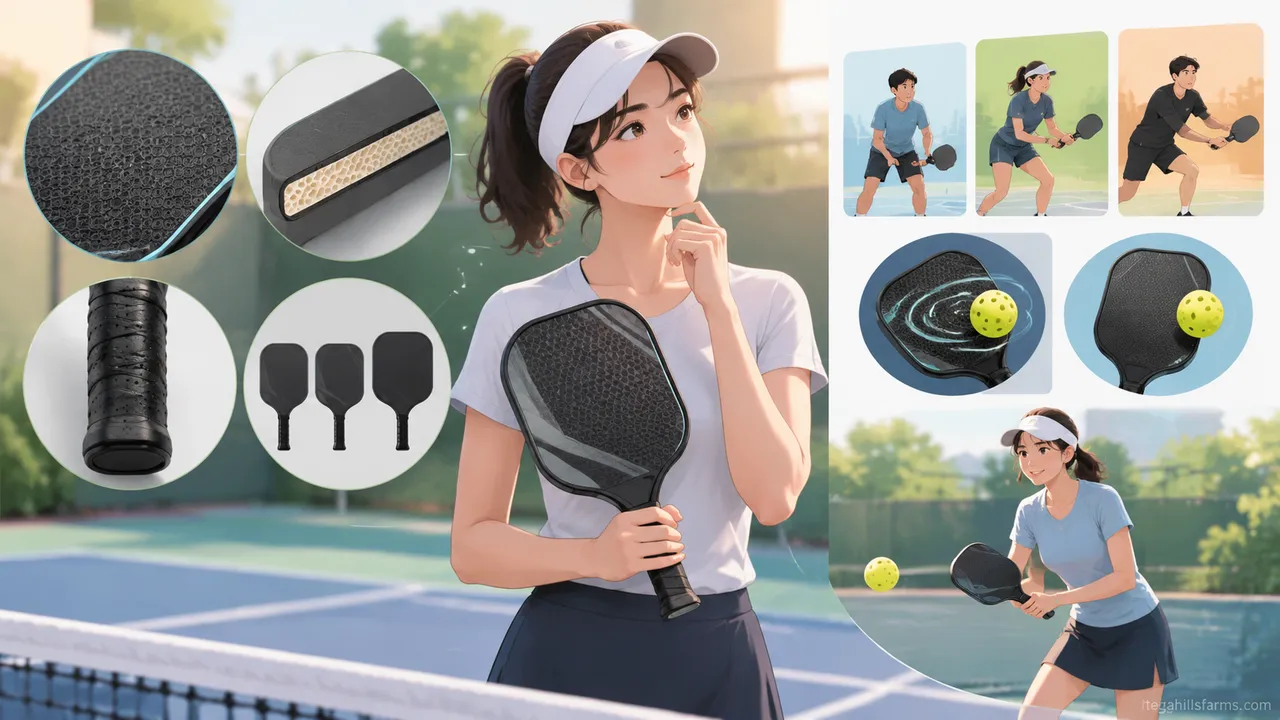
Beginners benefit most from forgiving paddle faces and lighter weight; advanced players can leverage stiffer, heavier paddles for maximum spin generation. For your first spin paddle, prioritize a textured face that does not punish mishits — the forgiving sweet spot on composite or fiberglass paddles keeps ball spin consistent even when contact lands slightly off-center. Lighter weight (7.5–8.0 oz) prevents early fatigue during drilling sessions, letting you practice spin technique longer before form degrades. Avoid premium carbon fiber paddles when starting out: their smaller sweet spots and stiff response punish every technique error, slowing your learning curve.
Intermediate players have developed consistent contact and can handle less forgiving faces. Carbon fiber surfaces become viable now — the improved grip rewards your more reliable swing path with heavier spin generation. Weight can increase toward 8.0–8.5 oz to build momentum for drives while maintaining net mobility. Shape matters more at this level: elongated paddles add reach for third-shot drops and topspin serves, while standard shapes offer quicker hand speed for net exchanges.
Advanced players focused exclusively on spin should prioritize maximum surface grit and elongated shapes that maximize brushing area. Heavier paddles (8.5+ oz) work for well-conditioned players who generate sufficient wrist snap to control them. For players who want the absolute maximum spin, see our guide on best lightweight pickleball paddles for options that sacrifice some weight for maneuverability, and our guide on pickleball paddle weight for a deeper understanding of how mass affects spin generation.
Spin-First vs All-Around: What’s Your Priority?
If maximum spin dominates your game, prioritize surface grit and elongated shape above all else; if you want spin without sacrificing other shots, choose a balanced paddle with moderate spin focus. Spin-dominant players should target paddles with raw carbon fiber faces (maximum grit retention), elongated shapes (maximum brushing surface), and 16mm+ cores (maximum dwell time). Accept trade-offs in touch at the net and forgiveness on mishits — those sacrifices buy heavier rotation on every groundstroke and serve.
All-around players need paddles that do not compromise other dimensions. Mid-weight paddles (7.8–8.3 oz) balance spin generation with control at the net. Standard or slightly elongated shapes offer versatility without extremes. Composite or graphite faces with quality textured coatings provide meaningful spin without the technique demands of raw carbon fiber. For players who prioritize spin but still want to drop-shot, dink, and drive effectively, these balanced paddles serve better than maximum-spin extremes.
With the five top spin paddles reviewed above and the key spin technologies explained, you now have a solid foundation for making your choice. Beyond picking the right paddle, understanding how spin mechanics work on the court can help you get the most out of whatever spin paddle you select — particularly if you are coming from tennis or another racket sport where topspin mechanics differ. The following guide sections cover the unique considerations for maximizing spin performance across different player types and playing conditions.
Spin Technique Differences: Pickleball vs Tennis
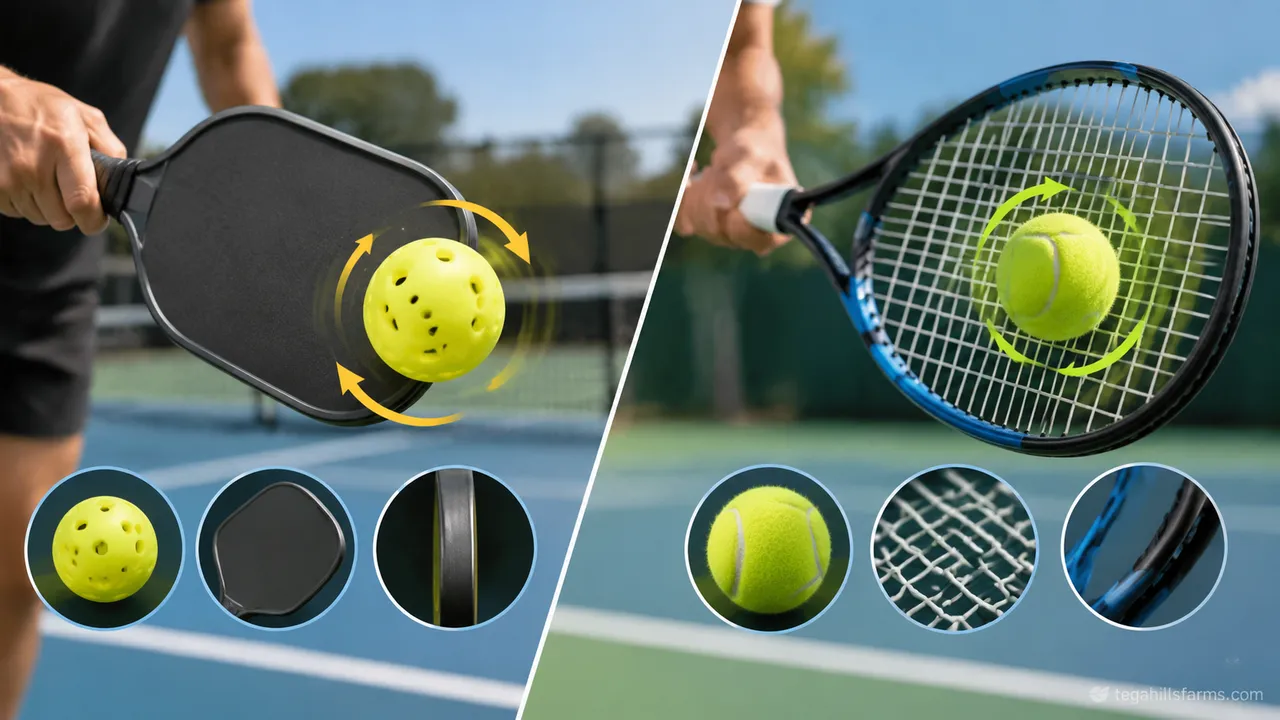
Pickleball and tennis create spin through fundamentally different mechanics because the equipment and ball behave differently — the lighter ball, smaller face, and solid paddle surface change how rotation transfers. Tennis relies on string bed snap and racket head speed through a long contact zone. Pickleball requires shorter, sharper brushing motions with the ball compressing against a solid face. Players transitioning from tennis must relearn the core feel of spin generation rather than simply applying the same wrist mechanics at smaller scale.
Why Paddle Angle Matters More in Pickleball
The solid paddle face and smaller contact area make paddle angle during ball contact more critical for spin than in tennis — a few degrees of difference dramatically affects rotation. In tennis, string elasticity and the longer contact window let you recover from slight angle errors; the strings absorb some inconsistency. In pickleball, the ball contacts a rigid surface where your paddle angle at the moment of contact directly determines spin direction and magnitude. Open the face slightly too much on a topspin attempt and the ball sails; close it too much and the spin dies or you drive into the net. This sensitivity means developing consistent paddle angle through practice matters more for pickleball spin than for tennis topspin.
The textured face amplifies this: if your paddle angle varies during contact, the ball either grabs and spins (correct angle) or slips with minimal rotation (angle error). Unlike tennis where string snap-back can partially correct angle errors, pickleball’s solid face gives you exactly what the geometry dictates. For players learning spin technique, filming your contact point and reviewing paddle face angle through the swing helps identify patterns that kill spin. For those coming from tennis, this adjustment typically requires dedicated practice time — see our guide on best pickleball paddles for tennis players for paddles designed to ease that transition.
Wrist Snap and Brushing: The Key to Pickleball Spin
Pickleball spin relies on a compact, sharp wrist snap rather than the long rotational wrist action used in tennis — the follow-through stays close to the body, not extended outward. The key difference is swing path length: tennis topspin uses a long, arcing upward brush across the strings; pickleball topspin uses a shorter, more vertical snap as the ball sits on the paddle face. The wrist accelerates sharply through the last few degrees of the swing, brushing up the face to impart rotation. This motion feels almost like a flick — quick, compact, and powerful rather than long and sweeping.
The ball-to-body distance matters: pickleball’s court dimensions keep the ball closer to your body than tennis, so the wrist snap happens in tighter quarters. The follow-through naturally stays closer to your side rather than extending across your body as in tennis forehands. Players who transfer their tennis wrist mechanics directly tend to over-extend their follow-through, losing the compact snap that generates pickleball spin. Practice drills that emphasize short, punchy wrist acceleration help ingrain the correct motion. For more on adapting tennis mechanics to pickleball, see our guide on pickleball vs tennis for a complete comparison of the two sports.
Frequently Asked Questions About Spin Paddles
Rough paddle surfaces do generate more spin, but surface grit matters more than raw power — and maintaining that texture over time is the real challenge for consistent spin players. Beyond surface questions, players often ask about technique adaptation, grip maintenance, and how core thickness affects their spin game. The answers below address the most common concerns for players investing in spin-focused equipment.
Does surface texture really make that much difference for spin?
Yes. Surface grit creates the friction needed to grab the ball during contact — without it, your brushing motion imparts minimal rotation. The difference between a smooth and textured face can be 30–50% less spin on identical swings. That said, texture must be maintained; worn surfaces lose effectiveness even if they still feel rough to the touch.
I’m a tennis player transitioning to pickleball. Will my topspin technique work?
Partially. Your wrist snap and brushing instincts transfer, but the feel differs significantly. The ball sits on the paddle face rather than bed like tennis strings, requiring adjusted paddle angles. Most tennis players initially produce flatter trajectories until they adapt their contact point and follow-through. See our guide on best pickleball paddles for tennis players for options designed to ease that transition.
How often should I replace grip tape on a spin paddle?
When it loses texture or becomes slick. Grip tape that has compressed from sweat and play loses the rough surface needed for secure hand-paddle connection during spin shots. For paddles with textured faces, monitor the grip tape monthly if you play frequently. Replacement costs are low, and fresh tape restores spin control immediately.
Can I add texture to a paddle that has a smooth face?
No effective permanent solution exists for adding meaningful texture to smooth paddle faces. Grip sprays and temporary coatings wear off within a session. If spin is your priority, choose a paddle with adequate texture from the start — see our guide on best pickleball paddles for spin for tested options.
Does core thickness affect spin potential?
Thicker cores (16mm+) extend ball dwell time, allowing more complete spin transfer during contact. Thinner cores (13–14mm) respond faster but reduce the window for brushing. For maximum spin, thicker cores paired with textured faces deliver the best results. For more on how core dimensions affect paddle performance, see our guide on pickleball paddle weight.
Protecting Your Spin Paddle’s Grip Surface
Textured paddle faces lose their spin-generating grit over time — cleaning methods and usage patterns directly determine how long your paddle maintains peak spin potential. Unlike tennis racket strings that snap back and create spin through elasticity, pickleball spin depends almost entirely on surface friction. Once that texture smooths out, no amount of perfect technique restores the spin generation you had when the paddle was new. Protecting the grip surface extends the paddle’s useful lifespan and maintains your competitive edge.
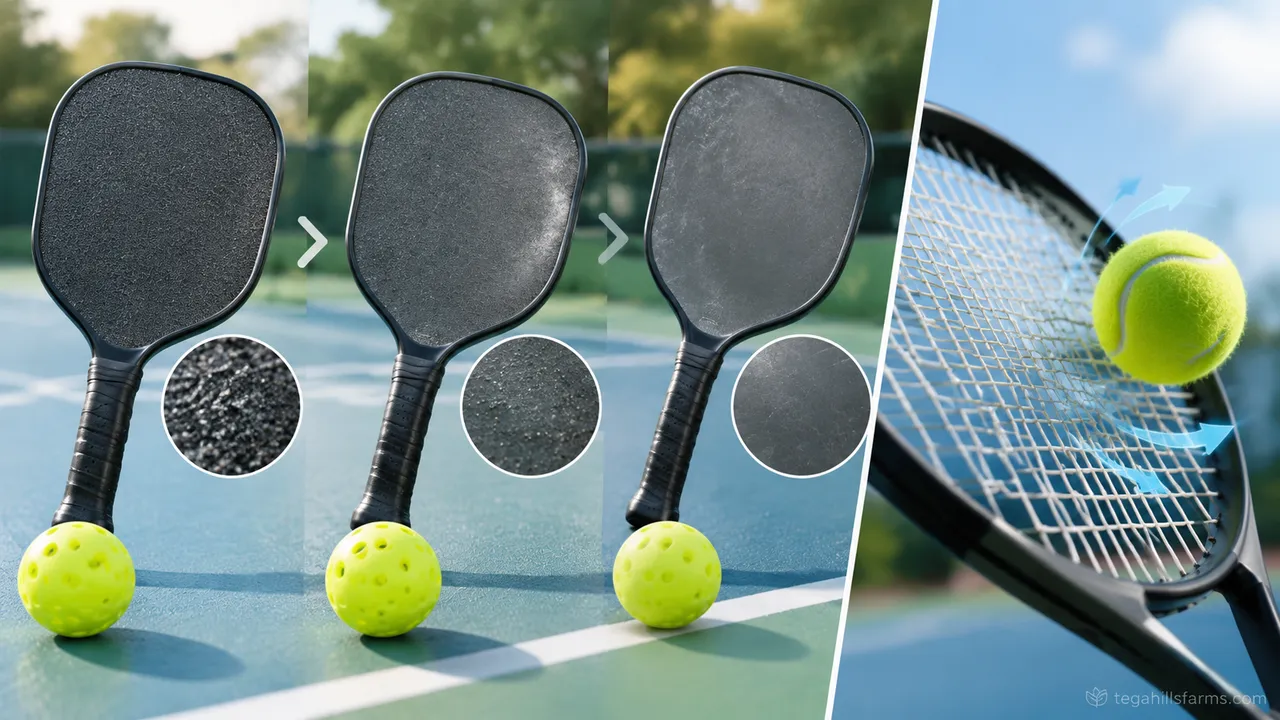
Clean textured faces with a slightly damp cloth after play — avoid abrasive cleaners or scrub brushes that strip the coating. Sweat, sunscreen, and court dust all contribute to surface degradation. A quick wipe after each session removes buildup before it compacts into the texture. Avoid leaving paddles in hot cars or direct sunlight, as heat can degrade polymer coatings and cause surface smoothing faster than normal play. For paddles with removable edge guards, occasionally cleaning underneath prevents debris accumulation that can affect edge contact and spin on near-edge shots.
Replace grip tape before it becomes slick. Grip tape serves double duty: hand comfort and spin control. When the texture compresses smooth from repeated contact, your hand slips during aggressive wrist snaps — that loss of secure grip disrupts the precise mechanics needed for heavy spin. Most players replace grip tape every 2–3 months with regular play, more often if hands sweat heavily or if you play competitively. Fresh grip tape costs little and immediately restores the connection your technique requires.
For paddles with raw carbon fiber faces, surface care differs: carbon fiber maintains its grit better than polymer coatings but can accumulate oil from skin contact over time. Occasional cleaning with isopropyl alcohol (diluted) removes oils without damaging the carbon surface. Never use acetone or harsh solvents — they degrade the material and can affect spin generation. With proper care, a quality carbon fiber paddle maintains usable spin texture for significantly longer than polymer-coated alternatives.


Write Your Review
No reviews yet. Be the first to share your experience!